Loading...
Loading...


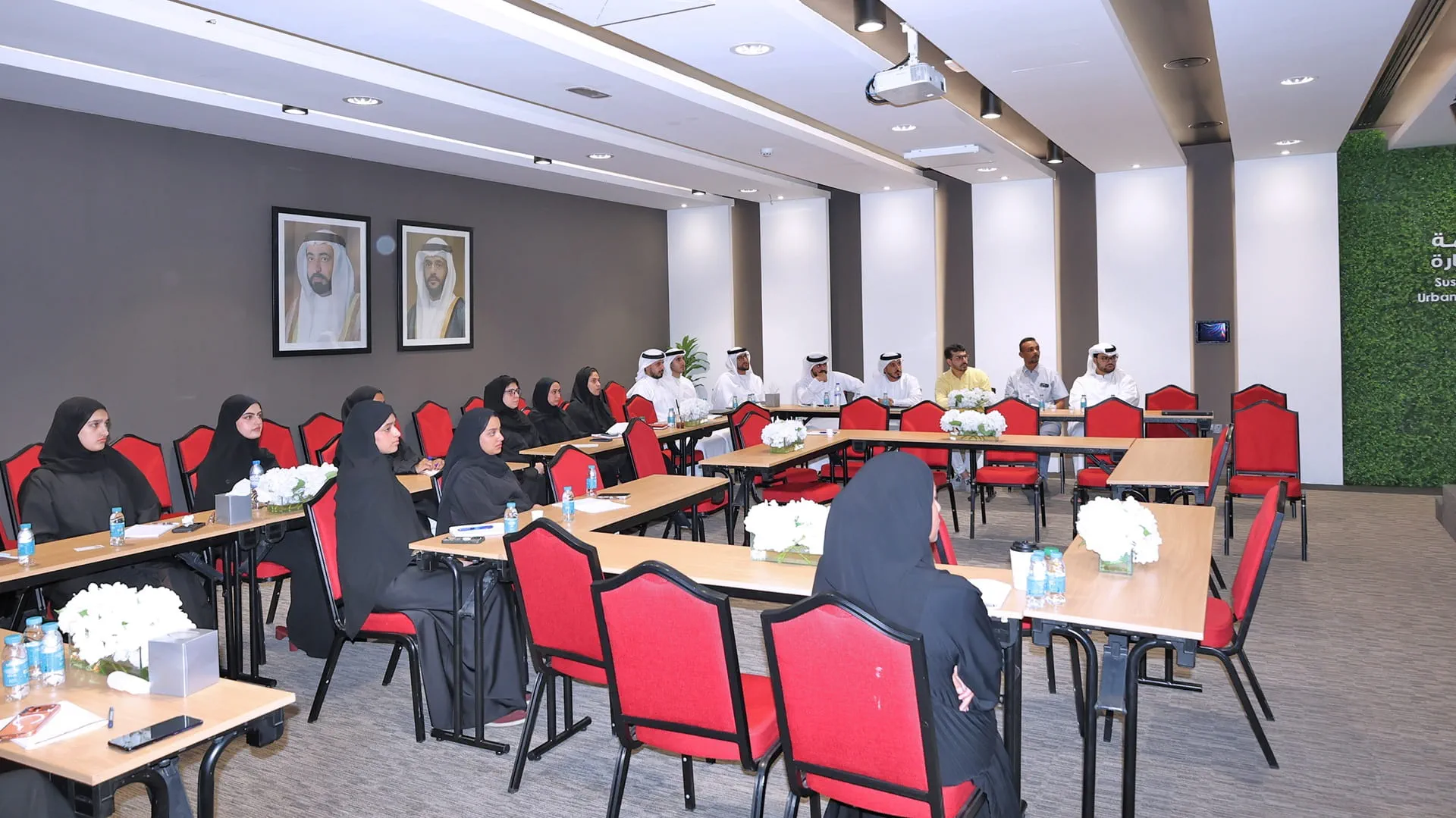
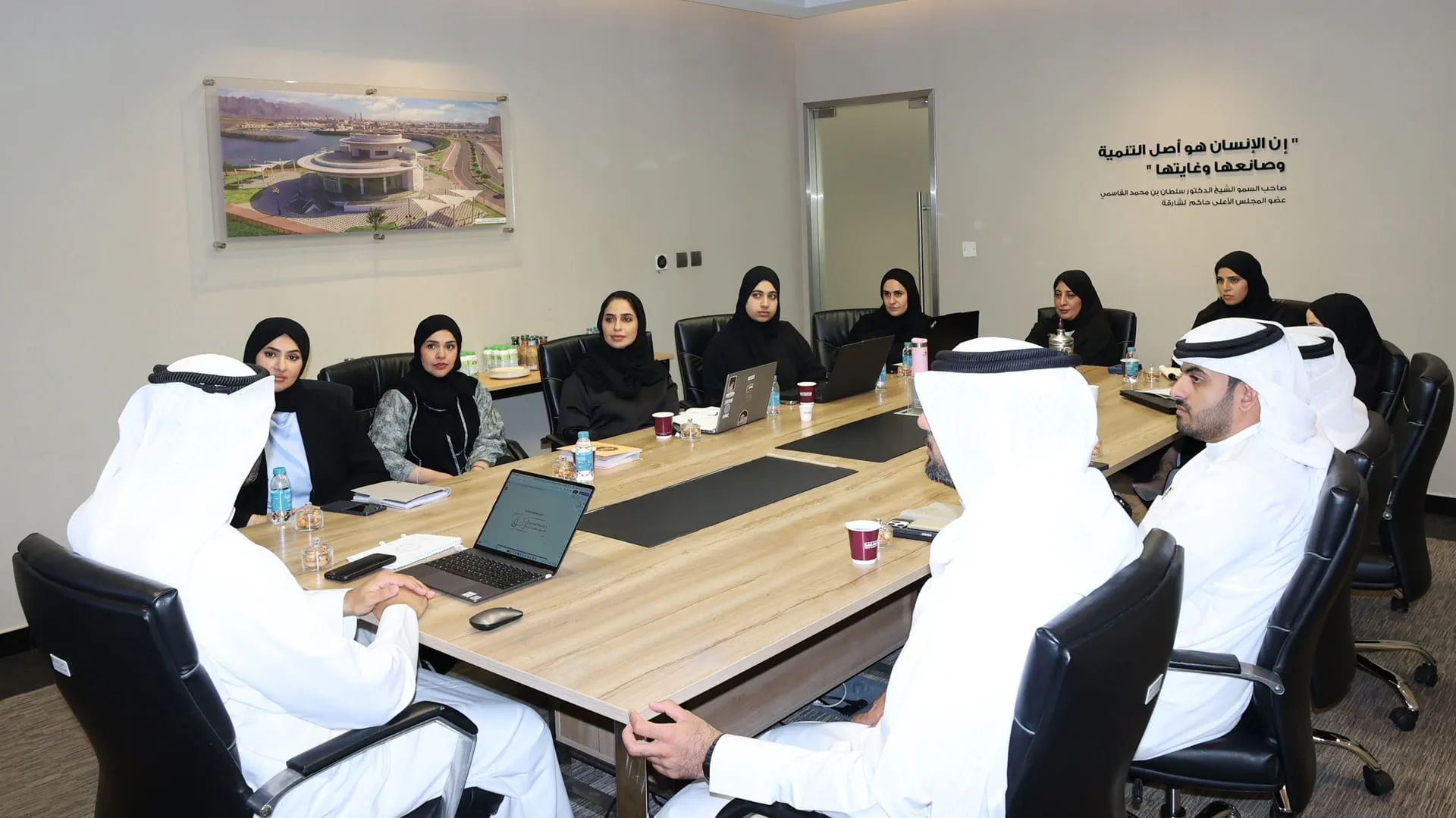
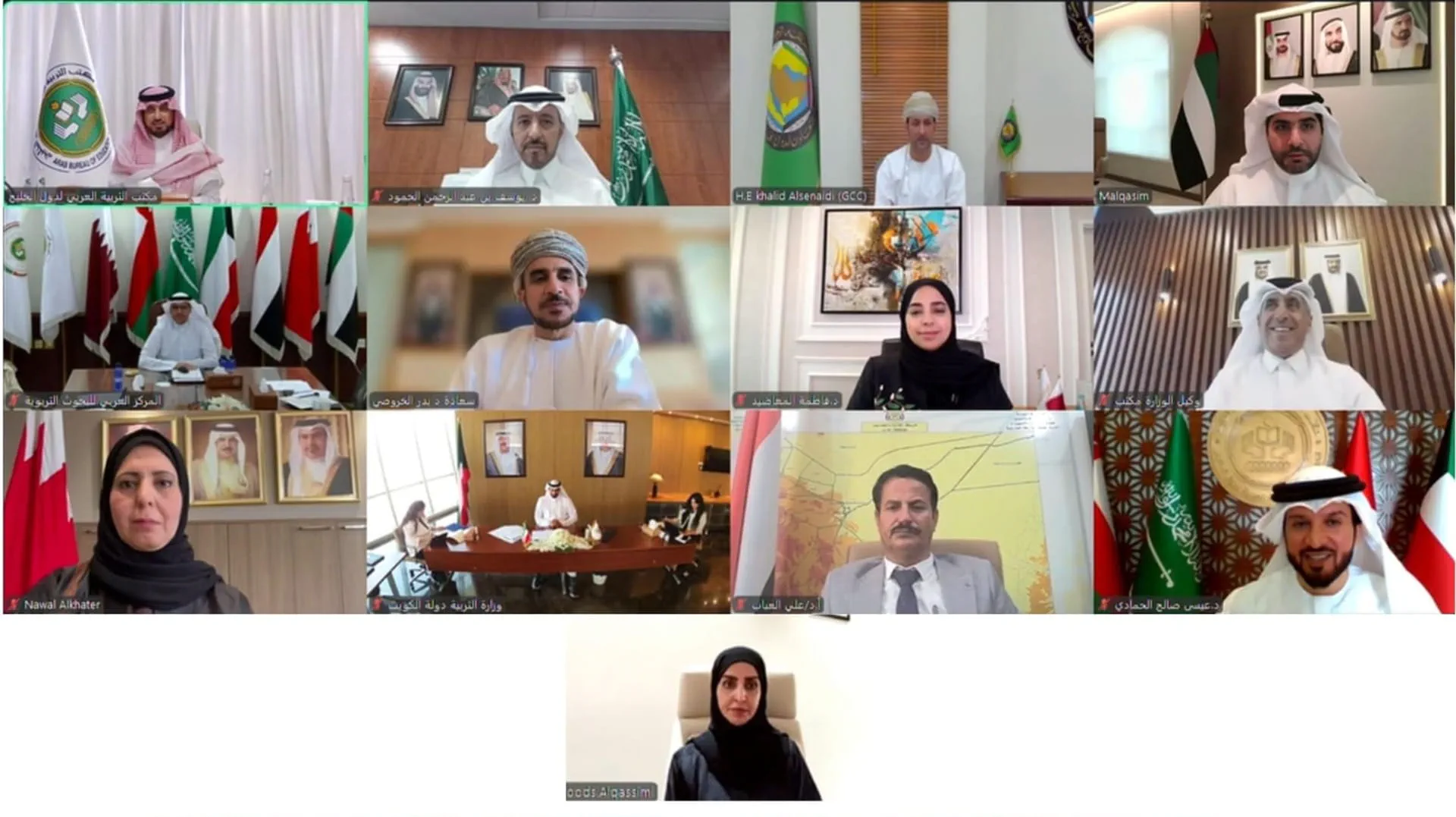
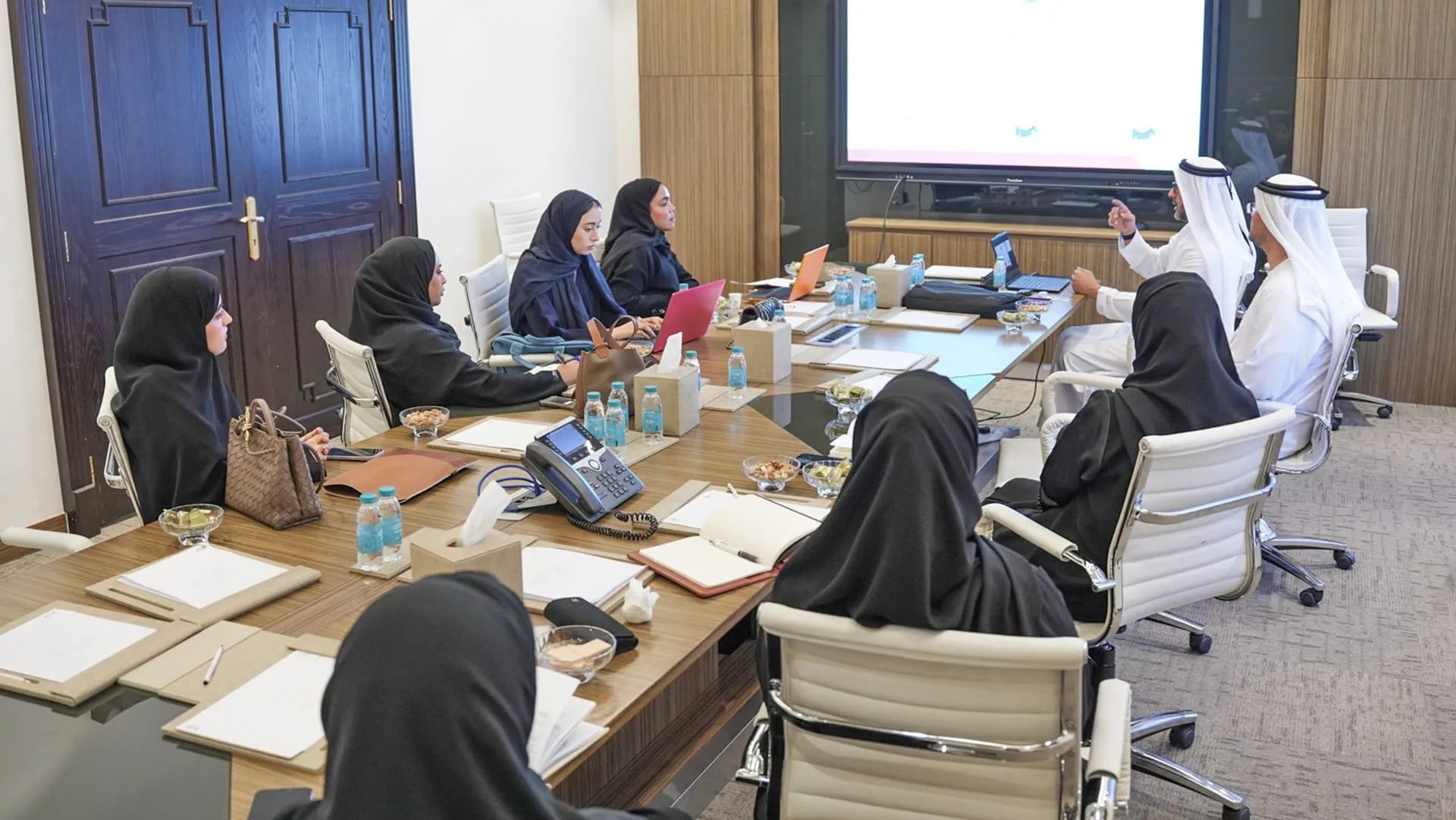
Held under the theme of sustainability and quality of life, the session focused on “Environment and Food Security,” during which council members presented a package of innovative proposals and initiatives, comprising 23 substantive interventions, aligned with the UAE’s national vision for building a safe and sustainable environmental future.
The session was chaired by Hamad Mohammed Ibrahim Al Hashemi, Chairman of the Sharjah Youth Shura Council, in the presence of Vice Chairperson Aisha Humaid Obaid Al Khayal and council members.
Responding to the questions and proposals were Aisha Deemas Al Suwaidi, Chairperson of the Sharjah Environment and Protected Areas Authority; Dr Mohammed Salman Al Hammadi, Assistant Undersecretary for the Food Diversity Sector at the Ministry of Climate Change and Environment; and Mohammed Obaid Matar Al Tunaiji, Director of the Central Region Branch of the Sharjah Department of Agriculture and Livestock.
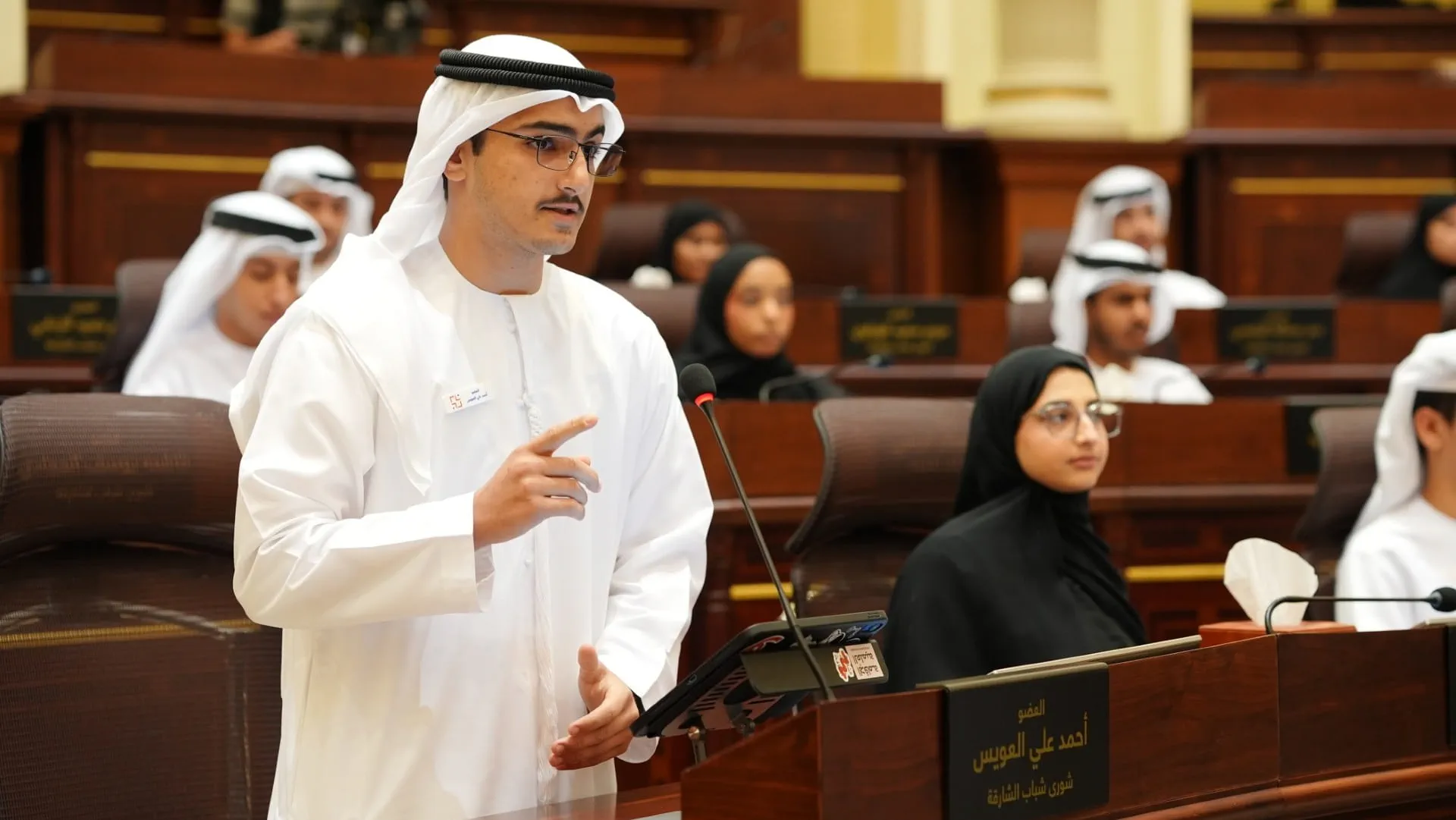
During the first intervention, member Ahmed bin Ali Al Owais called for the introduction of a supplementary curriculum in sustainable agriculture and food security from middle school through Grade 12, integrating theoretical and practical learning to prepare environmentally conscious generations.
Member Ghala Mohammed Al Shamsi proposed expanding the use of an intelligent system based on digital chips and applications to track livestock and accurately monitor their health and production data, thereby improving local production efficiency.
Member Sulaiman Nasser Al Mughni questioned the government’s mechanisms for transforming voluntary youth environmental initiatives into sustainable projects with economic impact and raised the possibility of establishing a national fund to support youth-led environmental entrepreneurship.
Member Noor Sultan Al Khayal proposed launching the “Sharjah Environmental Eye” initiative as a smart system to engage the community and young people in monitoring and documenting environmental damage, enabling rapid response and support for relevant authorities.
Member Musabah Mohammed Al Ketbi proposed establishing an interactive “First Seed Corner” at the Sharjah Cooperative Society to distribute free seeds and provide simplified guidance, encouraging children and young people to adopt home food production.
Member Maitha Mohsen Al Kaabi recommended establishing a research and production unit to localise molecular farming technology for the domestic production of veterinary vaccines and supplements at lower cost to protect livestock and fisheries.
Member Mohammed Ismail Al Zarouni proposed establishing the “Sharjah Platform for Environmental and Sustainable Agriculture Robotics” to attract young innovators and to develop software solutions and drones for pest detection and wildlife monitoring.
Member Aisha Ibrahim Al Saeedi proposed establishing a National Environmental Credit System to reward companies with incentive points for sustainable contributions, such as tree planting and beach clean-ups, with credits used to support community and school initiatives.
Member Salem Ismail Al Buraimi proposed introducing an annual “Youth Agricultural Innovation Challenge” to engage school and university students in developing innovative projects that support food security and environmental sustainability.
Member Noura Mohammed Al Dhuhoori proposed launching a smart digital platform, “Sharjah Wildlife Guide”, to introduce the public to local animals, plants, and protected areas via interactive maps and a virtual assistant.
Member Mohammed Abdullah Al Ali praised food security initiatives aimed at achieving self-sufficiency and questioned the feasibility of establishing a national project to produce camel milk and its derivatives, to capitalise on their nutritional value and growing global demand.
Member Rawda Qassim Al Hammadi proposed launching a smart national environmental rewards programme that grants incentive points to individuals in exchange for recyclable materials, which can be redeemed for discounts to encourage recycling as a sustainable behaviour.
Member Saif Hilal Al Kindi proposed establishing a local association to bring farmers together, provide an organised platform for marketing and showcasing their products, strengthen the competitiveness of local produce, and reduce reliance on imports.
Member Yasmin Kashwani called for a national project in Sharjah to produce locally manufactured infant formula in line with the highest health standards, building on the success of projects such as Mleiha and Sabaa Sanabel to strengthen food security.
Member Ali Yousif Robari proposed a programme linking local farms directly to retail outlets, hotels, and restaurants to forecast demand, facilitate crop marketing, and reduce surplus production and food waste.
Member Aisha Khalid Al Naqbi inquired about efforts to utilise palm tree waste, such as fronds and trunks, by converting it into environmentally friendly, economically valuable products rather than treating it as waste.
Member Mayed Matar Al Tunaiji proposed expanding support for young farmers and entrepreneurs through specialised training programmes in smart agriculture and modern technologies to improve the quality of local production and strengthen sustainability initiatives.
Member Maryam Hamdan Al Zaabi recommended launching the “Future Sustainable Youth” programme to empower students to develop small-scale agricultural projects using modern technologies, supported by a digital environmental identity that records participation and links it to incentive opportunities.
Member Yousif Salah Al Ali proposed launching the national “A Garden in Every Home” initiative to transform homes into productive green spaces through modern organic farming methods, promoting health and self-sufficiency.
Member Sheikha Rawda bint Khalid Al Qasimi asked about the authority’s role in protecting the coral reefs surrounding Sir Bu Nair Island from damage caused by boat anchors, and whether designated mooring areas would be established to safeguard them.
Member Obaid Rashid Al Shamsi proposed coordinating with the Ministry of Education to establish school farms, providing students with practical experience in food production while promoting sustainability and food security.
Member Mohammed Saif Al Qaidi proposed studying the establishment of an integrated system to collect condensate from the air-conditioning units of large buildings and reuse it for agricultural projects and irrigation to conserve water and reduce waste.
The interventions concluded with a question from member Nasser Hussein Al Zarouni, who praised Sharjah’s food security projects and asked about future plans to expand local fodder production and to develop innovative feed from agricultural waste to reduce imports.
Responding to the proposals, Dr Mohammed Salman Al Hammadi, Assistant Undersecretary for the Food Diversity Sector at the Ministry of Climate Change and Environment, highlighted the ministry’s efforts to position the UAE as a leader in food security by supporting local production and secure supply chains. He outlined initiatives including academic curricula, school gardens, volunteer opportunities, and youth entrepreneurship programmes such as Food Pioneers and the Sustainable Project Challenge, which offers prizes of up to AED 1 million. He also referred to coordination to produce veterinary supplements through molecular farming, the expansion of environmental credit systems for companies, and the role of the Agricultural Centre, which includes 200 farmers and livestock breeders, in marketing products and increasing honey production by 150%. He welcomed proposals linking farms with retail outlets, promoting home agriculture, and reusing air-conditioning water, subject to feasibility studies.
For her part, Aisha Deemas Al Suwaidi, Chairperson of the Sharjah Environment and Protected Areas Authority, outlined the authority’s role in advancing sustainability projects through partnerships across sectors. She praised the “Sharjah Environmental Eye” proposal for aligning with digital transformation efforts and highlighted the authority’s long-standing support for young people through the Environmental Sustainability Award, which has run for 14 years, as well as its plans to transform wildlife monitoring systems into smart platforms. She noted that the authority focuses on awareness and research in recycling, reviewed initiatives to recycle palm waste in partnership with the Irthi Contemporary Crafts Council, and welcomed programmes that empower students, such as “Future Sustainable Youth.” Regarding Sir Bu Nair Island, she confirmed that studies are underway to protect coral reefs through designated safety distances and mooring buoys.
In the same context, Mohammed Obaid Matar Al Tunaiji, Director of the Central Region Branch at the Sharjah Department of Agriculture and Livestock, said the department is integrating artificial intelligence to monitor livestock across Iktifa Foundation projects and organised livestock farms. He confirmed ongoing support for innovation through the Sharjah Gateway Challenge, in cooperation with Sheraa, while noting that the proposal to produce camel milk is under future study. He announced that Iktifa is moving towards manufacturing innovative organic infant food products and referred to the launch of the integrated “Mazraati” digital platform, which provides services, guidance, and training for young farmers. He concluded by announcing that the Sabaa Sanabel wheat farm in Mleiha, based on circular economy principles, aims to increase production of organic fodder and corn silage from 2,000 tonnes to 15,000 tonnes next year to meet the needs of the emirate’s livestock production projects.

 For an optimal experience, please
rotate your device to portrait mode.