Loading...
Loading...


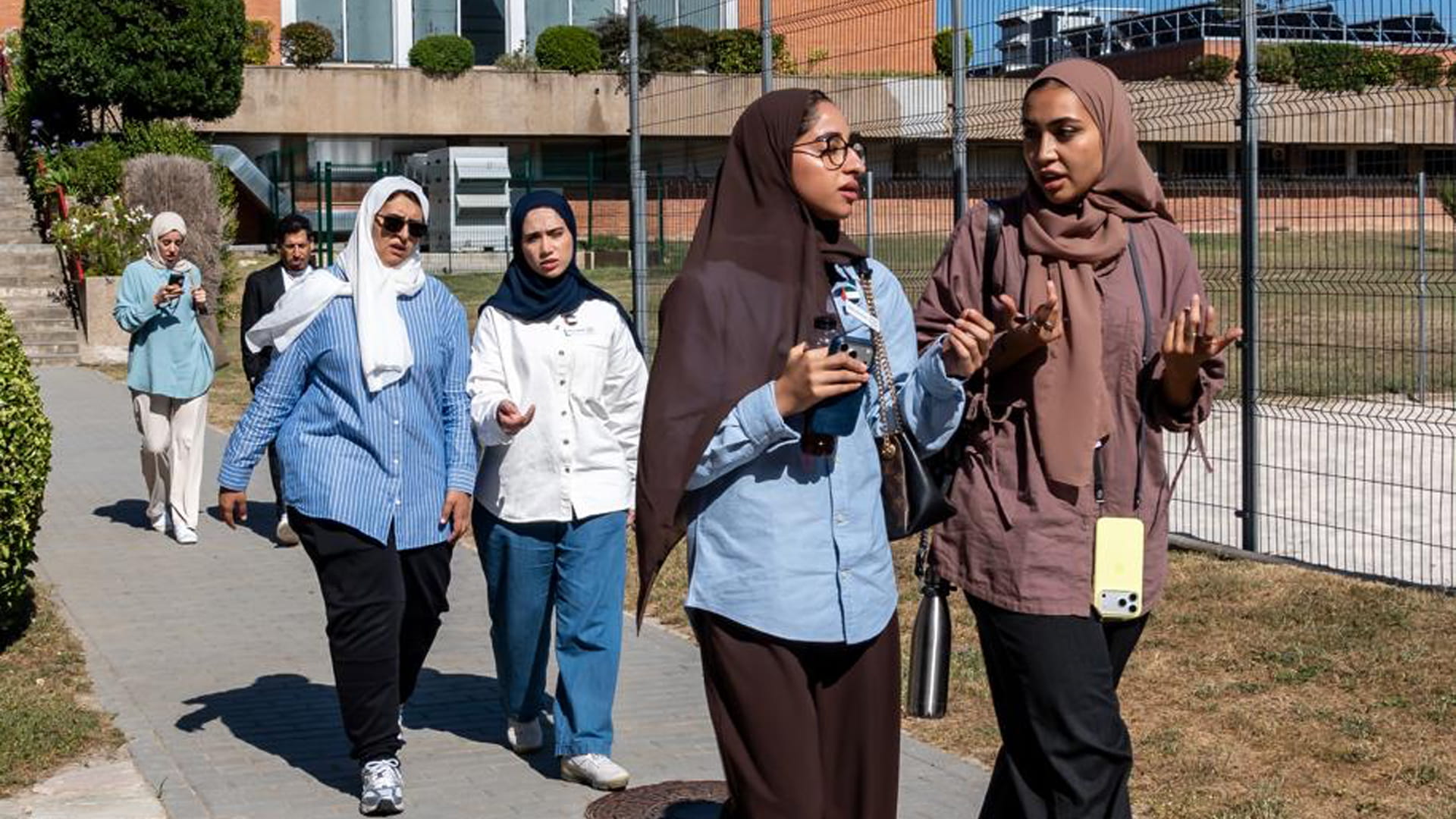
The visits form part of the programme's practical outcomes track, strengthening graduates' ability to connect leadership and professional knowledge with applied experience, and to translate the tools and concepts they have acquired into initiatives that advance the sports working environment and support the Sharjah Women Sports Foundation's objectives of broadening participation, promoting a culture of sport, and building a more sustainable ecosystem for women's sports.
At the University of Barcelona, participants attended a specialist lecture on sports governance covering the distinct nature of managing sports organisations and the importance of developing governance systems that account for the sector's unique characteristics and the interplay of its stakeholders and processes. The lecture emphasised that sports governance cannot be treated as a direct extension of public sector or private sector governance models, given sport's nature as a system that combines regulatory requirements, investment considerations, and relationships with athletes, teams, partners, and supporting bodies.
The lecture also addressed sports governance as a tool for institutional protection and stability, through clear role definition, institutional discipline, auditing, and alignment of internal strategies with the broader sports bodies under which organisations operate. Digital models and tools were also presented to help sports organisations assess their governance readiness, identify improvement opportunities, and develop phased corrective plans tailored to each foundation's context and needs.
The visits also included the Club Natació Atlètic-Barceloneta (CNAB), where the delegation explored an integrated model combining community and competitive sport across swimming and water polo. The model encompasses age-group teams, a first women's water polo team featuring Olympic-level players, and programmes that enable aquatic sports participation within an organised environment serving both the community and competitive teams.
The delegation further visited the Sant Cugat High Performance Centre (CAR), which specialises in athlete preparation through a scientific and professional system encompassing specialist training, physical assessment, recovery, and medical, physiological and nutritional services, alongside the support functions that contribute to raising athlete performance and developing preparation plans.
Her Excellency Hanan Al Mahmoud, Vice Chairperson of Sharjah Women Sports said that exploring best practices and conducting benchmarking represent an important step in developing the women's sports ecosystem, adding:
"These visits allow us to study successful models, understand how they are managed, and then adapt their elements to suit our local context and the needs of women's sport in Sharjah. They also give our talent a broader space to learn from specialised experiences and translate knowledge into practical tools that support institutional and sporting development."
She added: "We believe that developing the sports ecosystem requires talent capable of reading specialised experiences, analysing the elements of their success, and connecting them to the needs of sports work. This is where the Sports Leadership Programme plays a vital role in preparing practitioners with a broader understanding of the sector, capable of contributing to the development of initiatives and projects that serve women's sport."
Mooza Al Shamsi, Director of the Sharjah Women Sports, affirmed that the Foundation is committed to linking institutional development with learning from specialised experiences and best practices, stating:
"These visits reflect the diversity of sports professions that contribute to developing the ecosystem — from management and operations, to coaching, scientific assessment, recovery, and athlete support services. We ensure that Sports Leadership Programme graduates benefit from these experiences in a practical way, strengthening their ability to connect professional knowledge with application, and to develop initiatives that promote a culture of sport, broaden participation, and build a sustainable sports environment."
She added: "The breadth of the visits — spanning sports governance, aquatic sports, and high-performance systems — reflects the importance of building a comprehensive understanding of sports work, so that development is not confined to training alone, but extends to management, planning, assessment, recovery, and facility operations, contributing to a more integrated and sustainable sports ecosystem."
The visits reflect the commitment of both the Sharjah Capability Development “Tatweer” and the Sharjah Women Sports Foundation to strengthening the practical impact of the Sports Leadership Programme, by providing graduates with applied learning opportunities and connecting them with global best practices in governance, sports management, aquatic sports, and high-performance systems — contributing to the development of national talent and supporting advancement across the women's sports sector.

 For an optimal experience, please
rotate your device to portrait mode.