Loading...
Loading...


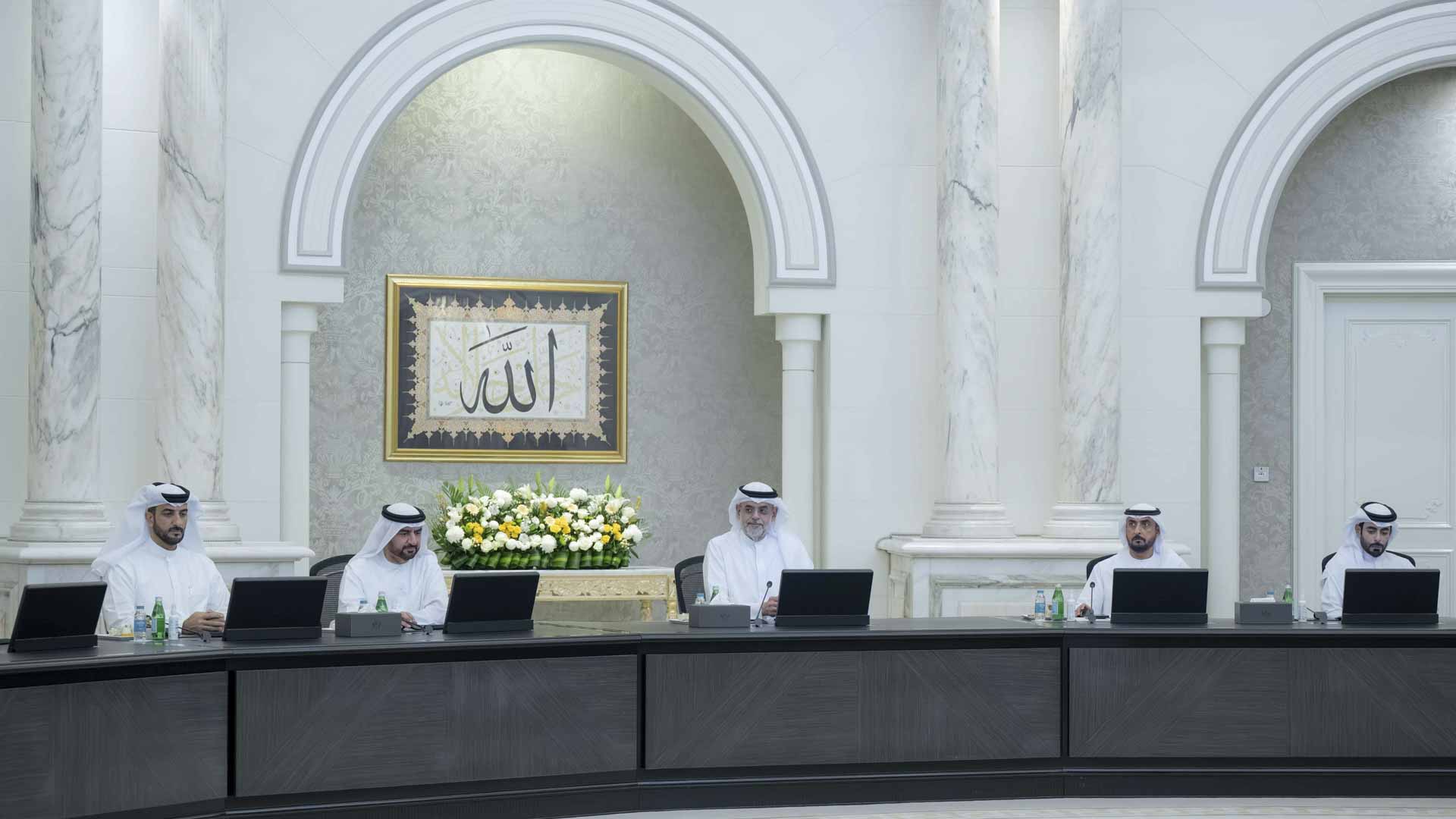
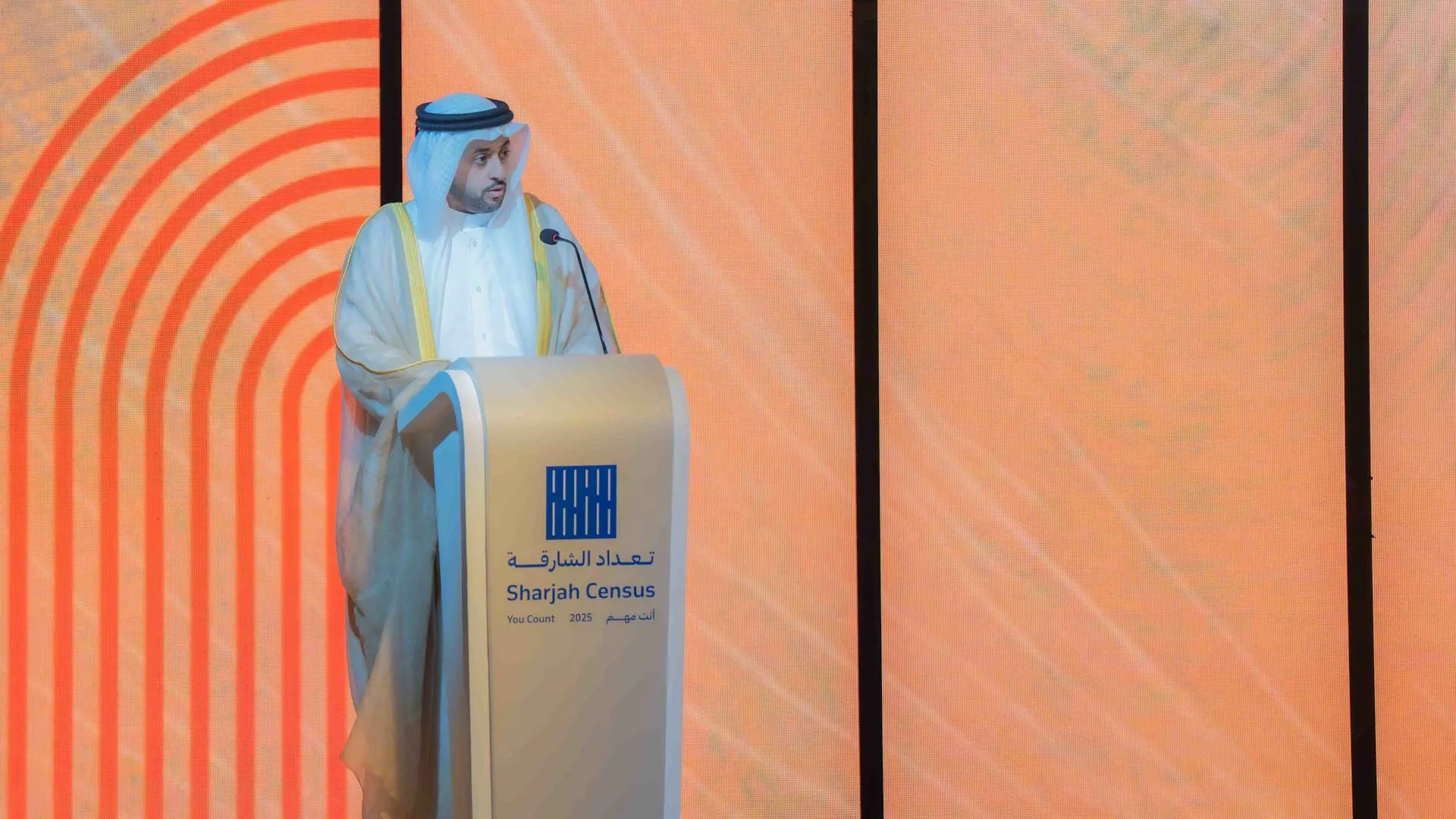
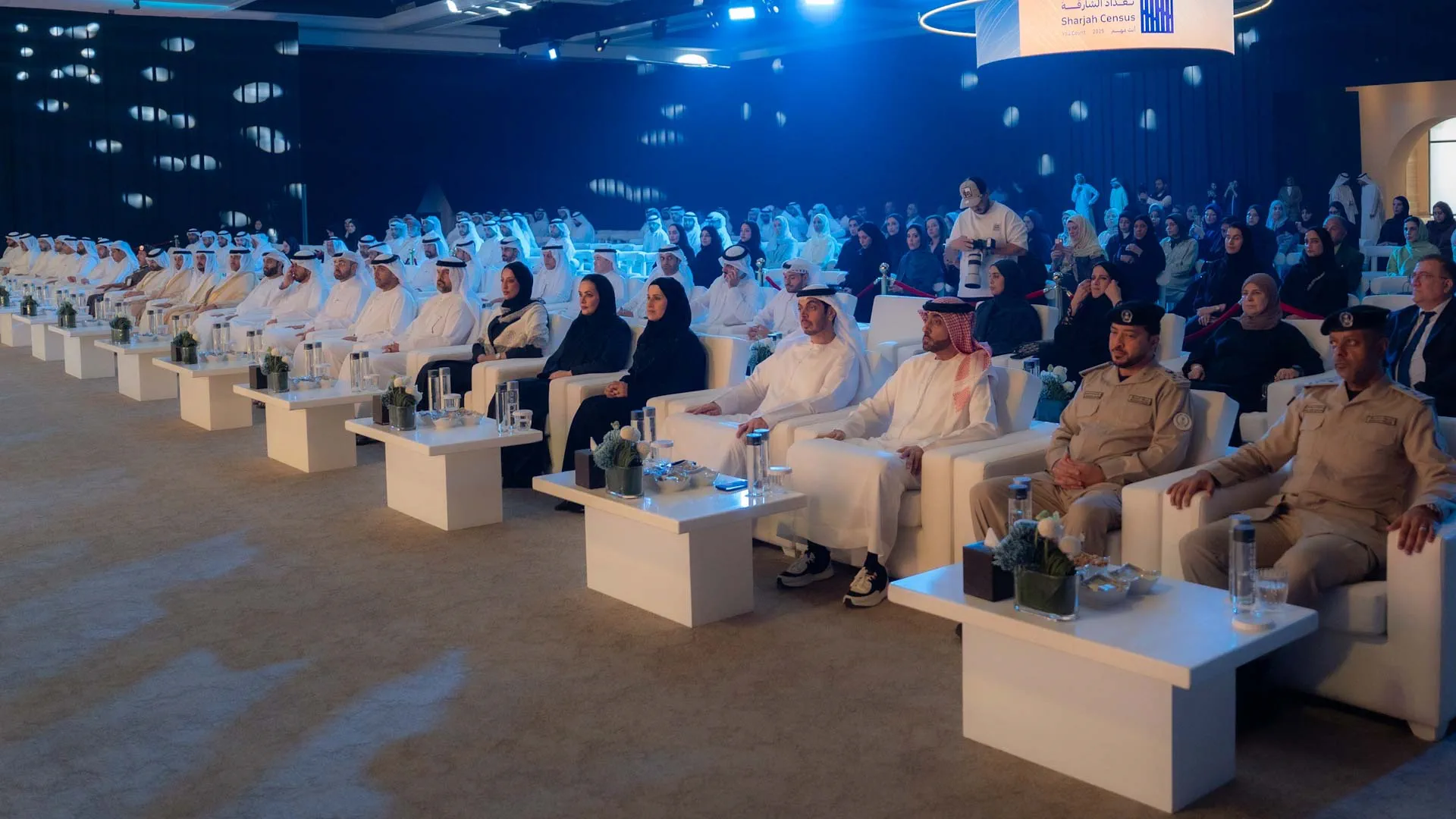
The ceremony began with the national anthem of the United Arab Emirates, after which attendees watched a visual presentation on the history of the census, its importance in the Emirate, and the features of sustainable development achieved over the past decades. Sheikh Mohammed bin Humaid Al Qasimi, Chairman of the Department of Statistics and Community Development, delivered a speech in which he thanked His Highness Sheikh Dr Sultan bin Mohammed Al Qasimi, Supreme Council Member and Ruler of Sharjah, for his inspiring vision, which made people the pivot of sustainable development in the Emirate.
The Head of the Department of Statistics and Community Development emphasised the importance of the census and the benefits these figures bring to development, saying that the value of data is not measured by its size but by its ability to answer future questions before they arise. Accurate data gives the decision-maker insight, not just information, and gives society confidence, not just numbers. Our mission is to turn every statistical indicator into a tool that serves human beings, anticipates their needs, and improves their quality of life.
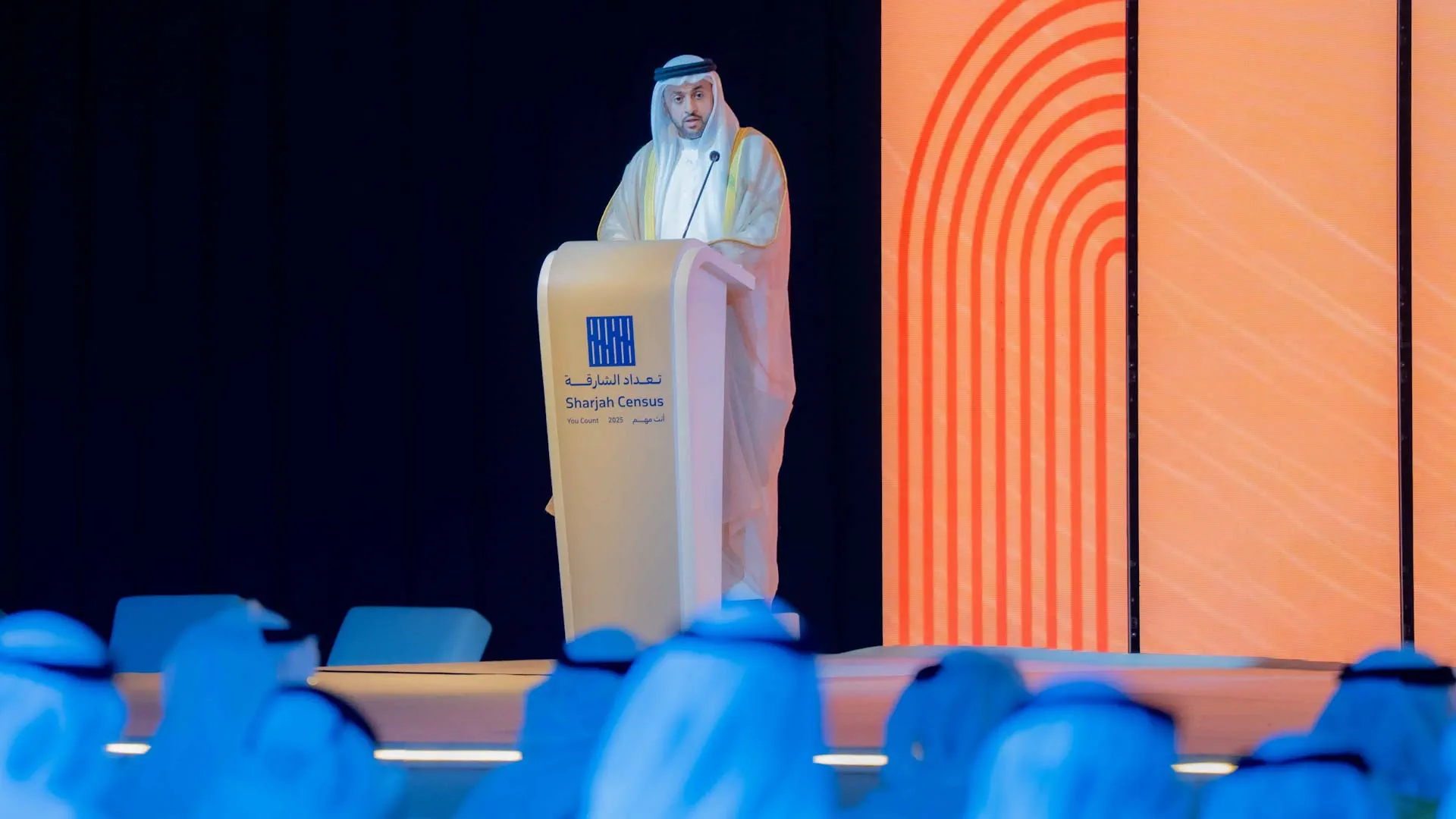
Sheikh Mohammed bin Humaid Al Qasimi added, "We realise today that the world is changing at a rapid pace, forcing us to move from traditional statistics to an integrated smart system in which government records are unified and artificial intelligence and advanced analysis work to anticipate what is to come. This is the direction on which we base our ambition towards 2030, and it is an orientation that makes data a sustainable national wealth and knowledge a real capital for development."
During his speech, the Chairman of the Department of Statistics and Community Development announced that the population of the Emirate of Sharjah has reached 2,135,888 people, and concluded by thanking and appreciating all federal and local authorities for their contributions to the success of the Sharjah Census 2025.
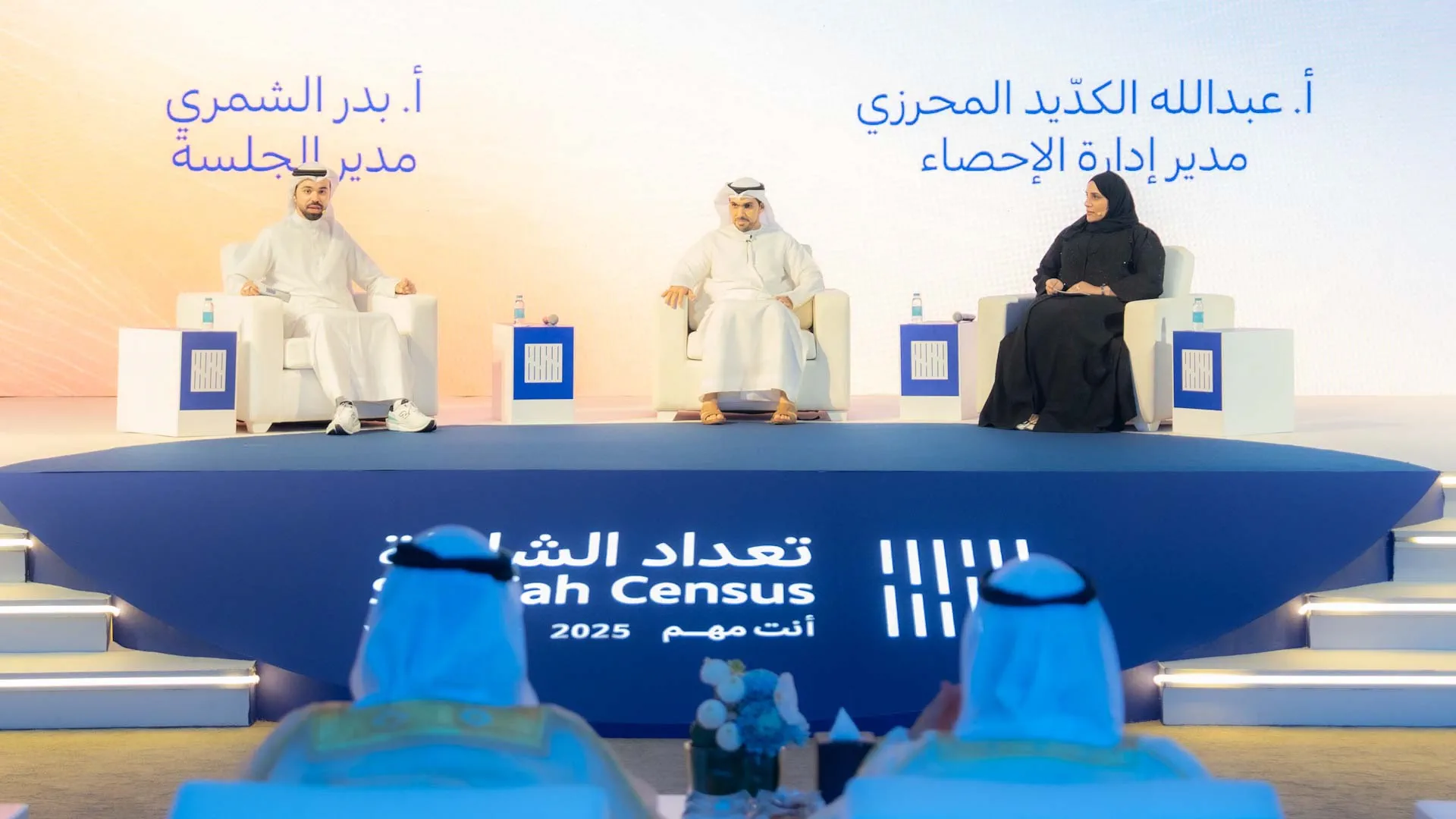
Sheikh Mohammed bin Saud Al Qasimi and the attendees witnessed a dialogue session featuring Abdullah Al Kadeed Al Mehrzi, Director of the Statistics Department at DCSD, and Ruqaya Ali Al Mansoori, Head of the Community Statistics Department at DCSD. The session was moderated by Bader Al Shammari, who addressed the key results of the Sharjah Census 2025, its significance for economic development, and its impact on decision-making across the Emirate.
The results of the "Sharjah Census 2025" showed an increase in the emirate's population, which rose by 51% over the decade 2015-2025. In the population growth index, the number of males reached 1.4 million people, accounting for 67%, while the number of females in the emirate reached 710 thousand people, accounting for 33%. The number of non-UAE citizens reached 1.9 million people, accounting for 89%.
At the level of the population pyramid of Emirati citizens in the Emirate of Sharjah, the total number of Emirati citizens reached 234,431, representing 11% of the total population in the Emirate. The number of male Emirati citizens reached 116,128, or 49.6%, and the number of female Emirati citizens reached 118,213, or 50.4%. The growth rate of Emirati citizens reached 33.6% between 2015 and 2025.
In the index of the geographical distribution of the entire population of the Emirate of Sharjah, the cities are Sharjah with a population of 1,899,202, Khorfakkan with a population of 61,936, Kalba with a population of 59,401, Al Dhaid with a population of 39295, Hamriyah with a population of 22,354, Al Madam with a population of 21,230, Dibba Al Hisn with a population of 16,116, Al Bataeh with a population of 9,077, and Maliha with a population of 7,178.
In terms of the geographic distribution of Emirati citizens across the cities of Sharjah, Sharjah City recorded the largest population, with 134,933 residents, accounting for 58% of the Emirati population. It was followed by Kalba with 34,278 residents (15%), KhorFakkan with 28,628 residents (12%), Al Dhaid with 10,915 residents (5%), and Dibba Al Hisn with 9,848 residents (4%). Meanwhile, Al Madam recorded 6,938 residents (3%), Al Bataeh 3,446 residents (1%), Mleiha 3,234 residents (1%), and Al Hamriyah 2,121 residents (1%).
Under the Education and Employment Index, the distribution of Emirati citizens by education sector showed that 64% were enrolled in government educational institutions, while 36% were enrolled in private institutions. The data also highlighted the diversity of employment sectors among Emiratis, including the federal government, local government, the private sector, the semi-government sector, family businesses, and diplomatic and international organisations.
The social indicators from the Sharjah Census 2025 showed that 67% of Emirati senior citizens use technology, reflecting growing digital engagement among older age groups. The results also indicated an 18% decline in illiteracy rates among Emiratis, highlighting continued progress in educational attainment. The proportion of Emirati citizens employed in the private sector rose by 178%, underscoring the success of national efforts to enhance Emirati participation in the private labour market.
According to the Sustainability Indicators, 18.6% of residential units used alternative energy sources, while 71.3% of homes were equipped with safety and security systems. The census also found that 69.7% of villas had landscaped or planted areas, reflecting growing attention to environmental sustainability and the quality of residential living environments across the emirate.
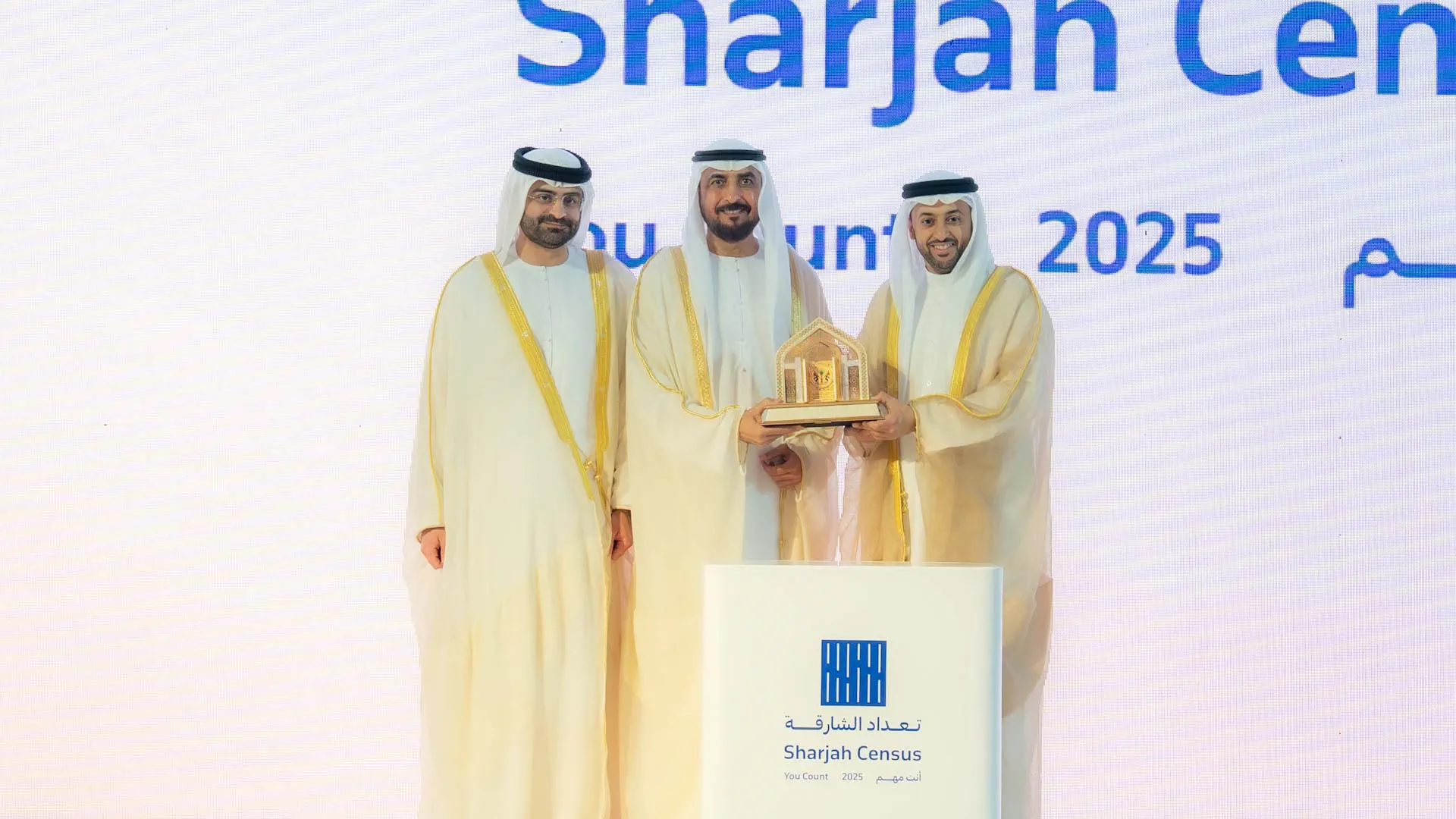
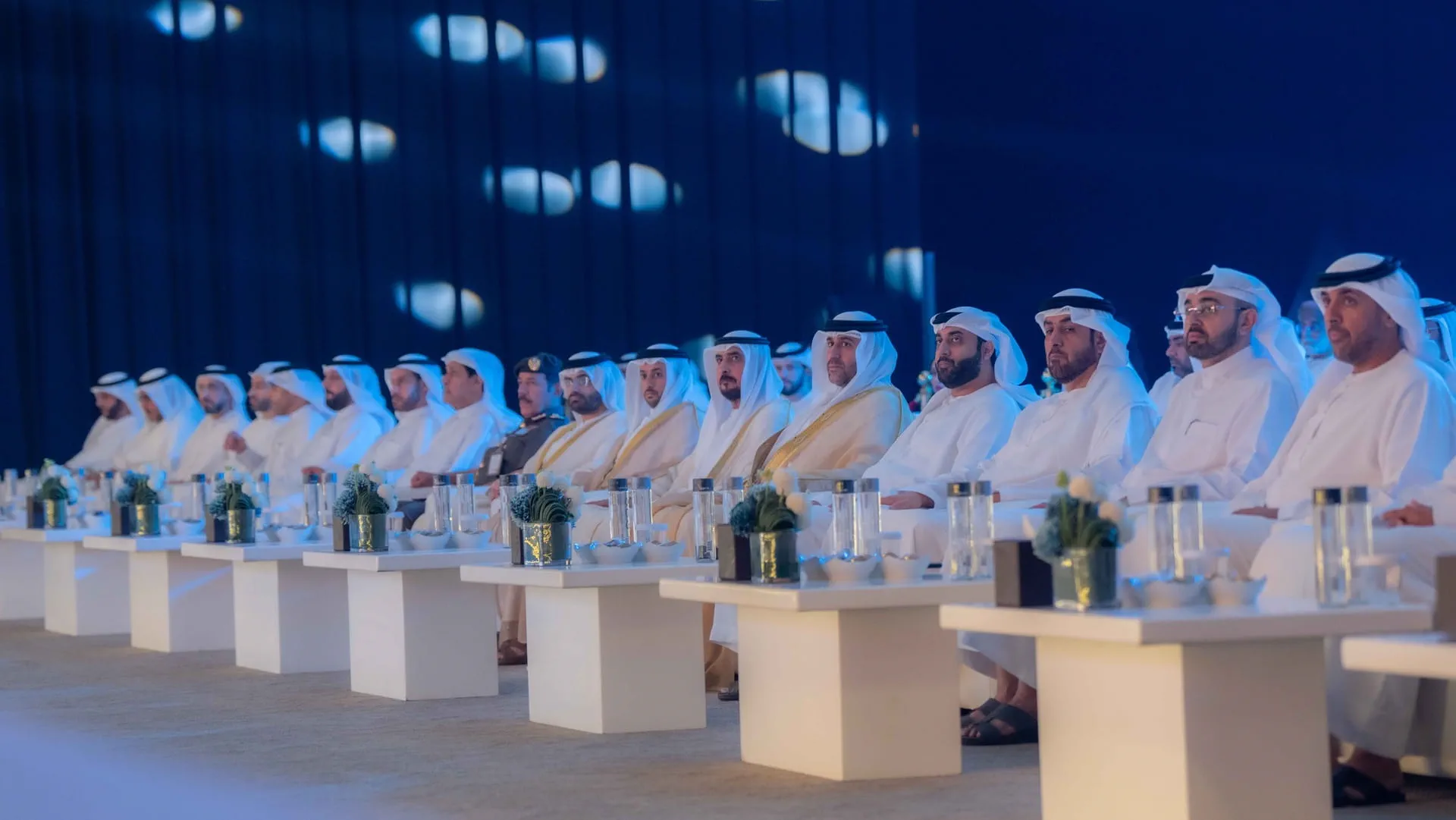
Sheikh Mohammed bin Saud Al Qasimi honoured the government and private entities, as well as individuals, who contributed to the success of Sharjah Census 2025, and posed for commemorative photographs with them. He also received a commemorative gift from Sheikh Mohammed bin Humaid Al Qasimi in appreciation of his attendance at the ceremony and for honouring the census partners and supporters.
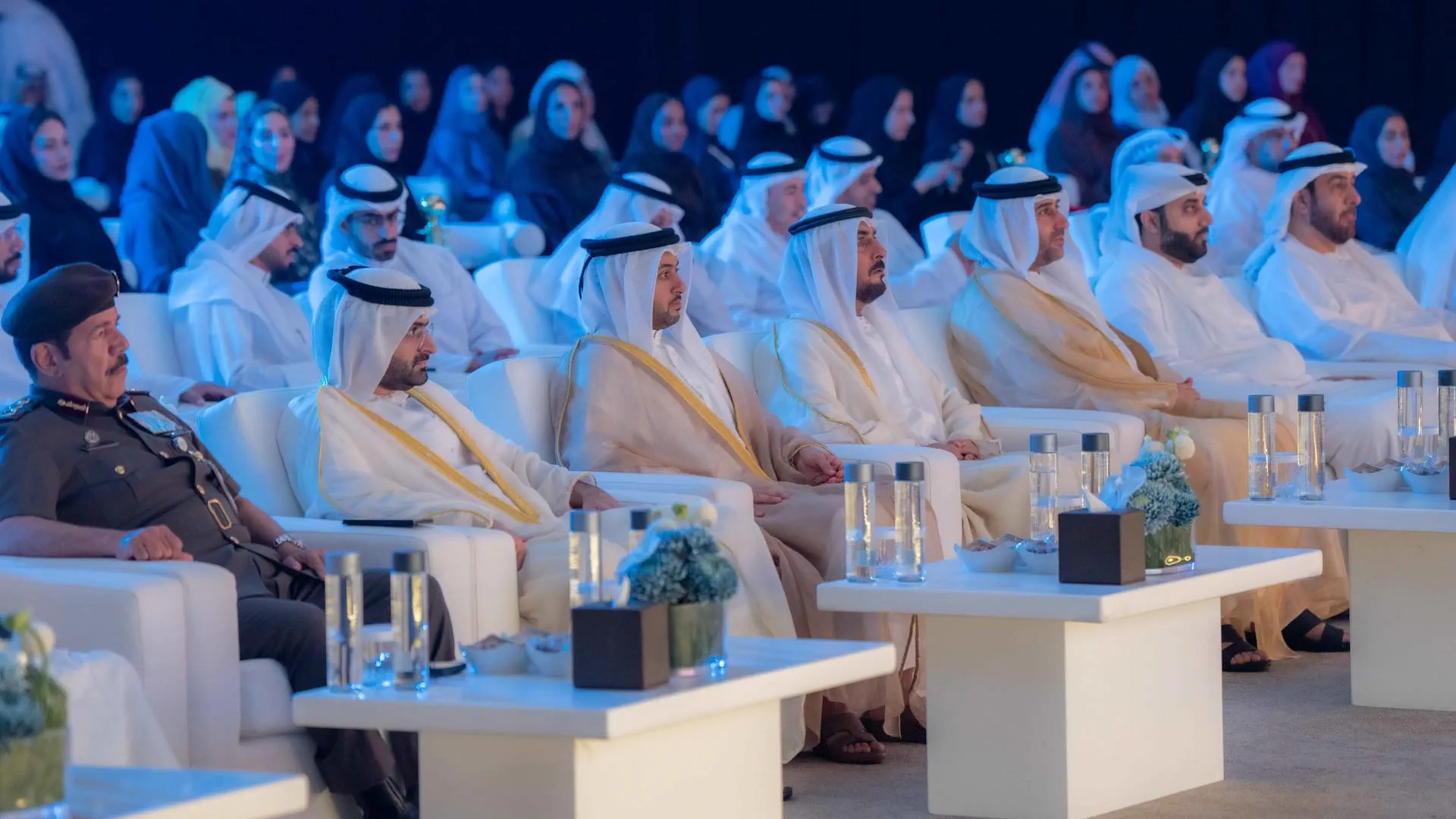
The ceremony was attended by Sheikh Mohammed bin Humaid Al Qasimi, Chairman of the Department of Statistics and Community Development; Sheikh Majid bin Sultan Al Qasimi, Chairman of the Districts Affairs Department; Sheikh Sultan bin Abdullah bin Salem Al Qasimi, Director of the Department of Statistics and Community Development; and Sheikh Mohammed bin Abdullah bin Majid Al Qasimi, Director of the Department of Municipal Affairs, together with a number of chairpersons and directors of government entities and departments.

 For an optimal experience, please
rotate your device to portrait mode.