Loading...
Loading...


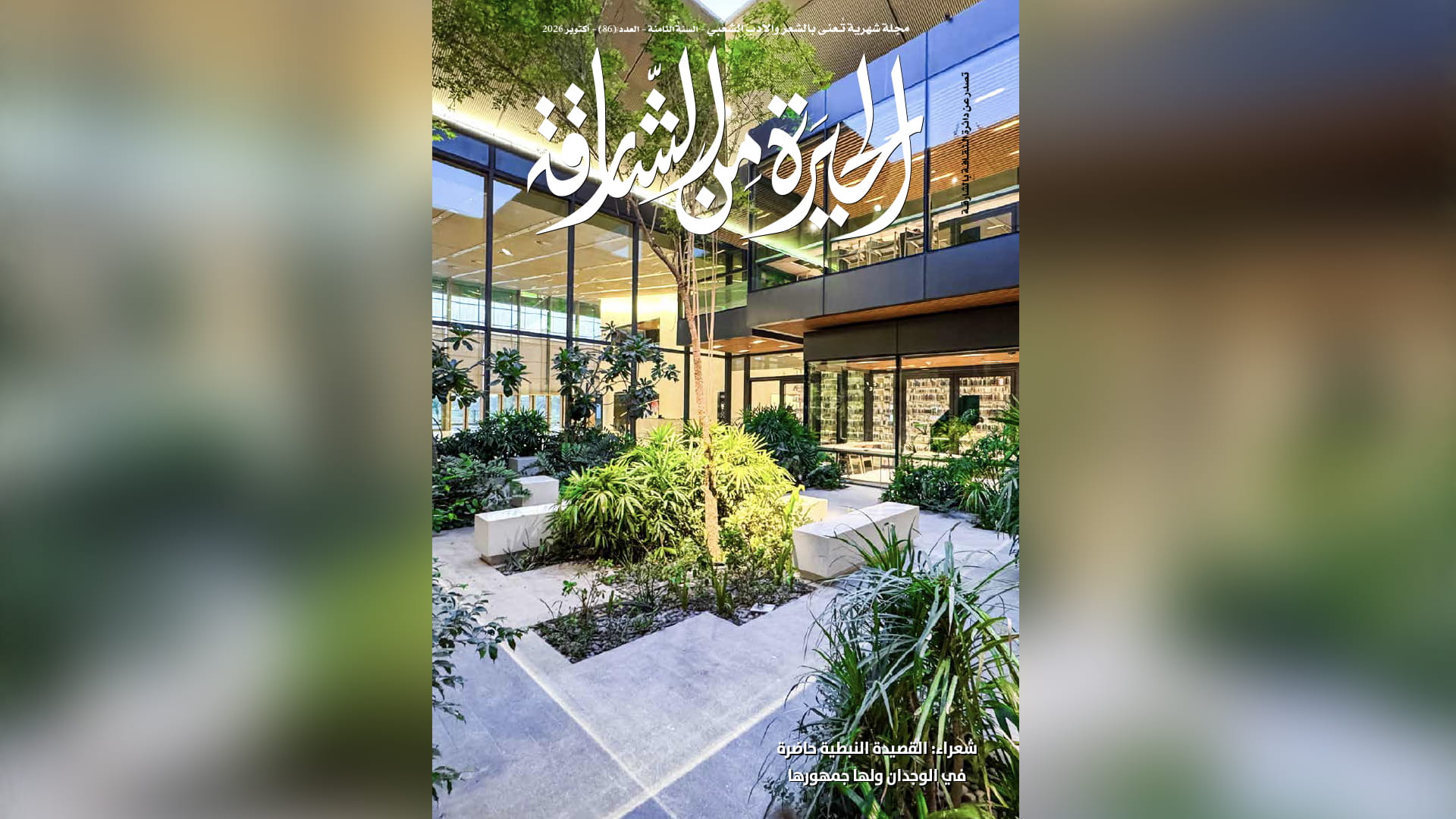
The editorial, titled “Sharjah’s vision and knowledge-building”, highlights the Emirate of Sharjah as a genuine model among the world’s leading cultural and scientific cities. It notes that the emirate has established a civilisational cultural project based on a comprehensive vision that places science and culture at the heart of development and advancement.
The project begins with building the individual as its highest goal, cultivating awareness, thought and talent, and extends to supporting scholars, writers, artists, researchers and creative figures of different backgrounds and nationalities, as well as launching a range of cultural initiatives and projects. The editorial attributes the achievement to the role of Sheikh Dr Sultan bin Mohammed Al Qasimi, Member of the Supreme Council and Ruler of Sharjah, whose academic, research and cultural background contributed to shaping this enlightened project, which places science, knowledge and culture among its highest priorities.
In his article “Intertextuality and the travelling text”, managing editor Nawaf Younes argues that the critic and writer Ezzat Omar was among those who most effectively explored and articulated the concept of intertextuality. Omar has published more than 30 critical works, alongside books on novels, short stories and children’s literature.
In his book The Travelling Text, Omar clearly demonstrates that creative writing is connected, on both individual and collective levels, through continuous interaction among cultures. Writers often receive and absorb other texts and then reproduce them within the spatial and temporal framework of their own culture, through interaction and influence, whether the work is poetic, narrative or artistic.
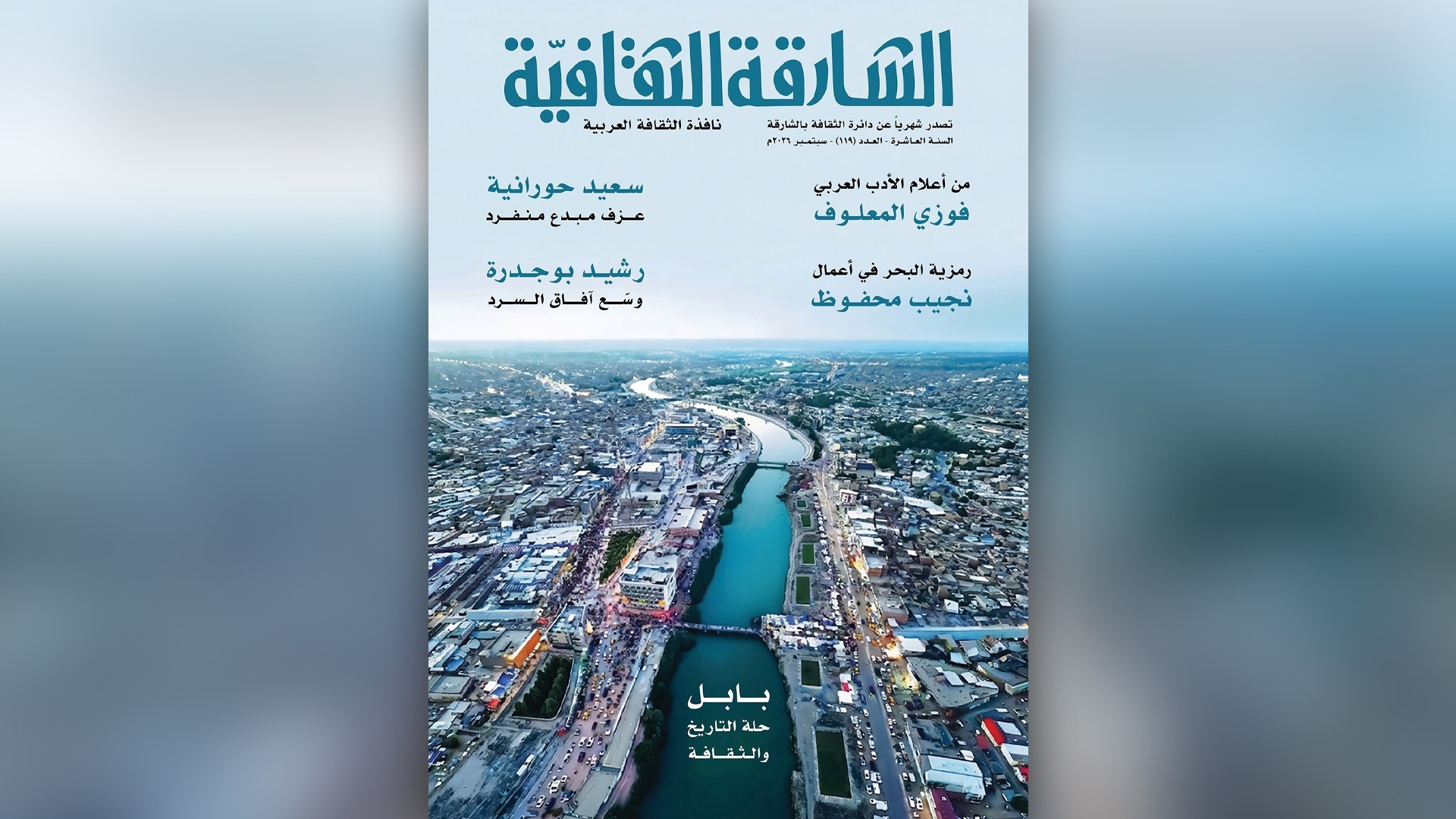
The issue features Dr Rasha Ghanem’s examination of the work of Fawzi Al-Maalouf, described as a lyre playing the emotions and dreams of the émigré experience. Abdelhakim Al-Zubaidi writes about Adel Suleiman Jamal, one of the leading scholars of Arabic heritage manuscripts.
Shihab Al-Kaabi celebrates the historic city of Babylon, one of the oldest civilisations in the world, while Aqeel Al-Naem explores the heritage of Al-Rastan, the “lyre of the Orontes” and guardian of history.
The Literature and writers section includes a wide range of studies and interviews. Dr Maryam Aghris examines the symbolism of the sea in the works of Naguib Mahfouz, while Hassan M. Youssef traces the life of Saeed Houraniyeh, caught between aspirations and reality.
Omar Ibrahim Mohammed explores the literary journey of Abbas Al-Musafi, who wrote poetry and prose. Ziad Al-Rais examines Rachid Boudjedra’s novel A Thousand and One Years of Nostalgia, in which the writer reimagines history.
Warad Khodr looks at the life of Abdelaziz Daqmaq, who established a strong presence in Syrian poetry, while Raya Al-Aji explores the work of Charbel Dagher, whose writing combines the precision of the researcher with the vision of the literary author.
Jamal Al-Sharqi interviews poet Dr Mohammed Hussein Al Yassin, who has successfully transformed ideas into poetry. Nesreen Antonios reviews Hassan Nasr’s novel Dar Al-Basha, which interrogates memory and time.
Awad Ali discusses the work of poet Ali Al-Ameri, described as a multidimensional creative phenomenon. Dr Majd Haidar takes readers into the fictional world of Joseph Conrad, one of the greatest writers in English literature.
Hisham Eid examines the risks associated with first-person narration, while Wafiq Safwat Mokhtar highlights Ahmed Hassan Al-Zayyat’s position at the forefront of cultural journalism.
Dr Jihan Al-Shandawili writes on Francophone fiction and transcontinental identity. Abdelnabi Astaif examines the elusive concept of inspiration, which stimulates the human psyche and drives creativity.
Hisham Azkideh meets Ahlam Nouiwar, who specialises in children’s writing and has an interest in folk tales and oral heritage. Alaa Abdelhadi explores the strange reality depicted in Jalal Barjas’s short-story collection A Thin Man Possessed by a Lame Fat Man.
Under Art, strings and brush, the magazine presents a range of studies spanning visual art, theatre, cinema, music and drama. These include “Raya Al-Rais: Rhythms of colour and poetic spectrum” by Adeeb Makhzoum; “Edvard Munch: Exploring the depths of the human self” by Hana Al-Darwish; “Abdelrahman Muhanna: Combining realism and expressionism” by Abdulrazzaq Shahrour; “Khaled Al-Ustad: Paintings that resemble dreams” by Shimaza Fawaz Al-Za’al; and “Hussein Bikar: A rich artistic history and a luminous legacy” by Anwar Al-Dishnawi. The section also features “Farouk Hilal: One of Iraq’s leading artists” by Ali Sakr; “Alfred Farag: One of the foremost Arab playwrights” by Nahla Ehab; “Salah Al-Qasab and the theatre of images” by Dr Bahaa Mahmoud Alwan; “Alienation techniques in theatrical text and performance” by Louay Shana; and “Science fiction in Arab cinema” by Osama Assal.
The Under the spotlight section features readings and reviews addressing subjects including Arabic poetry and the paths of form and meaning, isolation and integration in the story “Here lies the secret of friendship!”, Aristotle’s ideas about women, the folk tale from oral transmission to writing, the interaction between digital media and narrative, and discursive structures in contemporary Arabic poetry.
The issue also brings together a substantial selection of essays. Among them are “Global testimonies on Islamic civilisation” by Walid Ramadan; “Mohammed Al-Murr and travel literature” by Youssef Ali Al-Ghadban; “Nabil Suleiman in Tattoos: An alternative model of autobiography” by Malek Saqour; “Cultural openness to the other” by Mohammed Al-Hourani; “Al-Rahima: A distinctive literary and cultural project” by Itidal Othman; “Mansoura Ezz Eldin and the aesthetics of interpretation in her novel The Orchards of Basra” by Dr Howayda Saleh; and “The manifestations of Izzat Al-Qamhawi and the power of the sea” by Wifaq Salman.
The essays also include “Appealing to reason and ethical values” by Rouz Makhlouf; “The eight heads of the sciences according to the scholar Mohammed bin Ali Al-Tahanawi” by Saeed Yaqtin; “Texts addressing time and place in Mirrors of the Final Scene” by Intissar Abbas; “Imad Al-Jallasi and science fiction literature” by Mustafa Abdullah; “Ahmed Ratib Al-Nafakh: The scholar, writer and researcher” by Sawsan Mohammed Kamel; “Culture and artistic and linguistic adaptation” by Manal Mohammed Youssef; and “The failure of attempts to undermine Modern Standard Arabic” by Ahmed Farhat.
Further contributions address travel literature and understanding the other by Dr Ahmed Saad El-Din Ayta; “The poet and the vitality of the self” by Mazen Al-Alaiwi; “Creativity in the age of artificial intelligence” by Hani Bakri; “Digital trends and transcending the boundaries of reality” by Sami Mahmoud Taha; “Hossam Al-Din Shaaban: Combining the human dimension with a critical vision” by Abdelraouf Touti; “Ariane Mnouchkine made the spectator a partner in producing meaning” by Nour Ghanem; “Yaqub Al-Sharouni, the last of the pioneers of children’s literature” by Faraj Mujahid Abdelwahab; “The final call in the play The Depths of the Soul” by Magdy Mahfouz; “Documentary literature” by Prince Kamal Faraj; and “Criticism and the flourishing of poetry” by Tawfiq Ahmed.
The issue also devotes space to a selection of short stories and translations by a group of Arab writers and creative figures. These include Hossam Al-Din Yahya’s “A Smooth Wall”, a short story, accompanied by Dr Atef Al-Batrous’s reading “A Smooth Wall: A psychological edifice within a cohesive dramatic structure”.
Other short stories include Eid Abdelhalim’s “An Incomplete Childhood”, Amal Sobhi’s “A Fruitful Talisman”, Marwan Naseh’s “O Gentle One”, and Samir Hakim’s “Light Coming from Above”. The issue also features Ahmed M. Ahmed’s translated poem “He Will Not Be Easily Domesticated”.
In addition, the Echoes section examines Amr ibn Al-Ahtam, whose fame did not match the reach of his poetry, in an article by Wael Al-Jashi. The Adabiyat section by Fawaz Al-Sha’ar explores the aesthetics of language, philology and poetry, and includes a reading of poet Jassim Al-Sahih’s poem “In Love, Goodness and Peace” by Dr Akram Jamil Qanbas.

 For an optimal experience, please
rotate your device to portrait mode.


.jpg?h=1080&w=1920&hash=7248A928F95D9CBF3BE1E50C01ADF230)