Loading...
Loading...


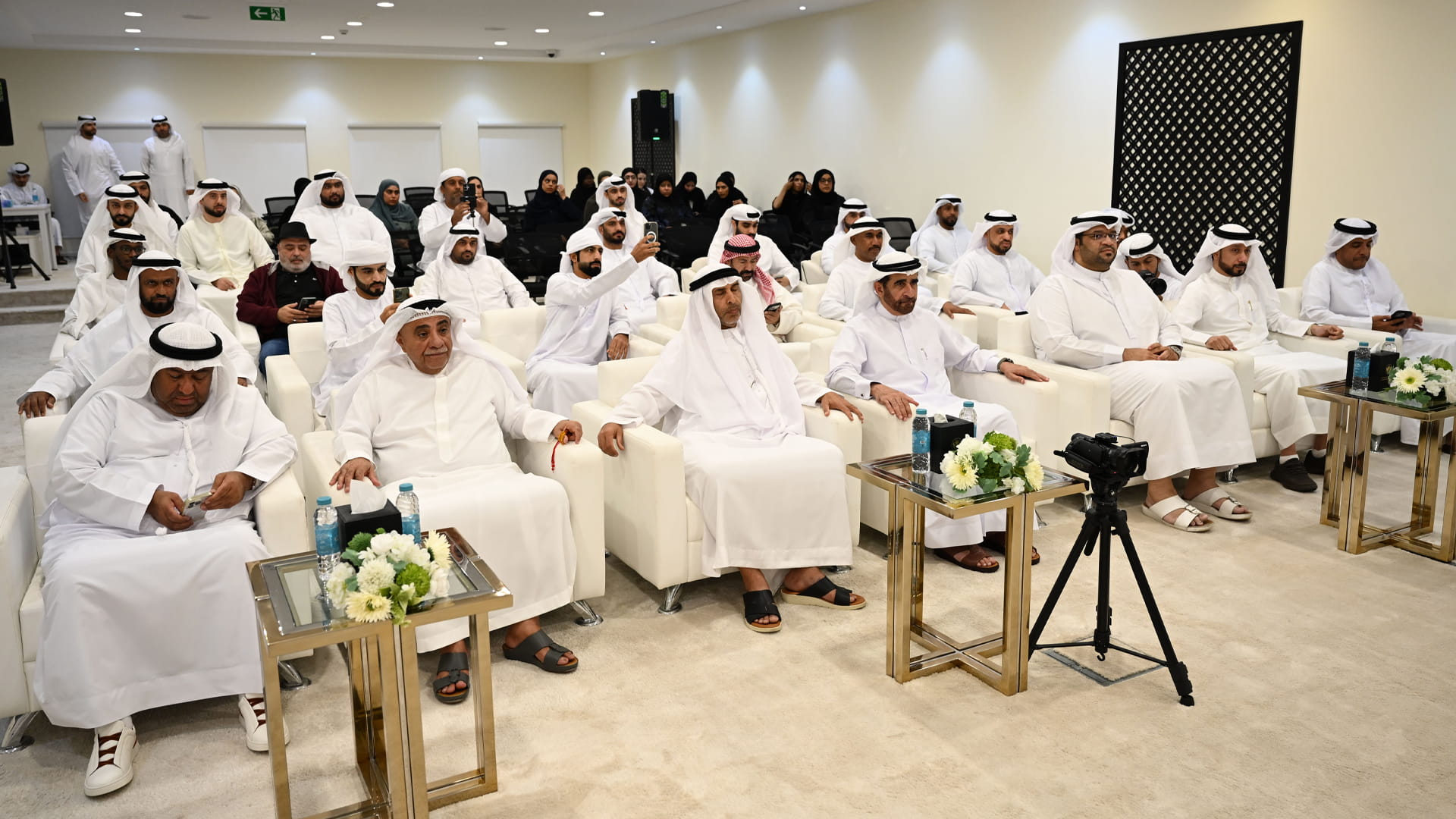
The festival’s daytime programme featured an accompanying intellectual forum titled “World Theatre and Its Role in Developing Directing Talent”, held at the Kalba Folk Arts and Theatre Association across two sessions. The discussions examined how enduring theatrical works can help develop the skills of emerging directors.
The event was attended by Ahmed Bourhaima, Director of the Department of Theatre at the Department of Culture and Festival Director.
The first session was moderated by Emirati artist Ibrahim Salem. Egyptian theatre researcher Dr Rania Fathy opened the session with a paper titled “Drawing Inspiration from World Theatre and Its Impact on the Amateur Director’s Vision”.
She highlighted the role of masterpieces of world theatre in equipping amateur directors with the tools and skills needed to develop their artistic identity and understand how to shape their individual directorial style.
Fathy stressed that drawing inspiration does not mean imitation, but rather involves analysing and interpreting a theatrical text before reformulating it through an independent artistic approach. She presented practical examples of young Egyptian directors who drew inspiration from Hamlet to develop diverse psychological, social and political interpretations.
She concluded that the world theatrical heritage provides a powerful stimulus enabling amateur directors to develop their own artistic experiences and establish their individual identities.
The second paper, “Classics and Paths to Developing Directorial Awareness: What Paradoxes?”, was presented by Tunisian theatre researcher Abdel Fattah Al Kamel.
He examined the relationship between emerging directors and world theatre texts, explaining how these classics can shape a director’s awareness and artistic vocabulary, particularly when directors avoid adhering rigidly to the original text and transform it into a living stage work.
Al Kamel also discussed challenges facing amateur theatre productions, including aesthetic questions surrounding the body, scenography and cultural translation when working with international theatrical texts. He stressed that successful productions based on world theatre require what he described as “creative betrayal” and the creation of a lively dialogue with contemporary audiences.
The second session was moderated by Emirati artist Abdullah Masoud. Syrian artist and researcher Dr Jamal Al Munir presented a paper titled “The Development of Directorial Skills Between Text and Performance”.
He explored the various roles that world theatre texts can play in shaping young directors, including developing their ability to understand events, uncover meanings within texts, construct dramatic lines and generate actions.
Al Munir noted that Shakespeare’s works, for example, confront young directors with complex dramatic structures and major human conflicts, potentially contributing to the development of their ethical and spiritual perspectives. Chekhov’s works, meanwhile, can help directors refine their methods by exploring complex emotions and paying attention to everyday details.
Syrian researcher Matar Hussein then presented “World Theatre Texts and the Promising Director: Meaning and Context”, focusing on the role of short international plays in developing the artistic capabilities of emerging directors.
He explained that short texts require a high degree of concentration in structure, relationships and time, obliging directors to carefully consider the significance of every detail. He also addressed the challenges of transferring a text from its original historical and cultural context into a new performance context while preserving elements that may be unfamiliar or challenging for the target audience.
Hussein traced the transformation of a text from an abstract dramaturgical reading into a directorial concept and then into practical experimentation on stage using different performance tools, including the body, lighting, music, time and spatial distance.
He emphasised the importance of careful selection in establishing the internal rhythm of a performance and determining the audience’s position. He concluded that repeated engagement with short international texts functions as a comprehensive “theatre laboratory” that helps promising directors make informed artistic decisions and gradually develop their own intellectual and aesthetic identities.
The forum’s final contribution, “World Theatre Texts and Cultural Difference: A Directorial Vision”, was presented by Tunisian researcher Dr Sami Amri.
He explained that world theatre texts offer rich and adaptable material that can directly contribute to developing young directors’ capabilities and experience by broadening their artistic and imaginative horizons and providing analytical tools.
Such texts require directors to explore details, understand characters’ motivations, unpack events and uncover underlying meanings. Working with these texts also teaches young directors how to rewrite theatrical discourse and develop visual and aesthetic concepts, including scenography and lighting, to suit the tastes and circumstances of their society and era.
Amri added that revisiting classical schools of world and Arab theatre provides directors with practical experience in addressing major human challenges within the context of contemporary audiences and connecting the past with the present.
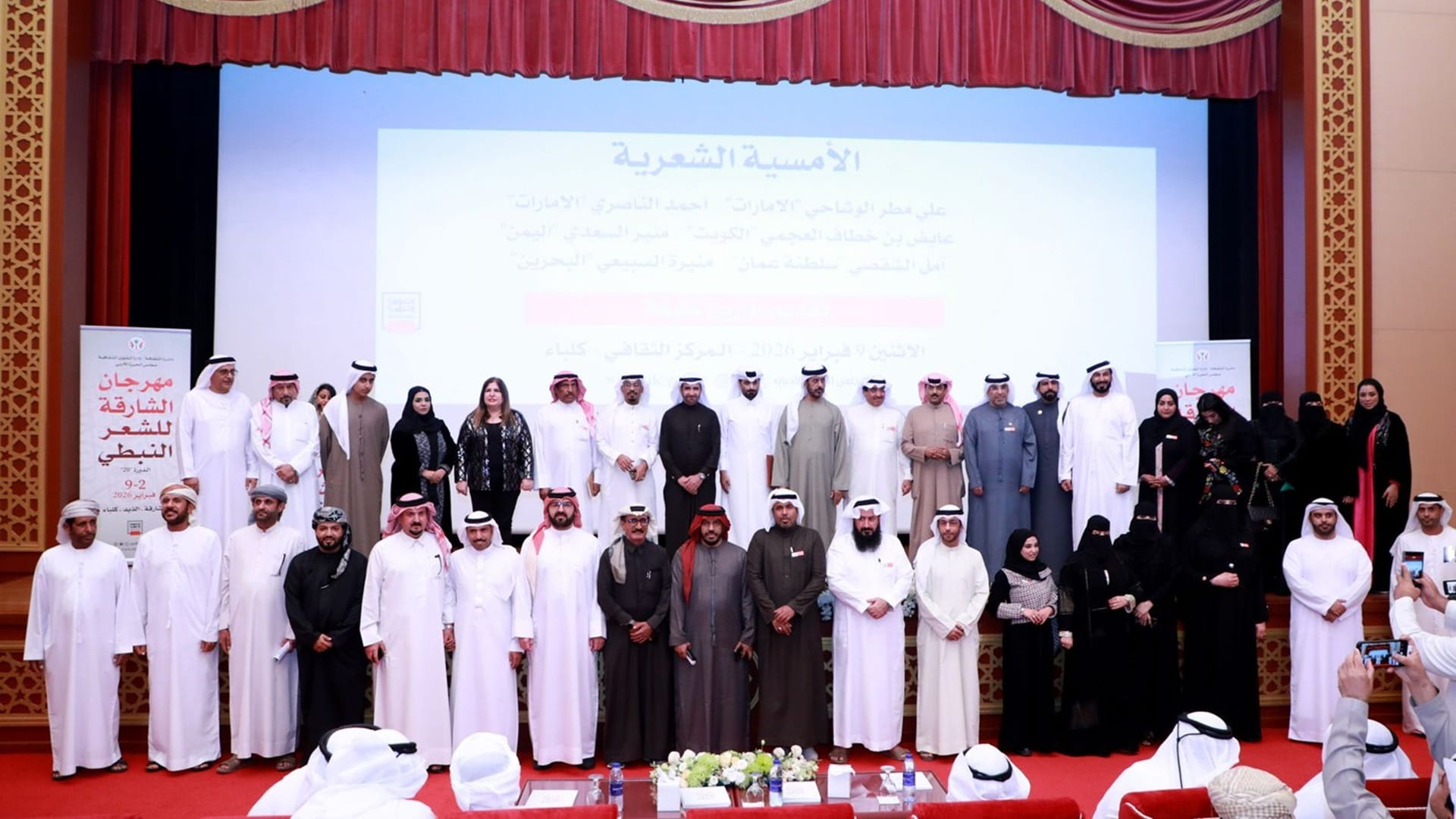
At the conclusion of the forum, festival coordinator Alia Al Zaabi presented certificates of appreciation and participation to the contributors.
The evening programme on the third day featured three performances at the Kalba Folk Arts and Theatre Association, each followed by a critical discussion.
The first was “The Last Order”, adapted from Irwin Shaw’s The Deadly and directed by Mohammed Al Obeidli. During the discussion that followed, Tunisian theatre researcher Walid Belhadi Mansour praised the director’s sensitive artistic treatment of the original text following its careful adaptation.
The second performance, “Fingers See the Light”, was adapted from William Gibson’s The Miracle Worker and directed by Mohammed Habib Kasban. Tunisian researcher Ahmed Taha Al Hamrouni praised the director’s artistic solutions in dealing with a tightly structured text that offers little room for spoken dialogue.
The third performance, “Rada”, was written by Alfred Noyes and directed by Waad Tariq. Moroccan theatre researcher Aisha Betsaid took part in the critical discussion that followed the performance.
The audience award for acting went to Mansour Ahmed Al Zaabi for his role in “The Last Order”, while artist Faisal Al Darmaki attended as a guest of honour.

 For an optimal experience, please
rotate your device to portrait mode.