Loading...
Loading...


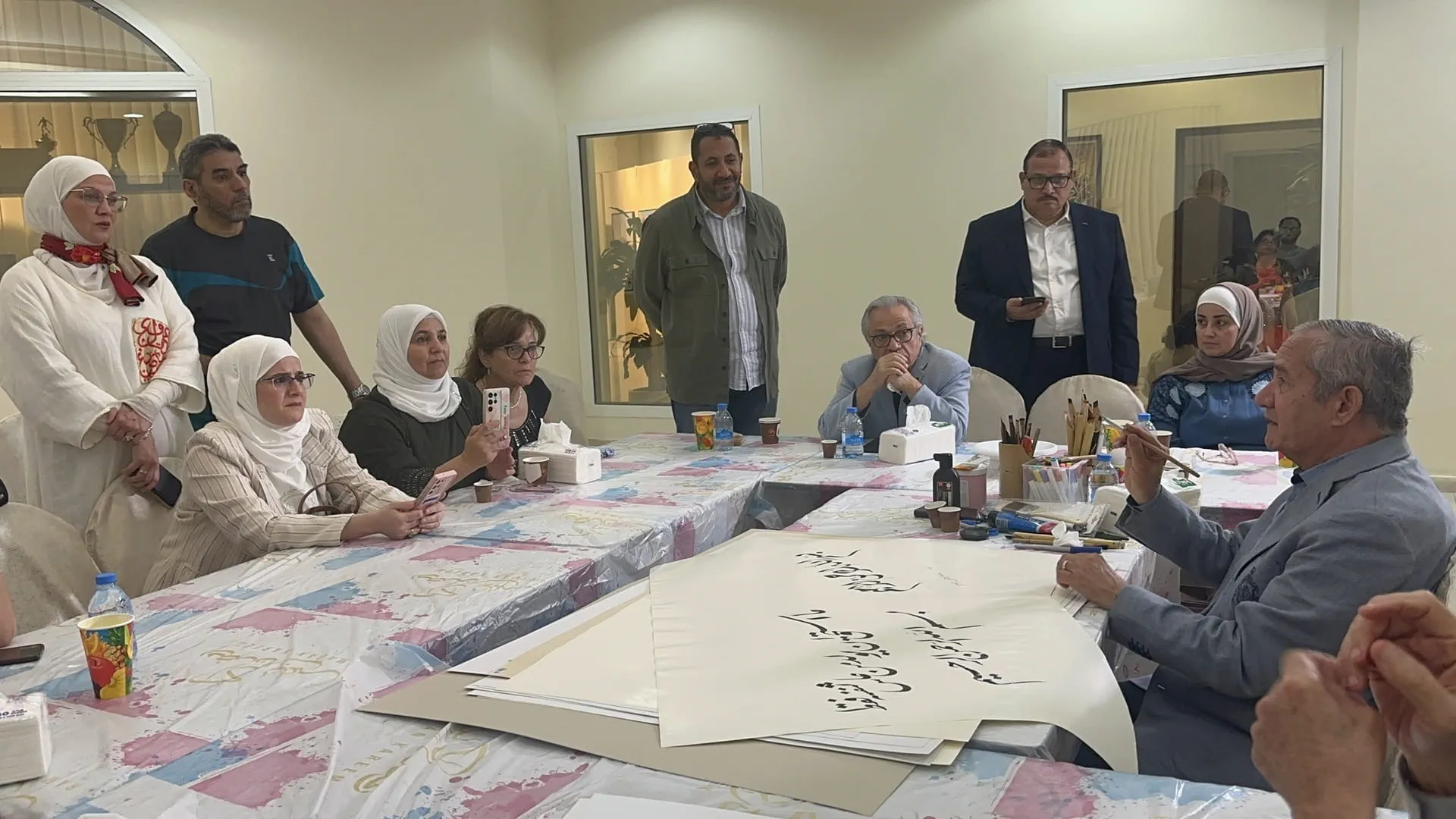
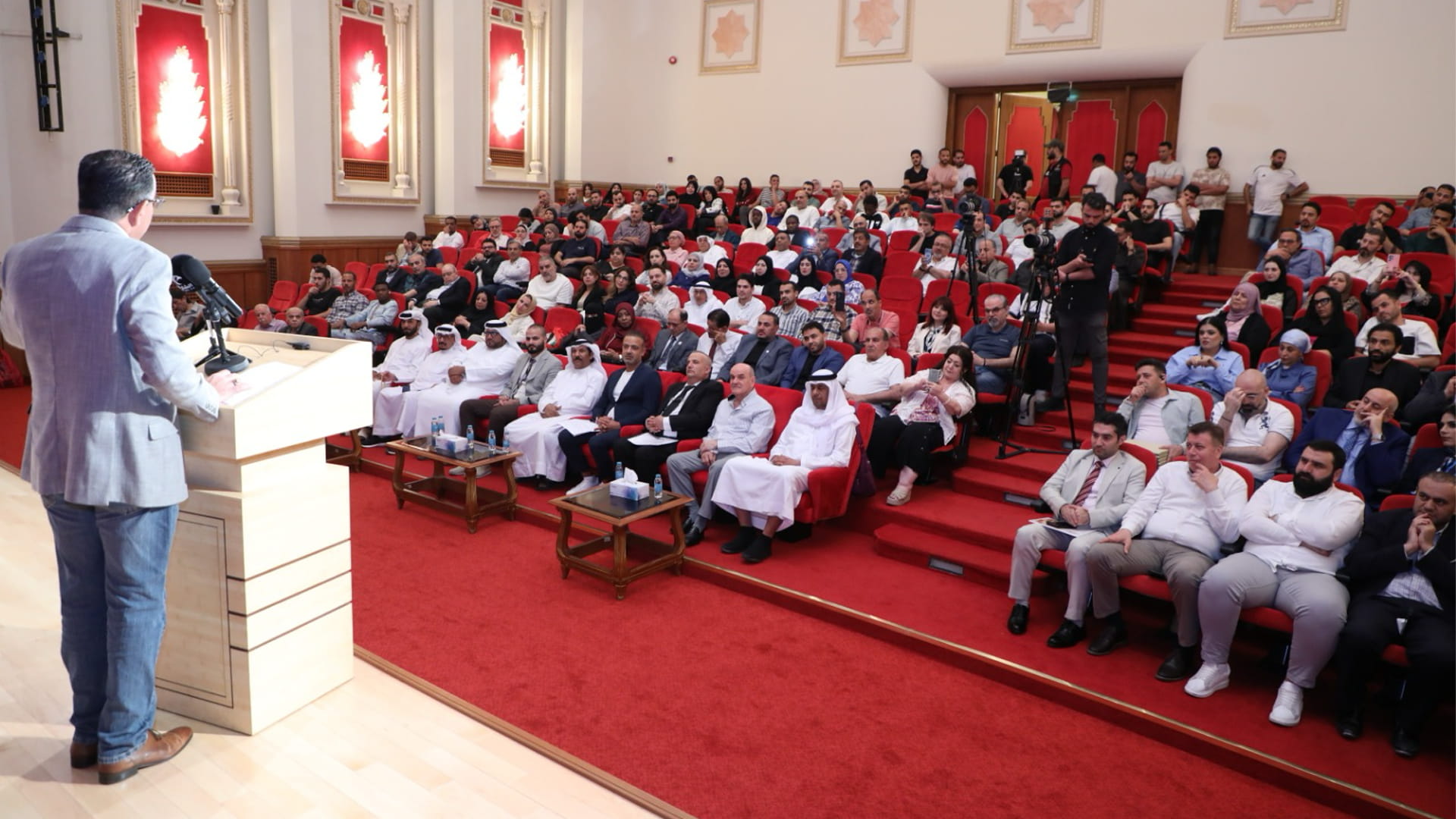
Calligrapher Khalifa Al-Shimi, head of the club's art committee, presented explanations and live demonstrations of the calligraphic and formative uses of Arabic letters. He also provided historical insights into the origins of Arabic script, the influence of reed pens on its development, and the rules established by the masters of this art, which have ensured its continuity and evolution.
Khalifa Al-Shimi began his workshop by discussing the history of calligraphy and how its rules were established. He explained that the stages of developing Arabic calligraphy led to its exceptional levels of beauty. This prompted the Abbasid calligrapher and minister Ibn Muqlah to establish general rules for calligraphy, transforming it from its ordinary form into a complete art form encompassing elements of beauty, creativity, and development. Among the most famous of these rules are the dot and the circle. The length of letters is measured by the dot, while their extensions and circularity are measured by the circle, whose diameter is the letter alif. A balance between the lengths and the circles is essential.
Al-Shimi added that the reed pen is also a significant factor influencing the development and diversification of calligraphy. The size of the reed used to make the pen, the purpose of the cutting, and the thickness of the cut at the tip all affect the size of the lines, the dimensions of the letters, and the overall quality of the script. He stated that the finest reeds come from Turkey, Iran, Egypt, Iraq, and several other countries. Specialists have established criteria for distinguishing the quality of a reed. He noted that while there are now types of synthetic metal pens that mimic the reed, they lack its efficiency and flexibility. He explained that one of the advantages of the reed is its ability to adapt to the calligrapher's fingers according to finger length and pressure applied to the pen, resulting in distinctive letters. This gives the calligrapher a unique writing style, allowing for immediate recognition of their handwriting.
Al-Shimi then reviewed several calligraphic styles (Thuluth, Diwani, Naskh, Nasta'liq, Ruq'ah, and Kufic), outlining the rules of each, the range of letter lengths, the possibility of combining letters, and the decorative forms their letters allow. Al-Shimi showcased his calligraphic works in various scripts, demonstrating his techniques, style, and the types of inks he uses.
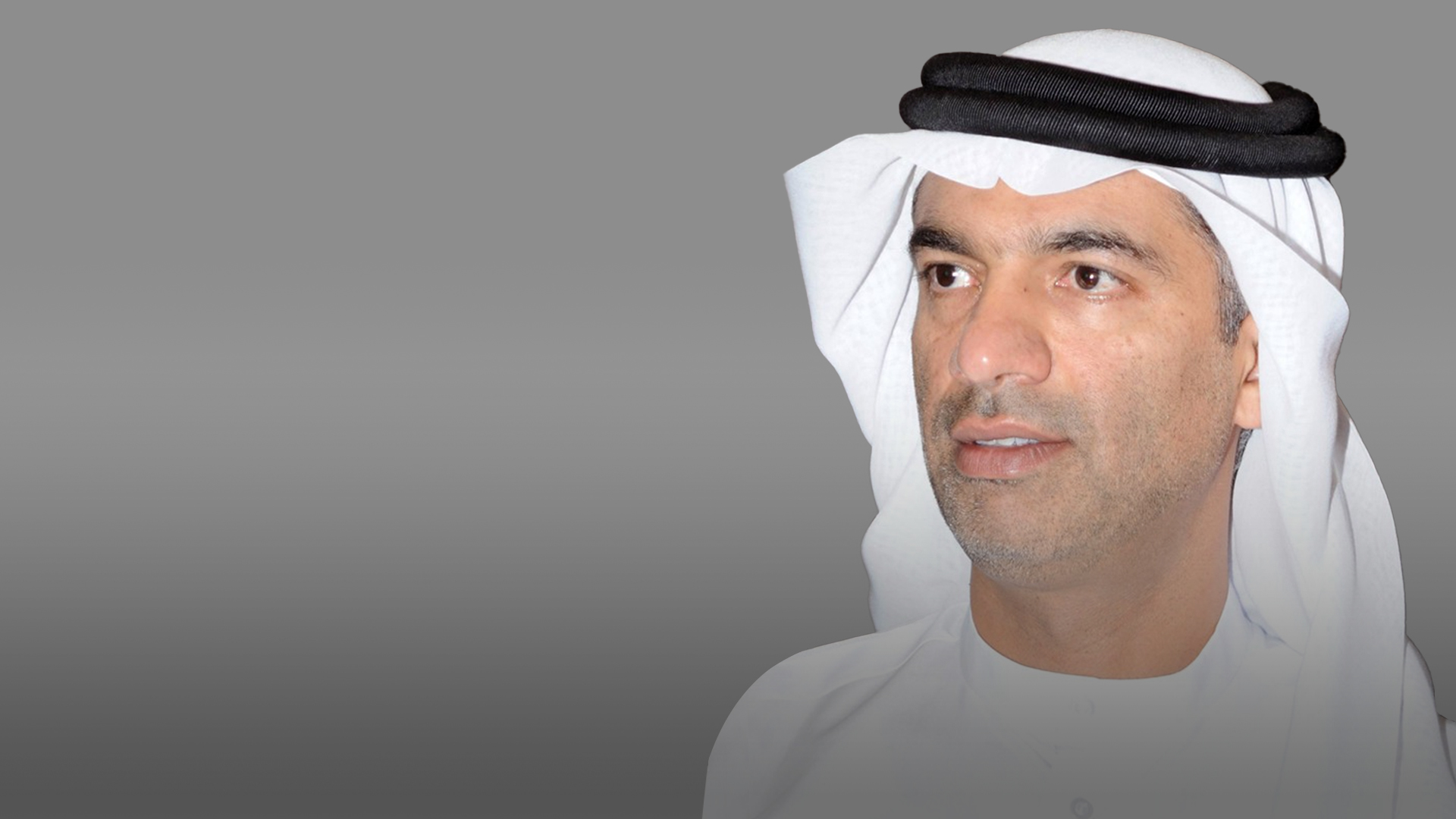
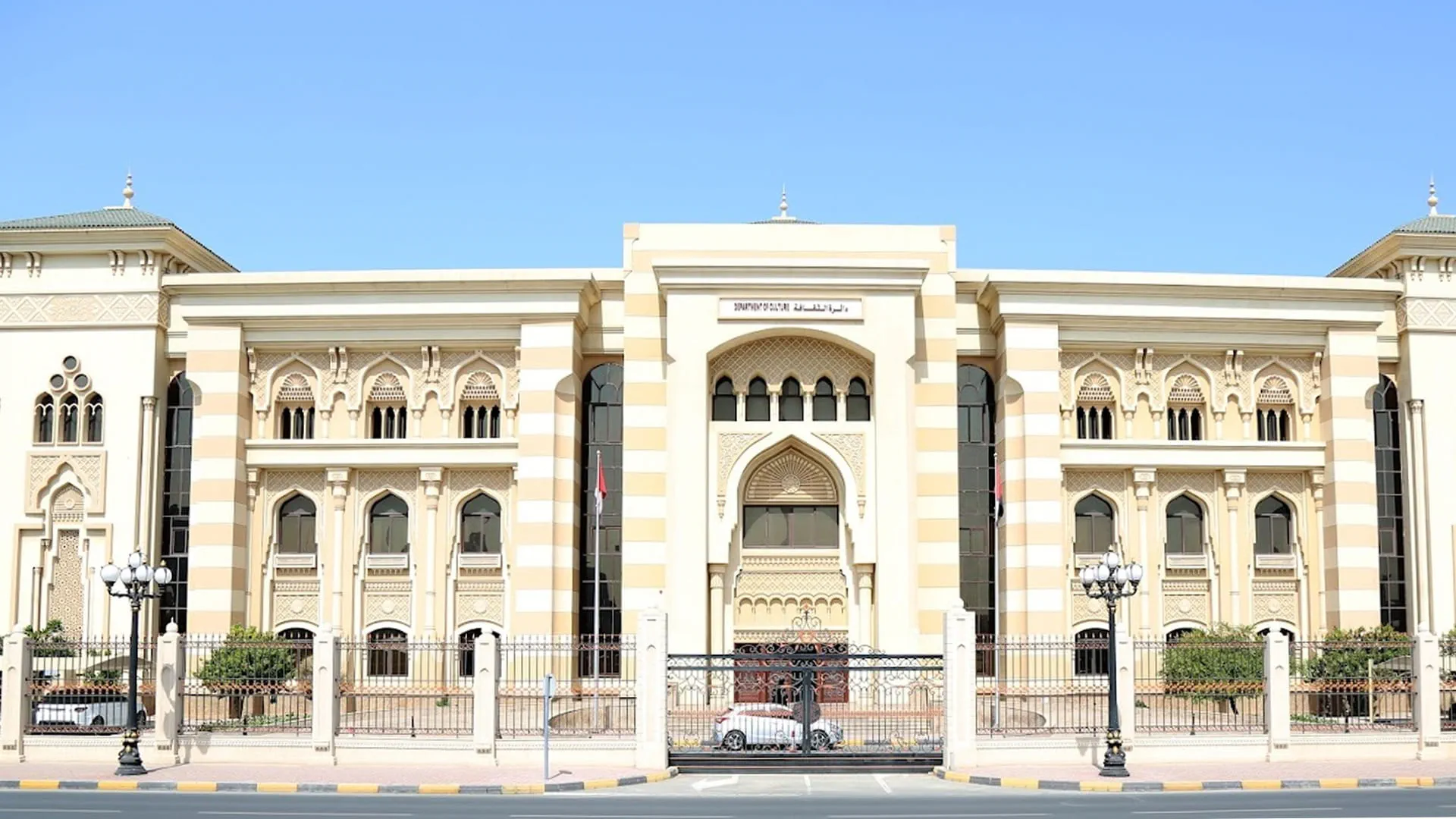
It is worth noting that the Sharjah Department of Culture announced it will honour calligrapher Khalifa Al-Shimi at the 12th Sharjah Calligraphy Biennial, to be held next October under the theme "Balance," in recognition of his significant contributions to Arabic calligraphy, his long career in the UAE, and his decorative calligraphy work, particularly in mosques and government buildings. He is one of the country's most prominent calligraphers.
Al-Shimi also provided explanations about his calligraphic paintings, in which he blends calligraphy with visual art. He explained that he begins by preparing the canvas with a background of several colours, according to his vision of what he wants to create. He then writes the letters or text he wants to write in a colour that harmonises with the background. He is careful to balance the elements of light and shadow, ensuring that the painting contains a kind of illumination emerging from the darkness like dawn. He emphasised the immense power of the Arabic script, which enables it to adapt to the demands of visual art and to be incorporated into any color or composition the artist desires. He pointed out that in calligraphic paintings, he does not use pens to trace the letters, but rather a brush, as it can write over the coloured background without affecting it.
Al-Shimi concluded the workshop by creating several paintings as gifts for the attendees, each featuring texts they had chosen to display in their homes.

 For an optimal experience, please
rotate your device to portrait mode.