Loading...
Loading...


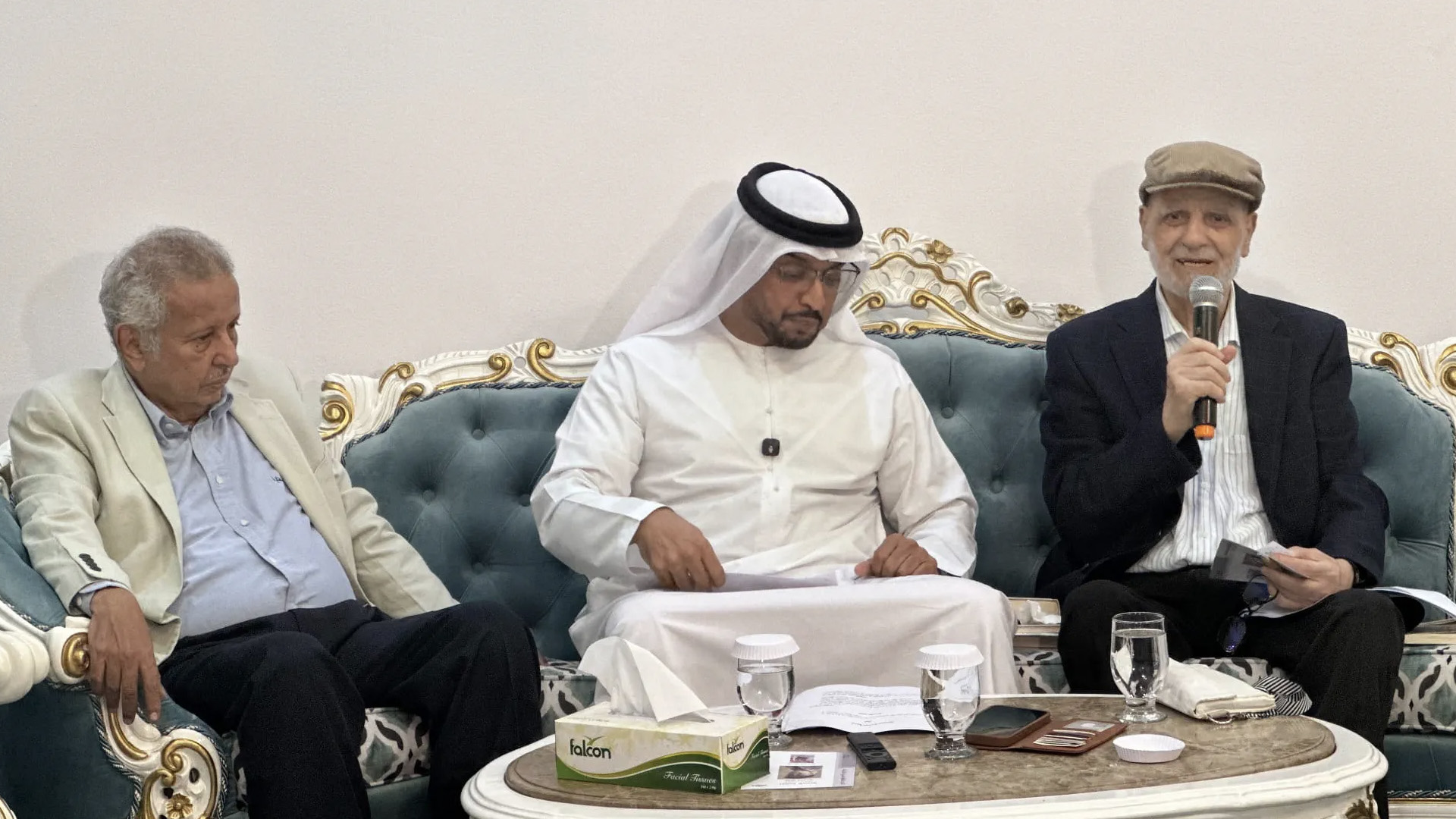
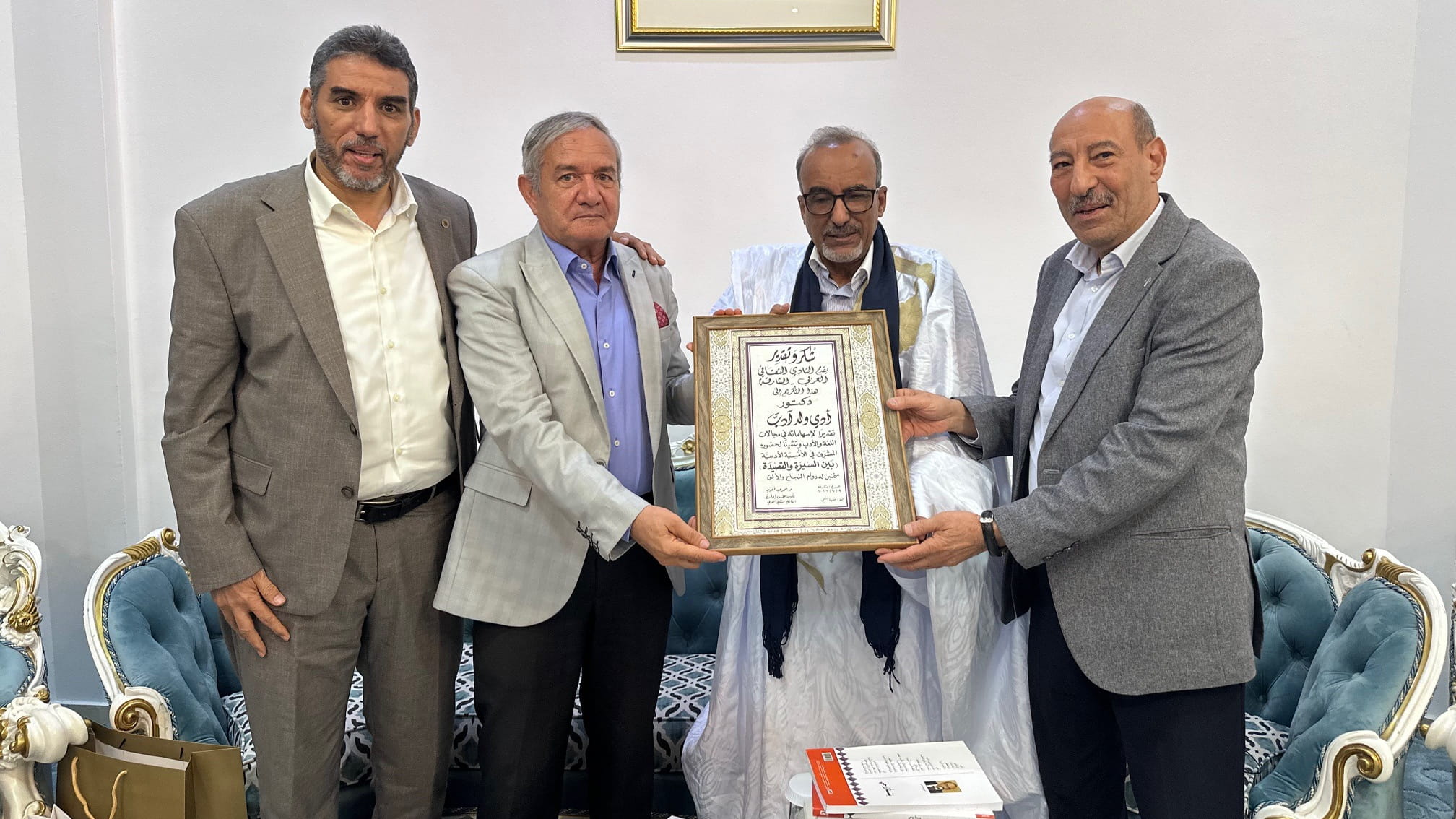
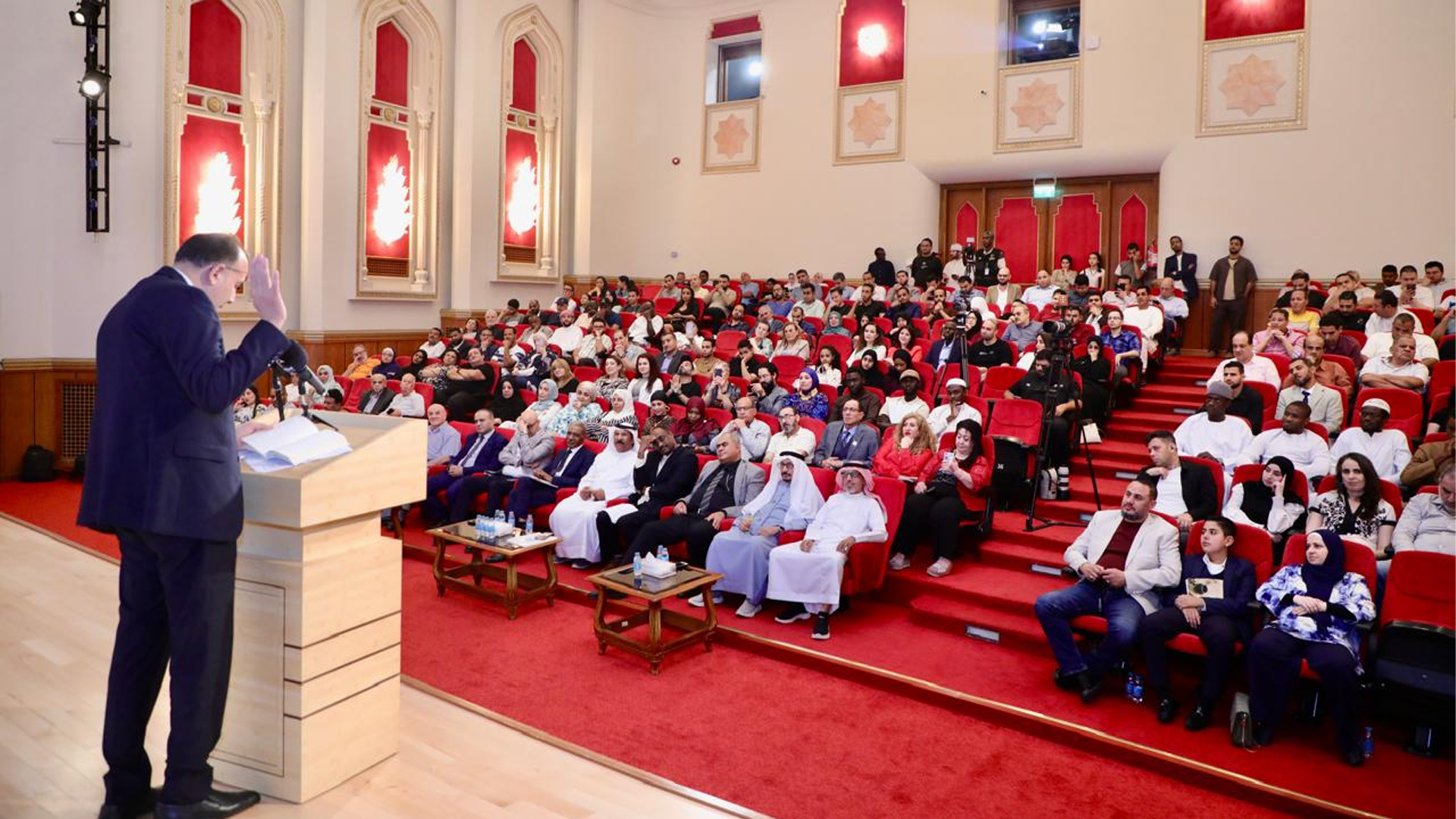
The seminar was presented by journalist Mohamed Ould Mohamed Salem, head of the Cultural Committee, who emphasised the club's commitment to hosting Arab writers visiting the UAE to enrich the cultural landscape. He introduced the guest, stating that "Dr Addi Wuld Adabba is a writer, poet, and researcher who has worked as a cultural editor and opinion writer for several Mauritanian and Arab newspapers. He has also served as a linguistic expert and publication reviewer at the Arab Centre for Research and Policy Studies. He has published several poetry collections, including: 'A Journey Between Haa and Baa,' 'Clutching Papers,' 'The Imprint of My Soul,' 'Faces That Wrote Me,' 'Palestine the Poem,' 'Prayers of Rhyme,' 'Maps of Pain,' and 'My Homeland on My Shoulder.' In addition, he has authored 18 books of academic and critical research on Andalusia, poetry, and his family's cultural heritage."
Dr Omar Abdel Aziz, Chairman of the Club's Board of Directors, participated remotely from London, saying: "Dr Addi Wuld Adabba is a comprehensive Arab intellectual with a special connection to poetry, criticism, vision, and overarching concepts. This seminar is exceptional because it focuses on such a significant figure." In Arab culture, stemming from the rich culture of the Mauritanian lecturer, as well as from academic culture, and also because the symposium will address poetics in its broadest sense, Dr Addi Wuld Adabba has been keen from the outset to write about Andalusian Arab culture, which constituted a landmark in terms of musicality, language, and also in terms of the structural construction of texts, as well as in terms of meter and rhyme, and in terms of poetry, whether in classical Arabic forms or in its free verse forms.
Dr Addi Wuld Adabba began by praising the role of the Arab Cultural Club, which hosted his first poetry evening in Sharjah in 2008, and the Department of Culture, which published his first book in 2006, emphasising that Sharjah holds a special place in his heart. He spoke about his beginnings, saying: “I grew up in a cultured family in the general sense, and I acquired much literary culture from them, especially poetry, which was passed down through generations. This had a direct impact on my creative and academic direction. I specialised in literature, and my research focused specifically on Andalusia.” I was spiritually drawn to Andalusian culture because of its unique character and creativity, and because it is an inexhaustible field for pioneering studies and new ideas.
On the ongoing debate between classical and free verse, Dr Addi Wuld Adabba presented a thesis entitled "Furious Poetry," in which he stated: "Poetry is of no benefit to be free if it lacks its heat, nor is it of no benefit to be classical unless it pulsates with that heat. When poetry loses its heat, free verse becomes mere prose, and classical poetry becomes merely cold verse. This heat is a spirit permeating the text; we do not find it in the word alone, or the sentence alone, or the image alone, or the rhythm alone, or the feeling alone, but rather it is formed from all of these. Everything dissolves into it to become another creative formation, a fiery one that ignites its listener and reader with the flame of poetry."
The lecturer addressed the problems of the "pillar of poetry," reviewing the views of classical scholars on defining the poem. He stated, "The pillar of poetry has been reduced in modern studies to anything metrical, which is not the true pillar. The pillar that al-Marzuqi spoke of is a system of values he extracted from the texts he studied, including diction, structure, imagery, meter, rhyme, and meaning. Reducing poetry to meter alone is illogical. My study of the history of poetry has shown me that each era has its own poetic pillar. The pre-Islamic era had its pillar, the early Islamic period had its pillar based on religious values, the Umayyad period had its pillar based on politics, the Abbasid period had its pillar based on cultural values, and the Andalusian pillar is based on the unconventional and the departure from the norms and conventions of poetry. This unconventionality is not limited to poetry but encompasses almost all areas of culture. I have also found evidence of a solidarity or alliance between the arts in Andalusia. Poetry, prose, calligraphy, mosaics, and architecture intertwine to convey a single expressive message, and I have found texts that express this alliance." Regarding his writing style, he explained: "I have always tended to deviate from the familiar and conventional, which is why almost all my poetry collections are titled 'The Imprint of My Soul' and all my research is titled 'The Interpretation of My Vision,' because I search in criticism and literature for what represents my own vision, and the same applies to poetry."
The evening concluded with the poet Dr Addi Wuld Adabba reciting some of his poems, including "My Journey in Search of Myself."

 For an optimal experience, please
rotate your device to portrait mode.






.jpg?h=1080&w=1920&hash=7248A928F95D9CBF3BE1E50C01ADF230)