Loading...
Loading...


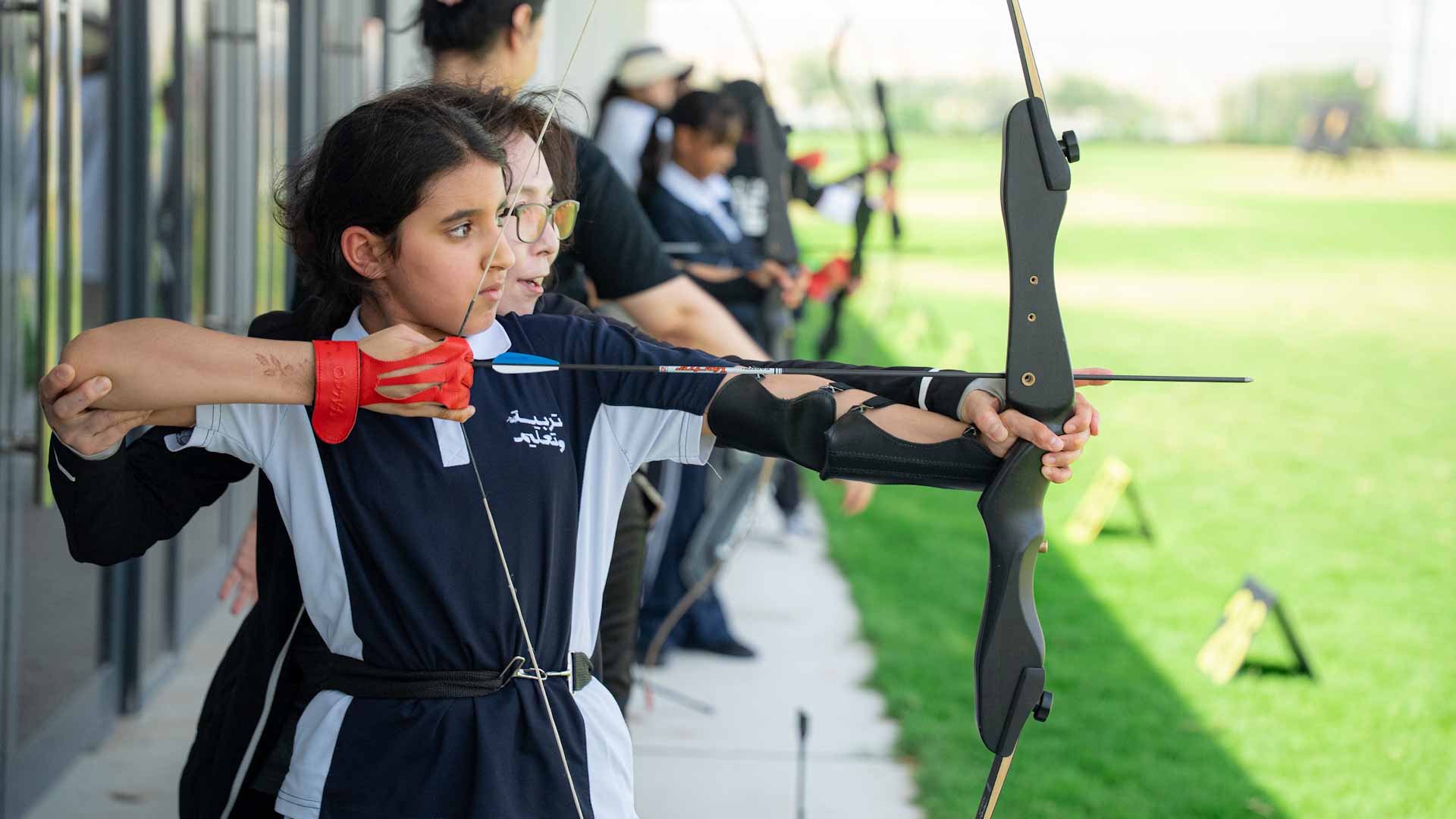
The events fell under the Foundation's Specialised Schools Initiative, a program designed to bring niche, individual sports into the school environment — disciplines that don't typically appear on a standard curriculum but demand qualities every educator wants to cultivate: patience, precision, mental discipline, and self-control.
Assessment and participation
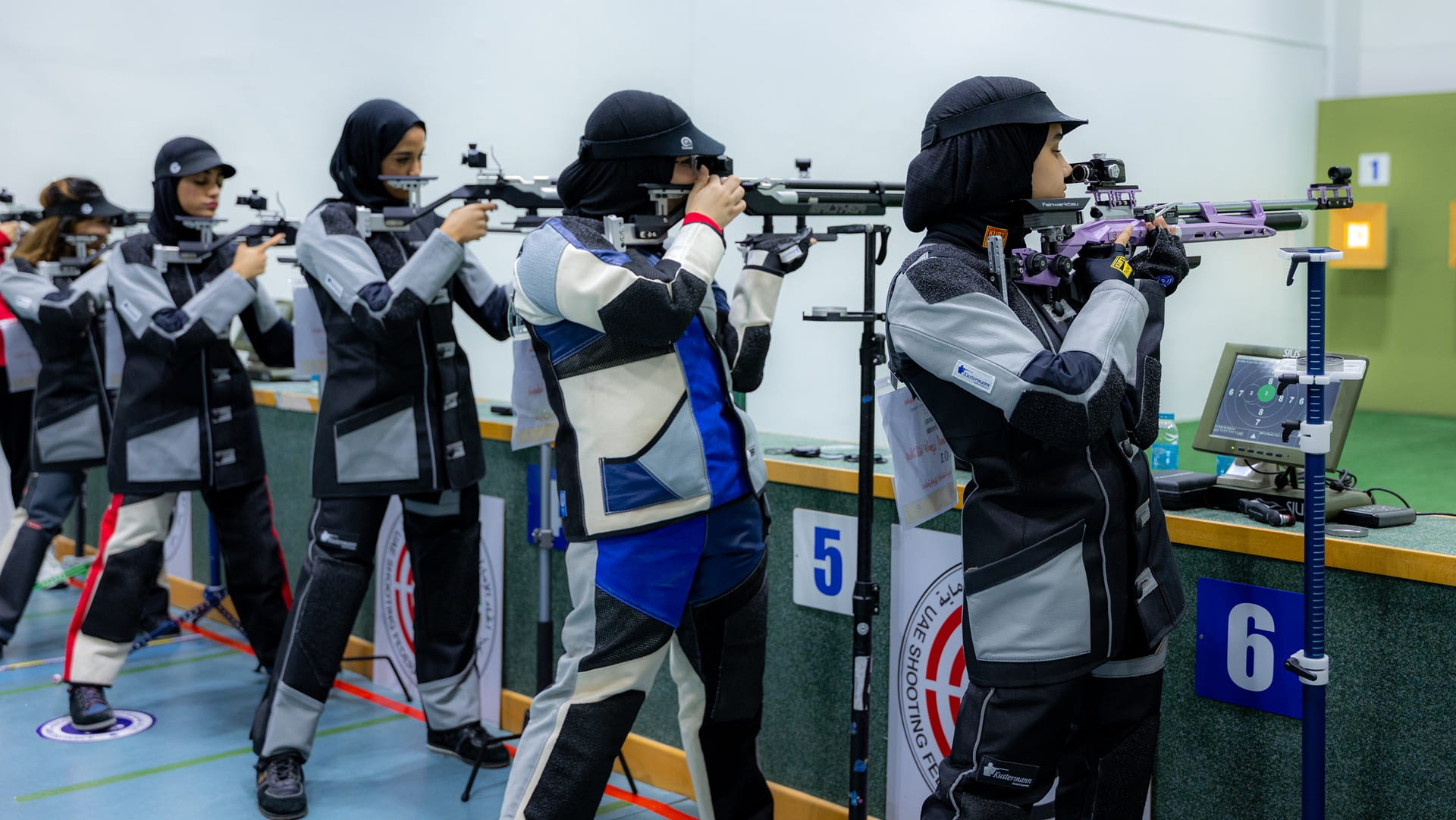
The School Archery Championship drew 69 students from nine schools, split across two age groups: 9–10 years and 11–12 years. The shooting competition brought in 70 students from eight schools, competing in the 12–13 and 14–15 age brackets.
Participation wasn't simply a matter of showing up and shooting. Each student underwent technical and physical assessments alongside anthropometric measurements, overseen by specialists from the Foundation's Sports Medicine and Healthcare Center and its Scientific Center for Research and Sports Performance Development. The data collected serves a longer-term purpose — building a scientific baseline for tracking each student's physical and skill development over time.
The results
In the archery competition for the 9–10 age group, Aisha Abdullah Askar of Emirates American School took first place, followed by Alia Saif of Sharjah Model School in second and Bakhita Ghareeb of Al Bataeh School in third. The 11–12 category was swept by Emirates American School, with Fatima Mohammed Al Naeimi claiming gold and Sara Sultan Al Suwaidi silver, while Moza Saif of Al Bataeh School rounded out the podium in third. In shooting, the 12–13 age group saw Al Bataeh School dominate the top two spots, with Fatima Mubarak finishing first and Qoot Sultan second, and Shahd Badr of Emirates American School taking third. The oldest category, 14–15, produced a more spread-out result: Reem Yaqoub of Ruqaya School won gold, Maitha Abdullah of Al Bataeh School earned silver, and Maitha Khamis of Wasit Model School claimed the bronze.
More than a competition
Beyond the podium, the day was structured to give students a fuller picture of what sports science looks like in practice. Alongside the competitions, the Foundation ran interactive sessions inside the Smart Sports Campus, activities connecting movement with learning, and hands-on experiences explaining how precision, focus, and performance analysis feed into athletic development.
The taekwondo hall was repurposed for the physical testing and awards ceremony — a practical use of space that also gave students a window into the breadth of the facility they were competing in.
Organisers’ remarksYaazia Al Suwaidi, Head of the Technical Preparation and Follow-Up Division at the Foundation, was direct about the reasoning behind bringing these sports into schools."Archery and shooting give students access to disciplines they wouldn't normally encounter in daily school life," she said. "We aim to transform schools into spaces that uncover diverse talents, rather than merely hosting conventional activities," she stated.
She added that the interactive elements, particularly the Smart Sports Campus visits, were intentional: "We want students to understand the relationship between movement, learning, and athletic development in a way that actually makes sense to them."
Hanan Al Mahmoud, Deputy President of the Foundation, framed the events within a broader institutional goal.
"These aren't just competitions—they're organised experiences that help students build confidence, discipline, and an understanding of what sport can mean for who they become," she said. "What we saw in both championships confirms the value of investing in individual sports. They develop concentration, patience, and self-regulation in ways that team sports sometimes don't."
Al Mahmoud also acknowledged the network of people that makes events like this possible. "The cooperation of the Ministry of Education, the Sharjah Private Education Authority, the participating schools, and the PE teachers who prepared and encouraged the students — all of that matters. When the institution, the school, the family, and the technical staff are aligned, the result is a generation that sees sport as part of life, not separate from it."
From the students and teachers
Two Emirates American School students, Ghazlan Ahmed and Rawdha Abdullah, said the championships felt nothing like a regular PE class. Archery and shooting, they noted, demand a kind of stillness before action—a moment of calm and commitment before each attempt—and the competitive environment had shown them something about confidence they hadn't expected.
Their PE teacher, Norhane Ali, offered a perspective that's easy to overlook. "Some students have a real talent for focus and precision, but it simply doesn't show up in team games. " Special competitions like these let us notice those qualities and encourage students to develop them."
Mona Fathi Mohammed, PE teacher at Sharjah Model School, pointed to a different benefit: learning to manage nerves. "Competing in a structured environment teaches students to handle pressure, follow instructions, and respect the sequence of performance. Those are skills that carry over well beyond sport."
Fatima Al Shami, PE teacher at Al Nouf School, made a similar point about motivation. "When training connects to real competition, students have a reason to commit. That's what gives the PE class actual meaning." Her students Reem Ali Hassan and Khawla Salem Al Shamsi echoed these sentiments, saying the experience had opened them up to a type of sport they'd never seriously considered before.
The day closed with a medal ceremony for the top three finishers in each age group, attended by representatives from all the organisers and partner bodies. Every participant received a certificate, and PE teachers were recognised alongside their students—an acknowledgement that the work of getting students to these starting lines matters as much as what happens once they're there.
The Specialised Schools Initiative continues its calendar of championships and programs for students across all school levels, with the Foundation's stated aim of making sport a genuine part of daily educational life — not an extracurricular afterthought.

 For an optimal experience, please
rotate your device to portrait mode.