Loading...
Loading...


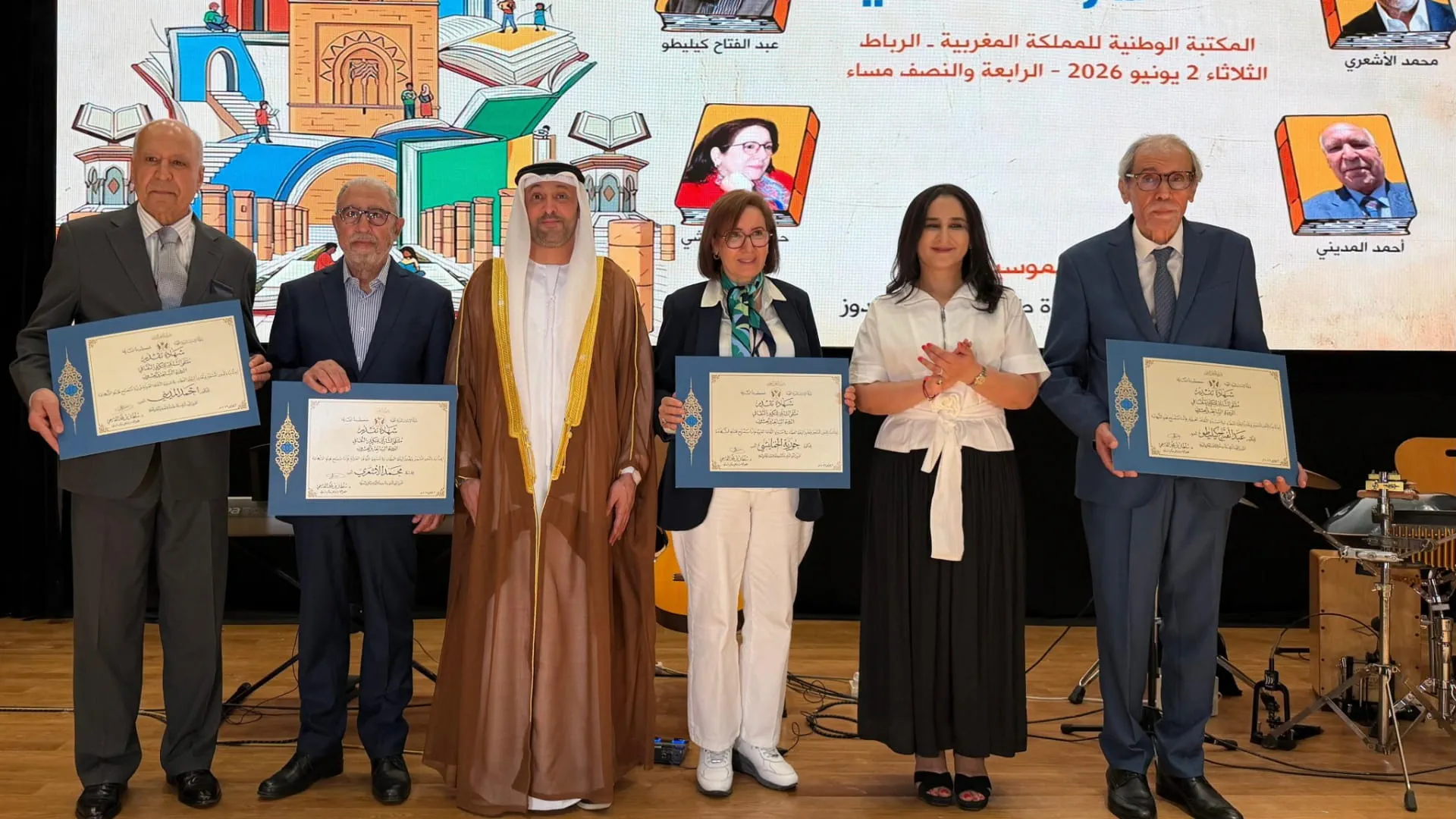
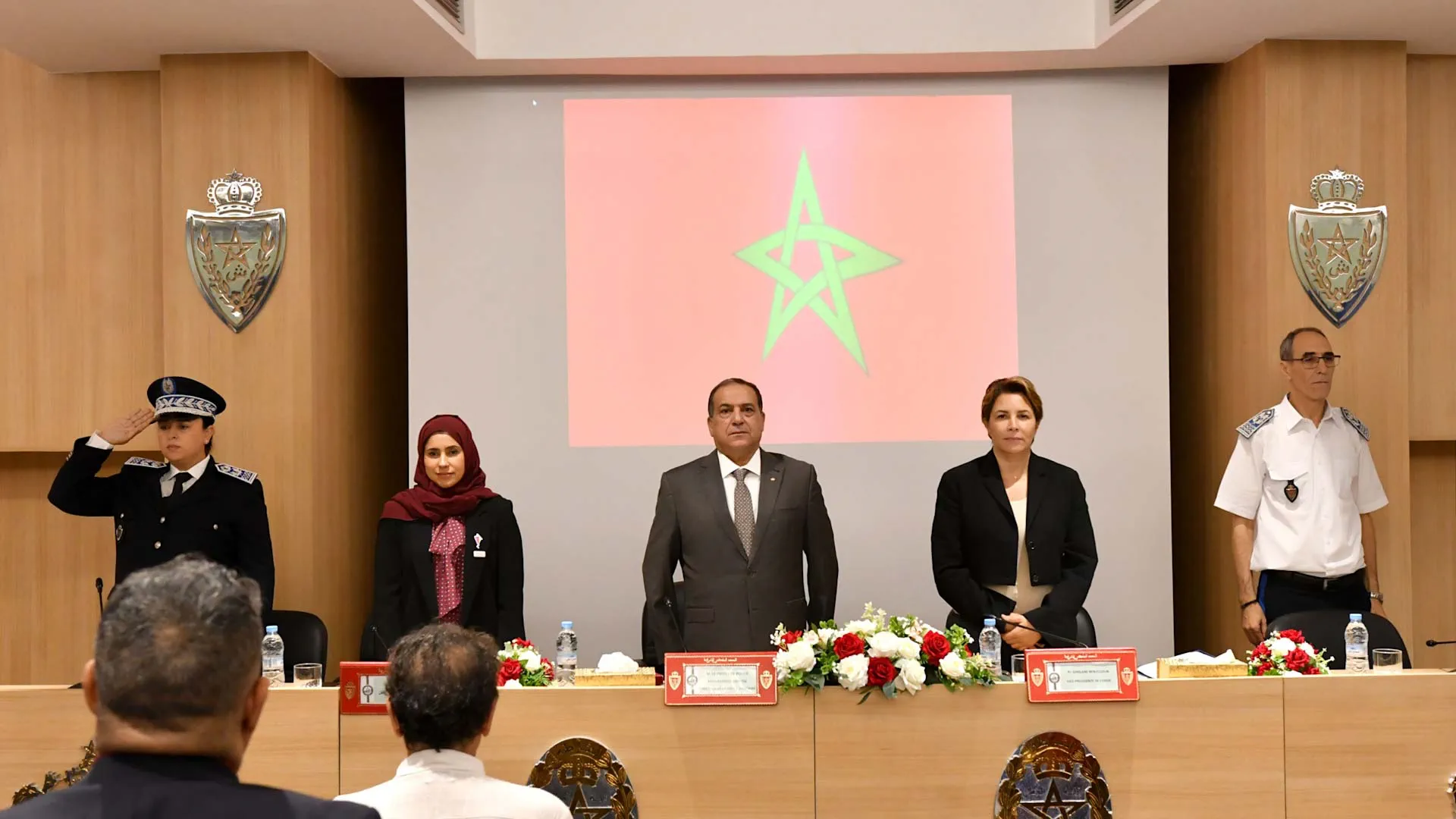
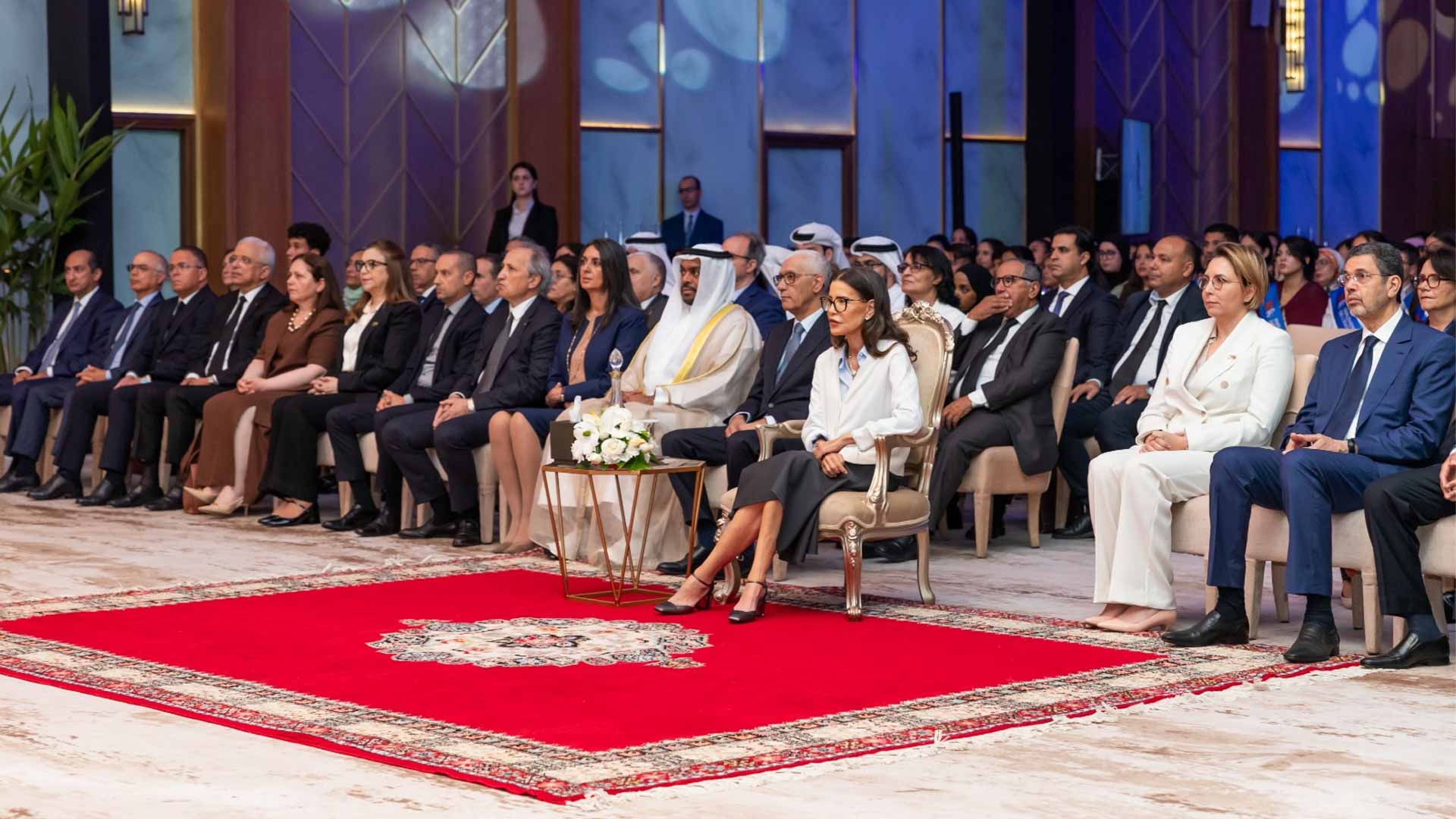
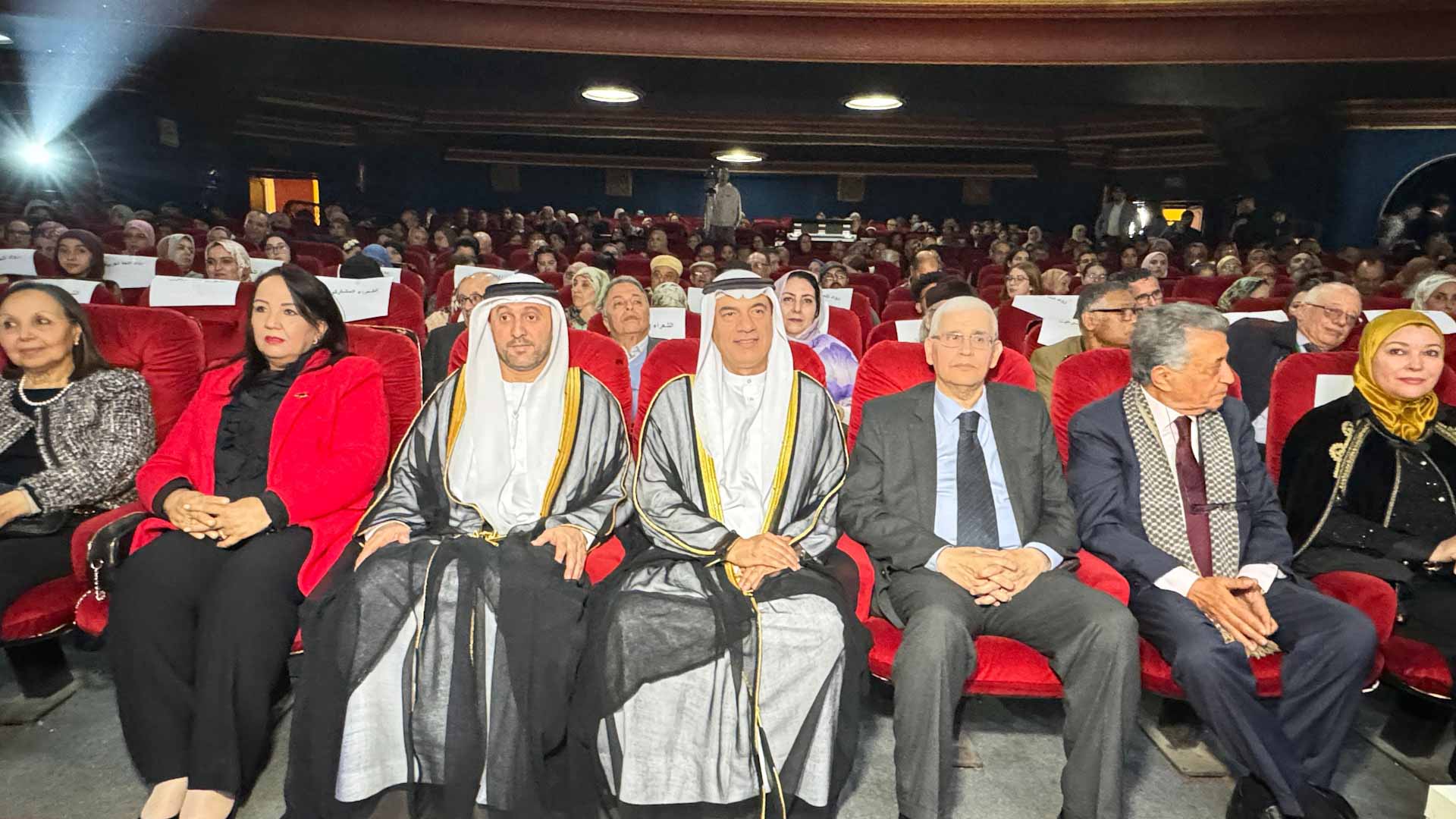
The forum is held in accordance with the directives of His Highness the Ruler of Sharjah to honour literary figures who have contributed to contemporary Arab culture, and this is its fourth time in Morocco. The ceremony was held at the National Library in Rabat, the capital of Morocco, in the presence of Mr. Mohammed Ibrahim Al-Qasir, Director of the Department of Cultural Affairs; Ms. Ghizlane Darrous, Director of the Directorate of Books, Libraries, and Archives at the Moroccan Ministry of Youth, Culture, and Communication, representing the Moroccan Minister of Culture, His Excellency Dr Mohammed El-Mahdi Bensaid; Ms. Samira El-Mellizi, Director of the National Library; and a large number of Moroccan and Arab writers, thinkers, intellectuals, and those interested in cultural affairs.
The ceremony was presented by the Moroccan poet Mukhlis Al-Saghir, Director of the House of Poetry in Tetouan. In his opening remarks, he welcomed the attendees, emphasising that the Sharjah Cultural Honouring Forum embodies the vision of His Highness the Ruler of Sharjah in celebrating Arab creators and appreciating their intellectual and literary contributions. He noted that the forum has become one of the most prominent Arab cultural initiatives that contributes to honouring intellectual and literary figures and highlighting their creative achievements, as well as reinforcing the values of loyalty to intellectuals who have enriched Arab cultural life with their continuous output and contributions.
At the beginning of his speech, Mohammed Al Qasir expressed his delight at the renewed cultural exchange with Morocco, saying, "We are pleased that this exchange is renewed, and the cultural scene shines brighter each time we gather to celebrate scholars, thinkers, and creative minds at the Sharjah Cultural Appreciation Forum, in its 27th edition, which honours four literary luminaries whose creative contributions have solidified their presence on the Moroccan and Arab cultural scene."
Al Qasir pointed out that this forum, which continues its cultural journey throughout the Arab world, carrying a message of loyalty to creative writers and literary figures, embodies a firmly established cultural vision championed by His Highness Sheikh Dr Sultan bin Mohammed Al Qasimi, Supreme Council Member and Ruler of Sharjah. His Highness believes that culture is the foundation of progress, and that sincere expression is capable of shaping awareness and establishing the values of beauty and knowledge.
Al Qasir added, "Throughout its various sessions, this forum has provided a shining platform to honour intellectual and literary figures who dedicated their lives to serving Arab culture and contributed to enriching the Arabic library and strengthening the presence of literature and thought in the nation's consciousness. Here we are, meeting for the fourth time in the Kingdom of Morocco, from which the second session of this forum was launched with love and appreciation, to continue together celebrating those who have made significant cultural contributions, in recognition of their sincere efforts and the values of knowledge, creativity, and enlightenment they have instilled. These figures are: the writer and novelist Mohamed Achari, the writer Dr Ahmed Al-Madini, the writer Dr Abdel Fattah Kilito, and the critic and researcher Dr Houria Al-Khamlichi."
The Director of the Cultural Affairs Department at the Department of Culture continued: “We gather today to honour this distinguished group of writers and authors from our beloved Morocco, who have illuminated their cultural journeys with enlightened thought and a broad, humanistic vision, and who have contributed to enriching the cultural landscape across the Arab world. This honour is a well-deserved recognition of the Kingdom of Morocco’s rich and ancient cultural heritage, and of the writers, authors, and poets it has produced, who have left their indelible mark on the course of Arab creativity. They have contributed effectively and with remarkable creative diversity to the development of the literary movement within their country and on the wider Arab horizon, forming renewed creative tributaries of thought, enlightenment, and beauty.”
Al Qasir emphasised that this fraternal gathering embodies the depth of the fruitful cultural cooperation between the Sharjah Department of Culture and the Ministry of Youth, Culture, and Communication in the Kingdom of Morocco. He noted that this cooperation has extended over the years and has yielded numerous joint initiatives, programmes, and activities that have contributed to strengthening and expanding the shared Arab cultural presence.
He also commended the Ministry's prominent role in supporting cultural activities and ensuring the success of various events, as well as facilitating communication between creators and cultural institutions in both countries. He emphasised that this ongoing cultural cooperation reflects the deep-rooted fraternal relations between the United Arab Emirates and the Kingdom of Morocco, under the wise leadership of both nations.
Mohammed Al Qasir conveyed the congratulations of His Highness the Ruler of Sharjah to the honourees, saying: "I am honoured to convey the congratulations of His Highness Sheikh Dr Sultan bin Mohammed Al Qasimi, Supreme Council Member and Ruler of Sharjah, to the honourees of this session. I also convey to you all His Highness's greetings and best wishes for your success."
For her part, Ghizlane Darrous delivered a speech on behalf of the Moroccan Minister of Culture, His Excellency Dr Mohammed El Mahdi Bensaid, saying: “It is with immense joy and pride that we inaugurate the 27th Sharjah Cultural Honouring Forum. This major Arab cultural event undoubtedly represents one of the precious encounters that unite Rabat and Sharjah as global cultural beacons. The Sharjah Cultural Honouring Forum culminates a series of cultural initiatives that bring together our two brotherly countries: Morocco and the United Arab Emirates, within the framework of the ongoing and fruitful cooperation between the Ministry of Youth, Culture and Communication and Sharjah Department of Culture.”
Darrous added, quoting the Minister: “We are delighted to host a new edition of the Sharjah Cultural Honouring Forum, an initiative established by His Highness Sheikh Dr Sultan bin Mohammed Al Qasimi, Supreme Council Member and Ruler of Sharjah. This initiative has celebrated dozens of icons of our contemporary culture in several Arab cities and capitals. Moroccan writers have been honoured in large part by this prestigious forum, in Tetouan, Casablanca, and Rabat, where Rabat has once again been chosen to host this year’s event.”
His Excellency Dr Mohammed El-Mahdi Bensaid praised the cultural initiatives of His Highness the Ruler of Sharjah, noting, "Starting with the establishment of poetry houses throughout the Arab world, the publication of a range of cultural magazines, the symposia and festivals related to poetry, narrative, theatre, and Islamic arts, and the prestigious awards, culminating in this special cultural honouring event, which reflects many noble and generous values and reinforces a culture of recognition and appreciation by valuing the scientific and literary achievements of the honourees." He emphasised, "As we welcome this major Arab cultural gathering, we declare that Morocco will remain a country that welcomes all humanitarian cultural initiatives and will continue to host major cultural and civilisational events."
The four honourees delivered speeches expressing their happiness and pride in this recognition, emphasising that this cultural initiative underscores the prominent role of culture and intellectuals in Sharjah's cultural project. They praised Sharjah's pioneering role in supporting Arab culture and nurturing writers and thinkers, highlighting the vision of His Highness Sheikh Dr Sultan bin Mohammed Al Qasimi, Supreme Council Member and Ruler of Sharjah, which has made culture a bridge for communication and dialogue between peoples.
The honourees also expressed their appreciation for this celebration, which they considered a tribute to their creative and intellectual journeys. They affirmed that such initiatives serve as an incentive to continue contributing and reinforce the values of recognising Arab cultural achievements and celebrating their creators.
In his speech, poet and novelist Mohamed Ashari expressed his delight at this honour, emphasising that it comes within the context of a well-established cultural project led by Sharjah with a clear and ongoing vision to support Arab creativity and value its accomplishments.
Ashari pointed out that the Sharjah Cultural Project, under the leadership of His Highness the Ruler of Sharjah, has become a comprehensive cultural system that has contributed to highlighting Arab culture on a global level and opened wide horizons for intercultural dialogue.
Ashari added that this honour transcends mere celebration, constituting a recognition of the honourees' creative journey and the value and role of the written word. He considered such initiatives to give writers a sense of continuity and belonging to a comprehensive Arab cultural project.
Ahmed Al-Madini said: "I am overwhelmed with joy and honour by this recognition bestowed upon me by Sharjah, thanks to the enlightened vision and profound appreciation that His Highness the Ruler of Sharjah holds for knowledge, creativity, and their torchbearers throughout the Arab world. This appreciation and recognition is powerfully manifested here and now." He added: "This meeting, with its profound symbolism, carries significant implications, collectively presenting a shining image of those who place thought, creativity, and their practitioners in their rightful place. Our being honored by Sharjah speaks volumes, acknowledging our country's cultural standing and its contribution to modern and contemporary Arab culture through some of our work."
At the beginning of his speech, Abdel Fattah Kilito said: "I would like to express my sincere gratitude to the Sharjah Department of Culture for this gesture and for organising this ceremony, thanks to which we celebrate literature today." He emphasised that such cultural initiatives grant literature and its practitioners a space for appreciation and celebration, and underscore the importance of the written word and its role in building awareness and fostering cultural dialogue.
Kilito praised the cultural project led by Sharjah across the globe, noting the continuity of its initiatives supporting creators and writers. He affirmed that honouring writers is not merely celebrating them as individuals, but rather represents a celebration of culture, knowledge, and the values of creativity that contribute to the flourishing and progress of societies.
At the beginning of her speech, Houria Al-Khamlichi expressed her happiness at receiving the honour, saying, "I am overjoyed by this recognition and deeply grateful to His Highness the Ruler of Sharjah, the patron of culture, who has made his support for intellectuals a civilisational project."
She continued, "I am delighted that this honour comes in the company of prominent Moroccan figures who have enriched Moroccan culture with their significant and multifaceted scholarly contributions in criticism, thought, translation, and creative writing, both poetry and fiction. This recognition is a human and cultural moment that gives added meaning to life's journeys and questions, and allows us to revisit the path with all its passion, hope, and encouragement to continue writing. This honour is also a tribute to poetry, to the poem, and to our beautiful Arabic language."
Abdel Fattah Kilito is a writer and novelist born in 1945. His published works include: "Literature and Strangeness," a structural study in Arabic literature; "Narrative and Interpretation," studies in Arabic narrative; "The Absent One," a study of al-Hariri's Maqamat; and "But the Story Is Mine," a novel.
Ahmed Al-Madini is a novelist born in 1949. His published works include: "A Rose for Moroccan Time" (a novel), "Possibilities of the Blue Country" (a collection of short stories), "The Willow Passage" (a novel), and "The Art of the Short Story in Morocco" (a study).
Mohamed Ashari was born in 1951. He is a poet, novelist, and former Minister of Culture. His published works include: "A Difficult Day" (a collection of short stories), "South of the Soul" (a novel), "The Bow and the Butterfly" (a novel), "The Neighing of Wounded Horses" (a poetry collection), and "Eyes as Wide as a Dream" (a poetry collection).
Houria Al-Khamlichi is a writer, researcher, and critic. She has published several works, including: "Poetry and Song," a selection of masterpieces of sung poetry in Arabic poetry; "Writing and Genres," a study of the poetics of openness in modern Arabic poetry; and "Translation and Interpretation of Arabic Texts."
At the conclusion of the ceremony, Mohammed Al Qasir and Ghizlane Darrous presented certificates of appreciation to the four honourees. The certificates, signed by His Highness the Ruler of Sharjah, recognised their literary and intellectual contributions to the Arab cultural scene.
The audience watched a documentary showcasing key milestones in the literary and intellectual journeys of the four honourees. The screening highlighted significant turning points in their academic and creative lives, and their contributions to enriching the Moroccan and Arab cultural landscape over decades of continuous dedication.
The documentary shed light on their literary and intellectual achievements by showcasing their most prominent works and publications, along with testimonials and excerpts documenting their impact in the fields of poetry, novels, criticism, and academic research. The presentation was well-received by the audience, as it documented creative paths that have left a clear mark on Arab culture.
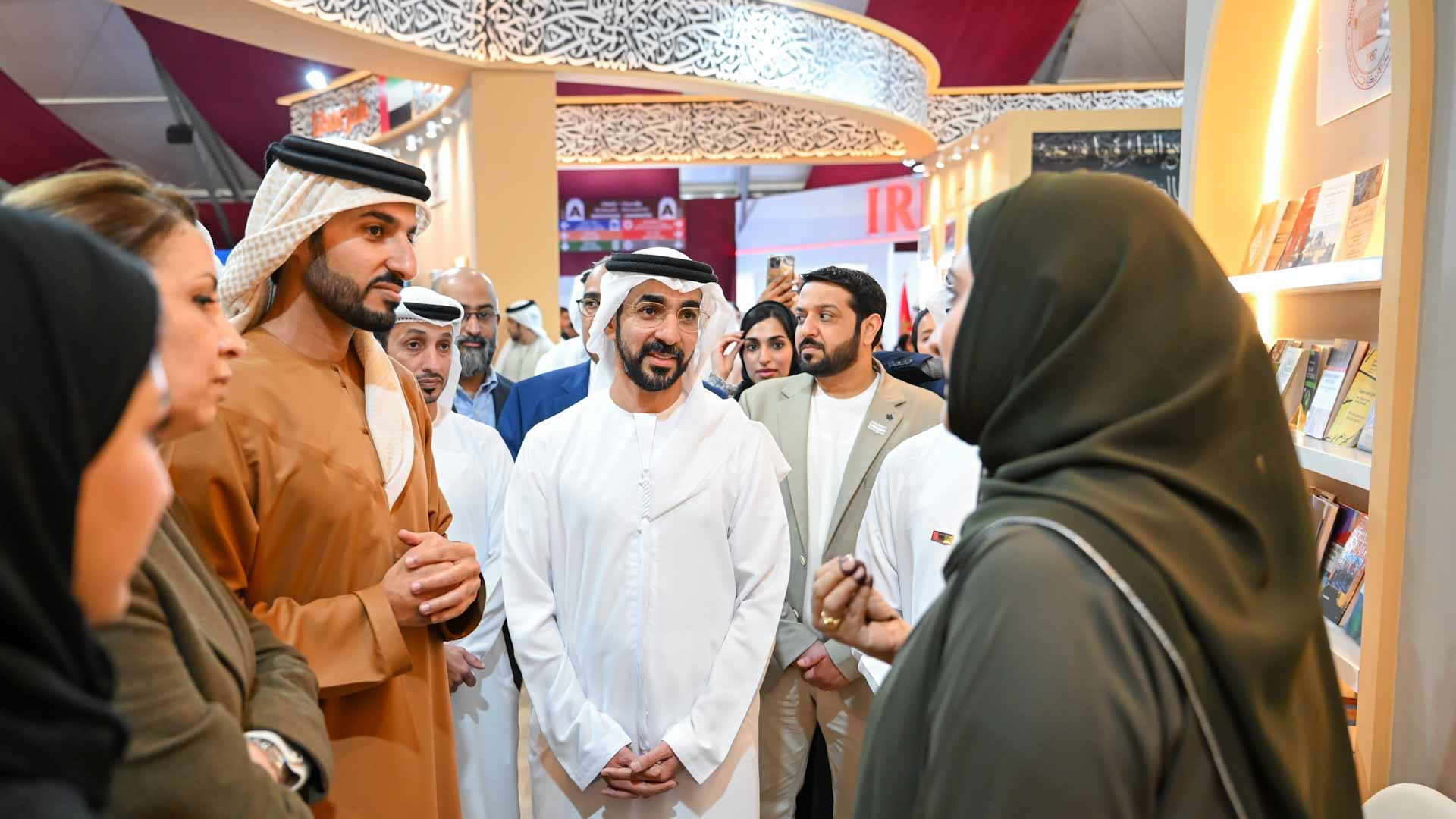
The forum included an exhibition featuring several publications by the four honorees. Mohammed Al Qasir and attendees toured the exhibition, viewing the most prominent works and publications on display.
The honourees also provided explanations of their creative experiences and the stages of their work on their books and publications, highlighting their intellectual backgrounds and the contexts in which they were produced.
The exhibition also included a collection of publications from the Sharjah Department of Culture, reflecting the diversity of its cultural project and its broad reach in the fields of thought, literature, and criticism, thus reinforcing its role in supporting the Arab cultural landscape.

 For an optimal experience, please
rotate your device to portrait mode.