Loading...
Loading...


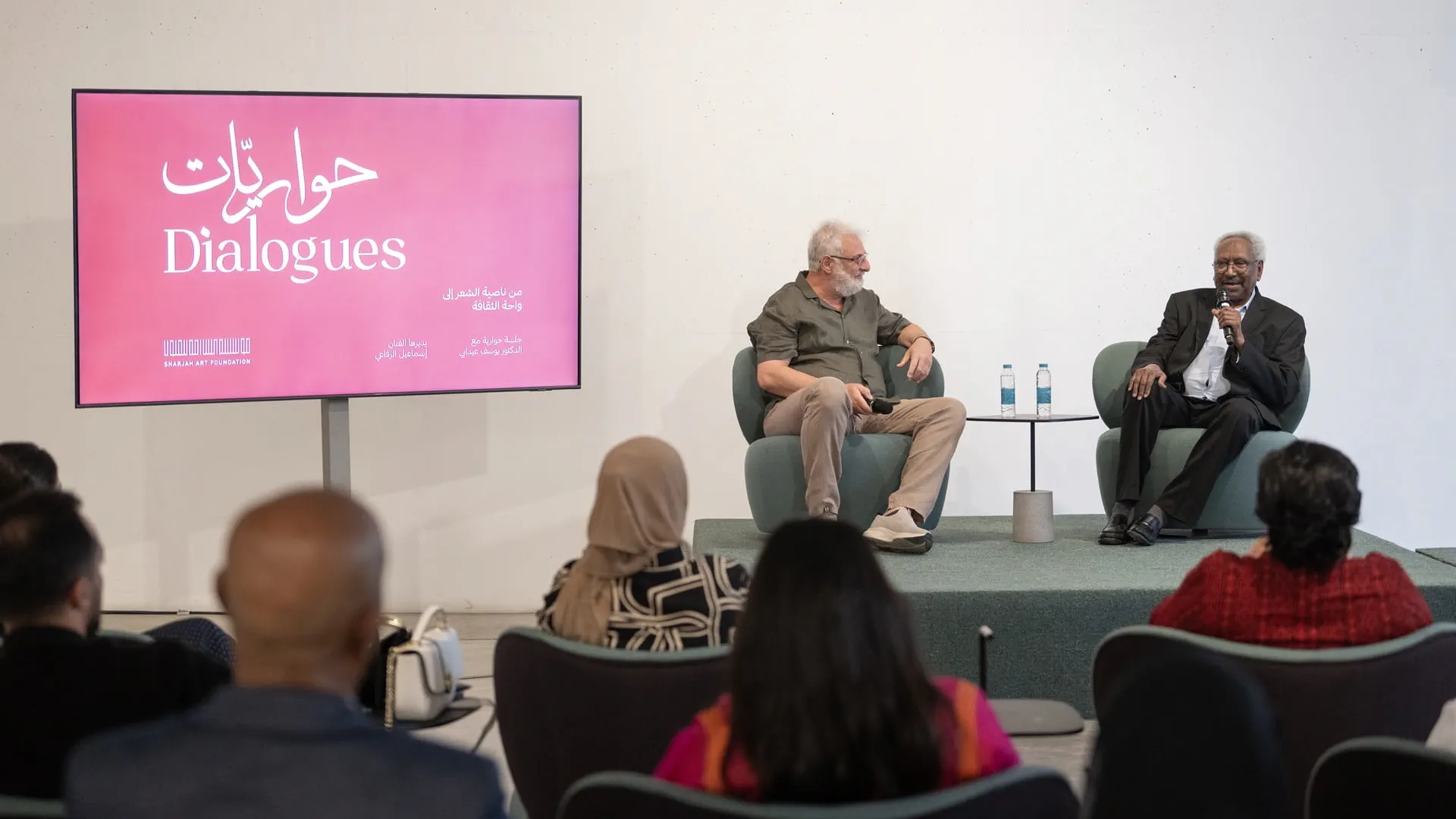
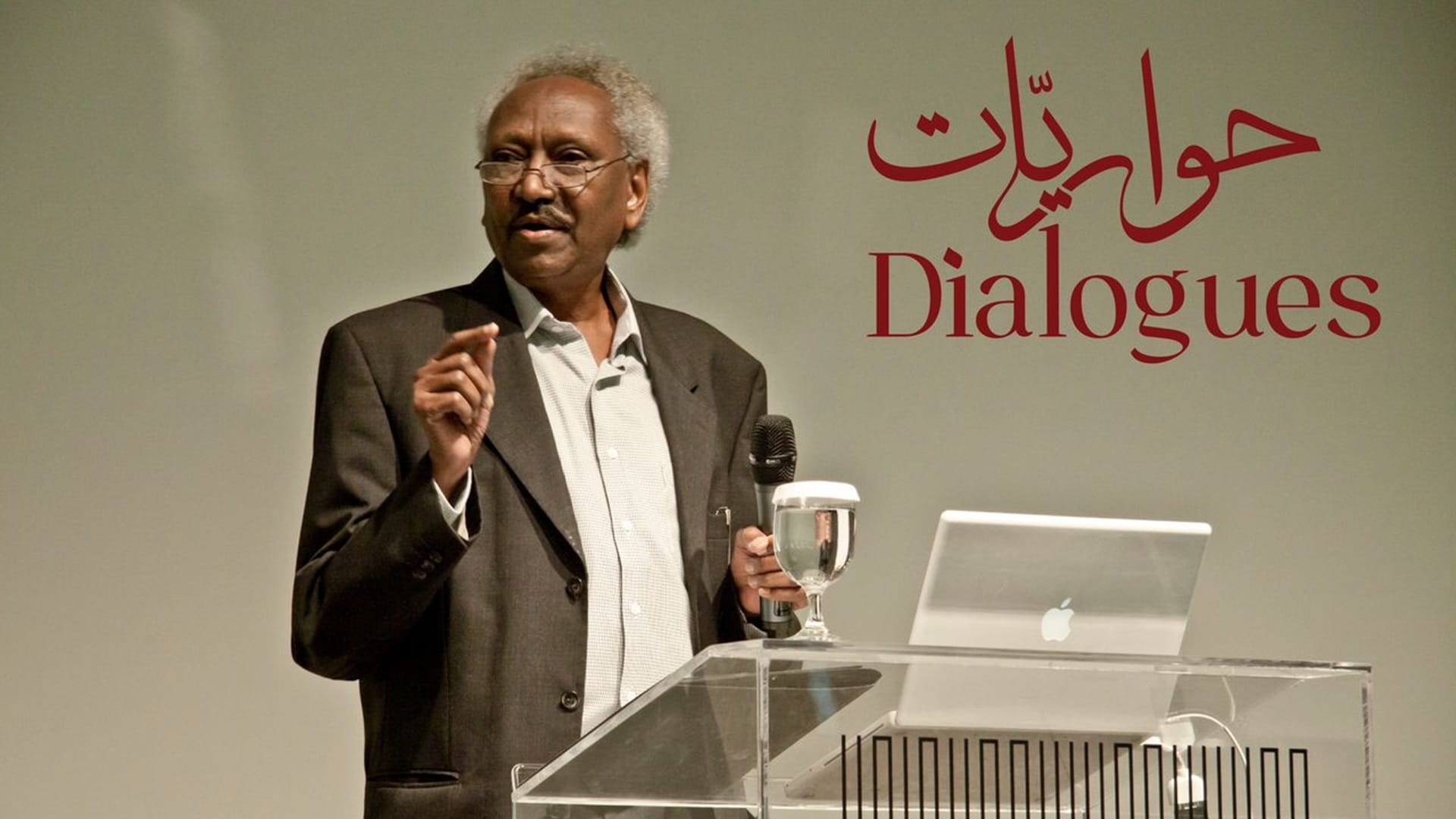
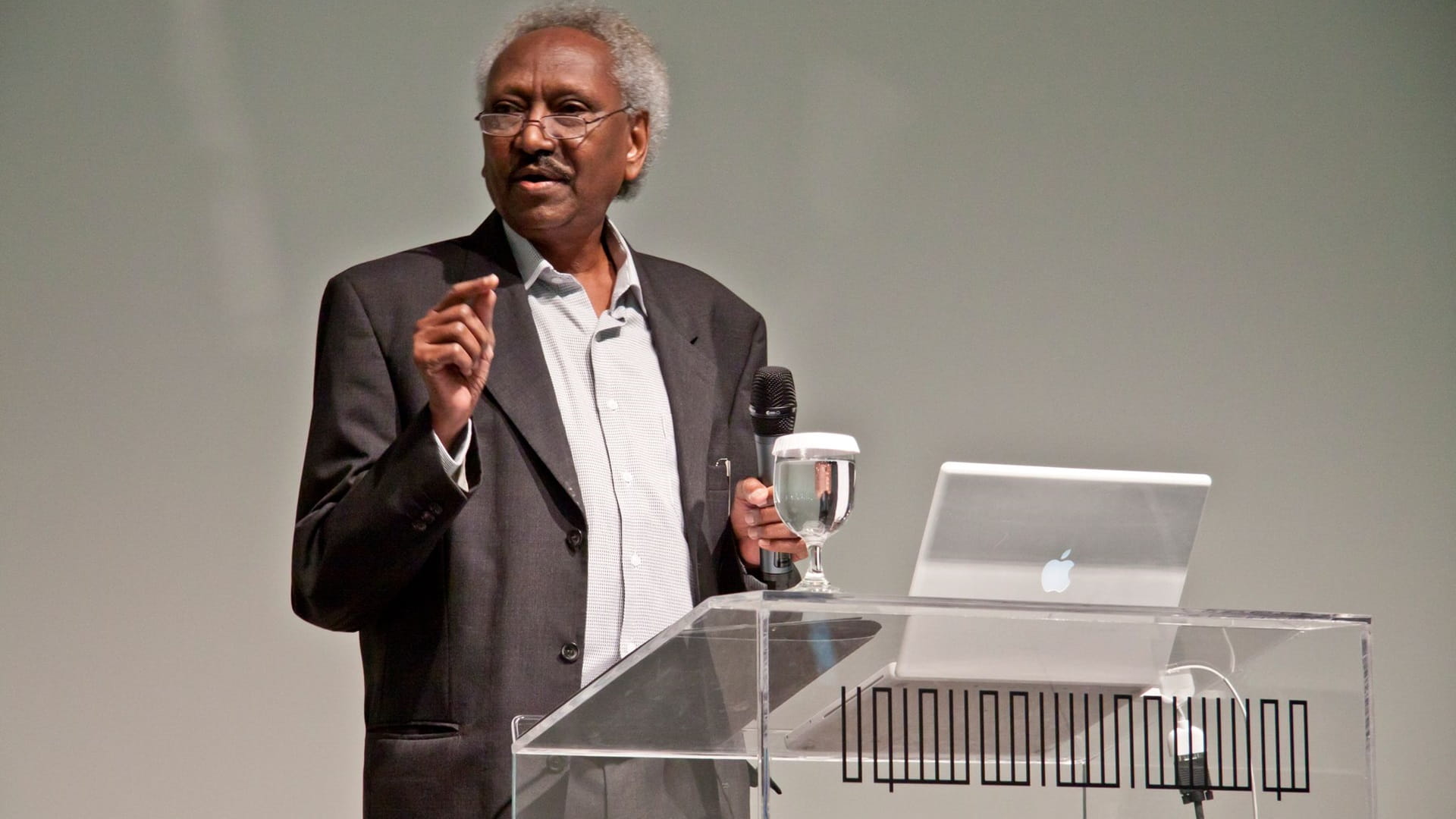
The session revisited key stages in Dr Eidabi’s career across poetry, theatre, journalism and cultural work, from his beginnings in Sudan to his contributions to Sharjah’s cultural scene. It also featured reflections from a number of theatre practitioners, writers and artists who experienced his work first-hand.
Eidabi began by returning to Rafaa, his birthplace, and reflecting on its history of education and theatre. He then spoke about Atbara, where his early awareness was shaped by a working-class, nationalist environment opposed to colonialism. He explained that he began writing at secondary school, before moving on to the University of Khartoum, where he met poets including Mohamed Al Maki Ibrahim, Al Nour Osman Abkar and Mohamed Abdel Hai. Together, they explored questions of identity and Sudanese cultural specificity.
This environment gave rise to the “Forest and Desert” movement, which sought to examine the interplay between the Arab and African components of Sudanese identity. The question continued to occupy Eidabi during his studies in theatre and cinema in Bucharest, where the experience prompted him to consider the artist’s relationship with their environment and the need to produce works that confront colonial narratives rather than reproduce them.
After returning to Sudan, Eidabi developed the “Theatre for All Sudanese” project. It was rooted in the country’s diversity of ethnicities, languages and cultures and called for a theatre in which this diversity could find representation within an inclusive concept of citizenship. The project sought to develop a theatrical language emerging from Sudanese realities.
Eidabi then discussed the origins of his relationship with Sharjah. He explained that his participation in a cultural week in the city led to a meeting with the late Tarim Omran Tarim, who invited him to work on the cultural supplement of Al Khaleej newspaper alongside Mohamed Al Maghout, Jumaa Al Lami, Issa Bishara, Mahmoud Mohamed Madani and others.
The experience sought to establish a new cultural discourse while providing young writers with space to publish their work and subjecting their texts to rigorous, professional review.
Eidabi stressed that the supplement went beyond covering cultural activity, contributing to the consolidation of a national culture grounded in dialogue, debate and clarity of position. It also opened its pages to young voices who would later become prominent figures in Emirati and Gulf culture. He noted that cultural journalism at the time was part of a broader movement that included newspapers, institutions, public-benefit associations and the Emirates Writers and Authors Union.
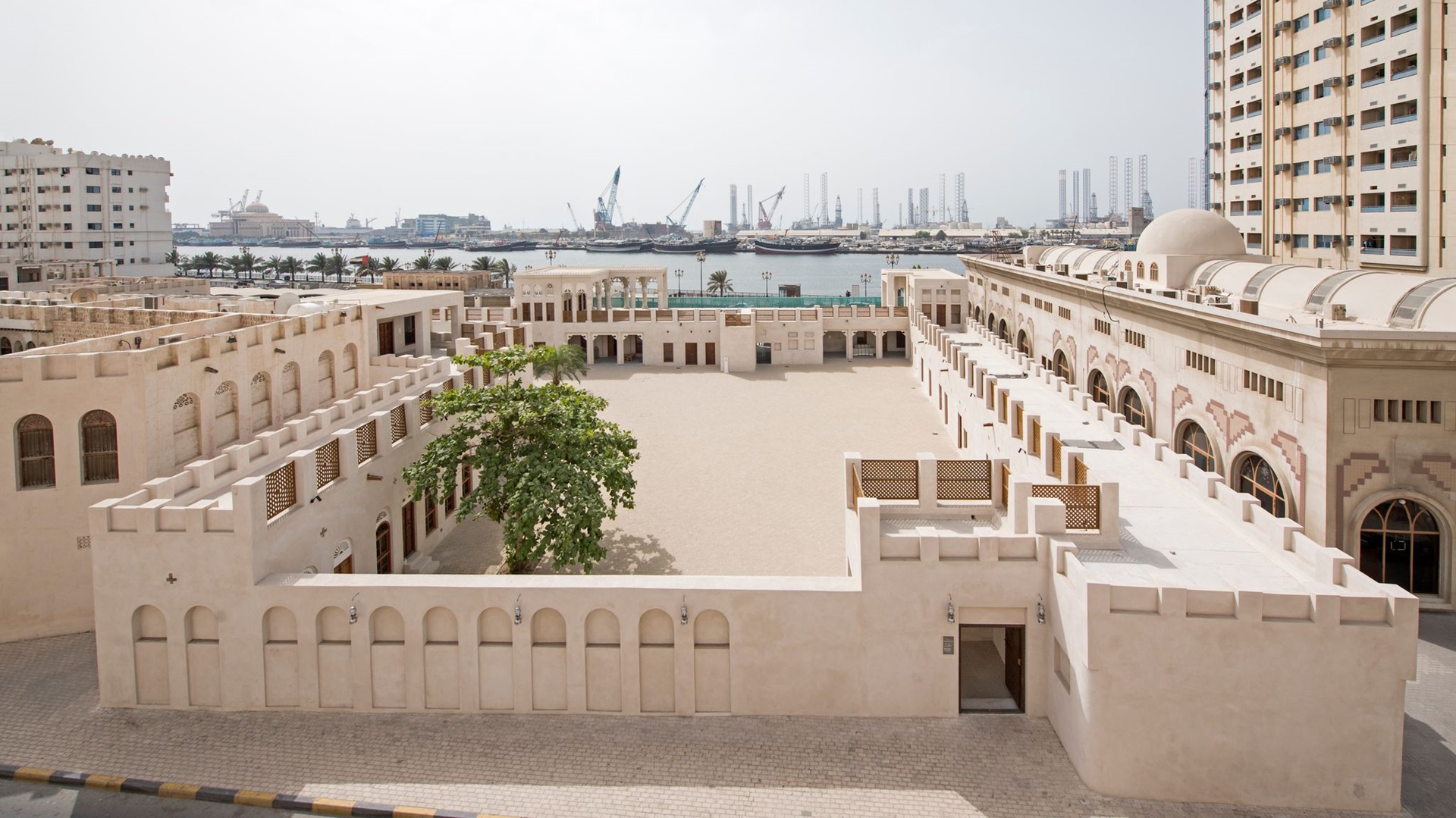
Eidabi also discussed the expansion of Sharjah’s cultural project from the 1980s onwards, particularly the role of the Sharjah International Book Fair, the Emirates Fine Arts Society, Sharjah Theatre Days and Sharjah National Theatre in creating a space where citizens, residents and creatives from diverse backgrounds could meet.
He also noted that the development of the Sharjah Biennial, particularly under the leadership of Sheikha Hoor Al Qasimi, enabled it to move beyond the logic of official representation and embrace more independent and innovative programming, thereby opening up broad horizons that encompass countries and cultures from around the world.
He stressed that Sharjah’s cultural project has been shaped collectively by its leadership, institutions, schools, newspapers, associations, writers and artists. It is not a top-down project detached from society, he said, but one whose significance stems from the vision of His Highness Sheikh Dr Sultan bin Mohammed Al Qasimi, Supreme Council Member and Ruler of Sharjah. This vision celebrates people and culture wherever they are, supports creative achievement and establishes strategic plans to ensure the continuity of Sharjah’s cultural experience, making society and its cultural practitioners integral to it.
In the context of his publishing and documentation efforts, Eidabi said he had produced 35 books documenting the history of Sudanese theatre, including studies, academic papers and testimonies from theatre practitioners. He also referred to the publication of a book documenting Sudanese theatrical activity in countries of displacement and the diaspora, emphasising that creativity remains essential even amid war and displacement.
The session featured contributions from theatre practitioners and artists who reflected on Eidabi’s influence on successive generations, describing him not only as a critic and intellectual but also as a teacher who followed emerging work from its earliest stages.
Director Mohamed Al Amiri, for example, spoke of Eidabi’s constant presence alongside theatre practitioners, his attendance at rehearsals and performances, and his commitment to providing them with books and references. He recalled approaching Eidabi for a single book, only to return with an entire library.
Al Amiri also described Eidabi as a refuge for his students, helping them bridge knowledge gaps and following their development step by step. Others highlighted the extent of his influence among writers and visual artists, as well as his role in nurturing talent and giving emerging creatives the confidence and space to grow.

 For an optimal experience, please
rotate your device to portrait mode.