Loading...
Loading...


The film follows the direction set by His Highness Sheikh Dr Sultan bin Mohammed Al Qasimi, Supreme Council Member and Ruler of Sharjah, who has pushed the emirate towards a food system based on organic production — no chemicals, no environmentally damaging practices — while drawing on local resources and newer technology to keep both sustainability and quality on track.
Each part runs 45 minutes. Part one goes out on Friday, 31 July, at 2.15pm UAE time, repeating that night at 11pm and again at 2.20am on Saturday. Part two follows on Saturday, 1 August, at the same afternoon slot, with repeats at 11pm and 2.20am on Sunday.
The documentary walks through the different strands of Sharjah's organic system: wheat grown organically in desert conditions, organic milk and beef, Damascus goats raised to strict organic standards, poultry and honey production, and modern greenhouses growing organic vegetables and fruit.
It doesn't stay within the emirate's borders, either. Part of the story is sourcing — tracking down the breeds and seeds that made these projects possible.
The crew travelled to Denmark to follow the sourcing of a rare A2A2 milk-producing cattle breed, raised under strict organic standards. That breed became the foundation of Meliha Dairy Farm, which is now listed in the Guinness Book of Records as the largest farm of its kind anywhere in the world – a marker of how far Sharjah wants to take domestically produced, high-quality food.
The team also went to Austria to document the selection of non-GMO heirloom seeds, now grown under the "Ghiras" project run by the Sharjah Agriculture and Livestock Production EST (Ektifa) to supply organic fruit and vegetables to the local market. Ghiras isn't just a production line — it also trains agriculture students from the University of Dhaid in organic farming methods, part of a broader push to build up local expertise in the sector.
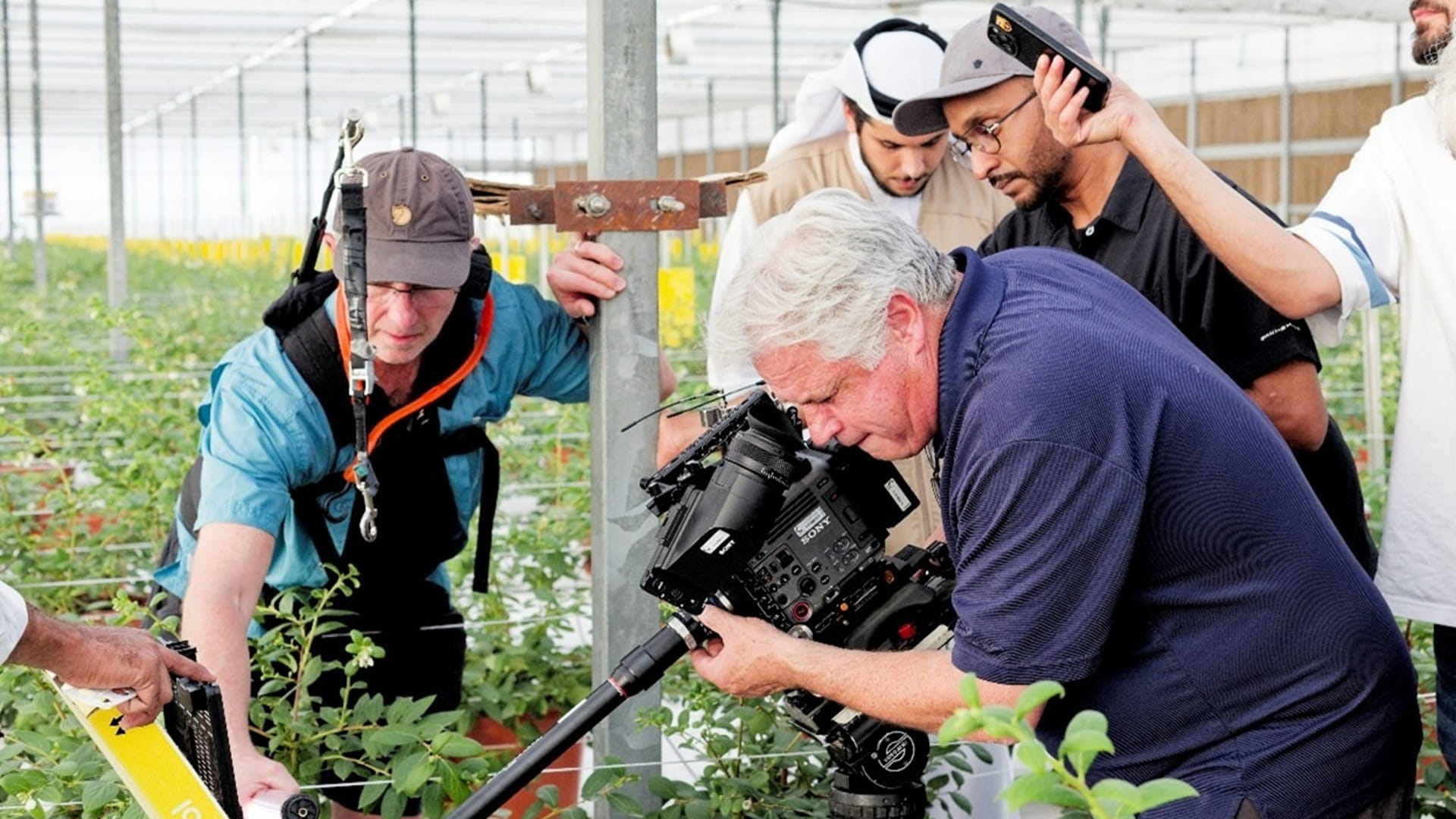
Canadian filmmaker Peter von Puttkamer directed, with Ashraf Ali as artistic producer. Composer Michael Richard Plowman wrote the score. The film is a joint production between the UAE's Sharq Media Production and Canada's Gryphon Productions. Filming took around nine months, covering the farming, harvest and production stages, as well as the scientific, technical and administrative work behind the entire system.

 For an optimal experience, please
rotate your device to portrait mode.