Loading...
Loading...


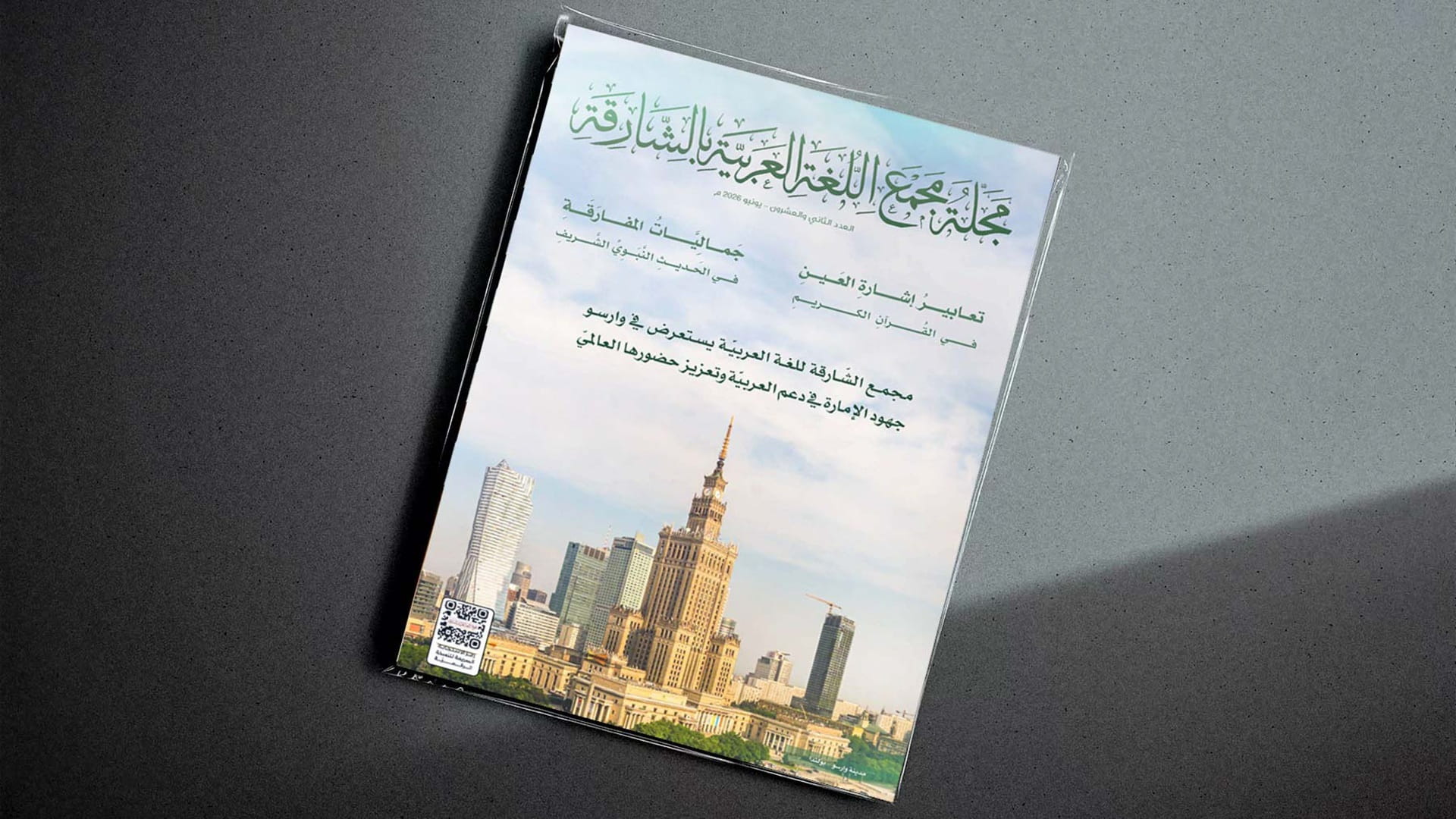
In the editorial opening, Dr Amhamed Safi Al-Mustghanemi, Secretary-General of the Arabic Language Academy in Sharjah, writes under the title “Has Arabic rhetoric closed its doors?”, arguing that Quranic rhetoric remains an open and expanding field of research. He emphasises that the study of Quranic composition continues to reveal new dimensions of the divine linguistic miracle. According to him, modern scientific approaches, when combined with the authenticity of traditional Arabic scholarship, can unlock new perspectives for researchers and expand the horizons of rhetorical and linguistic analysis.
A major feature of this issue is a dedicated file titled “Achievements of the Jordanian Arabic Language Academy in its Golden Jubilee”, authored by Prof. Samir Al-Droubi, a member of the Jordanian Academy. The article traces the historical development of the institution from its early beginnings as a committee for Arabisation and translation, highlighting its contribution to strengthening the Arabic language in education, administration, and public life. The issue also includes a contribution by writer Ahlam Mosteghanemi titled “The Day Constantine’s Libraries Wept”, which reflects on cultural loss and the symbolic value of knowledge institutions.
Within the section “Studies in Quranic Expression”, the journal presents several analytical articles addressing rhetorical and semantic dimensions of the Quran. One study examines the rhetorical function of omission (hadhf) in shaping legal interpretation, showing how linguistic omission opens broader interpretive space for scholars of jurisprudence and exegesis by emphasising context and intent. Another article explores the rhetorical significance of eye-related expressions in the Quran, analysing how references such as tears, weeping, and emotional visual cues reflect psychological states including fear, joy, sorrow, and pain, thereby conveying subtle layers of meaning. A further study focuses on the rhetorical power of dialogue in the Quran and its argumentative structure, demonstrating how Quranic dialogue strengthens persuasion, organises reasoning, and constructs meaning through a balanced and effective communicative style.
The “Linguistics” section includes three academic studies addressing precise linguistic and rhetorical issues. One paper discusses aesthetic aspects of paradox in the Prophet’s Hadith. Another investigates grammatical issues related to the dual feminine form, particularly the use of “kila”, warning against misreadings in Quranic recitation. A third study focuses on historical linguistics and its role in supporting lexicography by tracking how meanings evolve over time.
In the “Lexicography” section, the issue explores the semantic field of family-related vocabulary through a linguistic journey into Arabic lexical richness. Another article examines fine semantic distinctions between closely related words, such as the difference between “mistake” and “error”. A separate study addresses antonym dictionaries in Arab heritage, analysing their philosophical and linguistic structure. The section concludes with a lexical exploration of the root “faqaha” within the historical dictionary tradition.
The “Books and Studies” section revisits manuscript research, including the experience of orientalist Ignatius Krachkovsky with Arabic manuscripts. It also examines linguistic purification trends in “The Book of Writer’s Errors”, and presents poetry as a reflection of values in Arab heritage. Another article discusses textual linguistics through the book “Poetry and Discourse Harmony”, using it as a framework for literary analysis.
The issue further highlights major Arab literary and cultural figures, including Ali bin Al-Hasan Al-Hana’i, known as Kurā‘ al-Naml, the poet Labid bin Rabi’ah, Mokhtar Nouiouat, and Ahmad Muhammad Shakir. It also includes critical studies on very short stories, comparisons between the works of Gibran and Mahfouz, Arabic dictionary scholarship, jurisprudential themes in Maghrebi Unitarian poetry, Andalusian muwashshahat, representations of women in literature, and cultural dimensions in the novel “The Most Beautiful of Them” by Abdul Salam Al-Ujayli.
Finally, the issue contains short linguistic reflections and proverbs, addressing topics such as grammatical gender, lexical classifications, and usage distinctions. It also presents selected Arabic and Quranic proverbs that combine linguistic richness with moral and cultural wisdom, reinforcing the journal’s broader aim of connecting language, heritage, and intellectual inquiry.

 For an optimal experience, please
rotate your device to portrait mode.