Loading...
Loading...


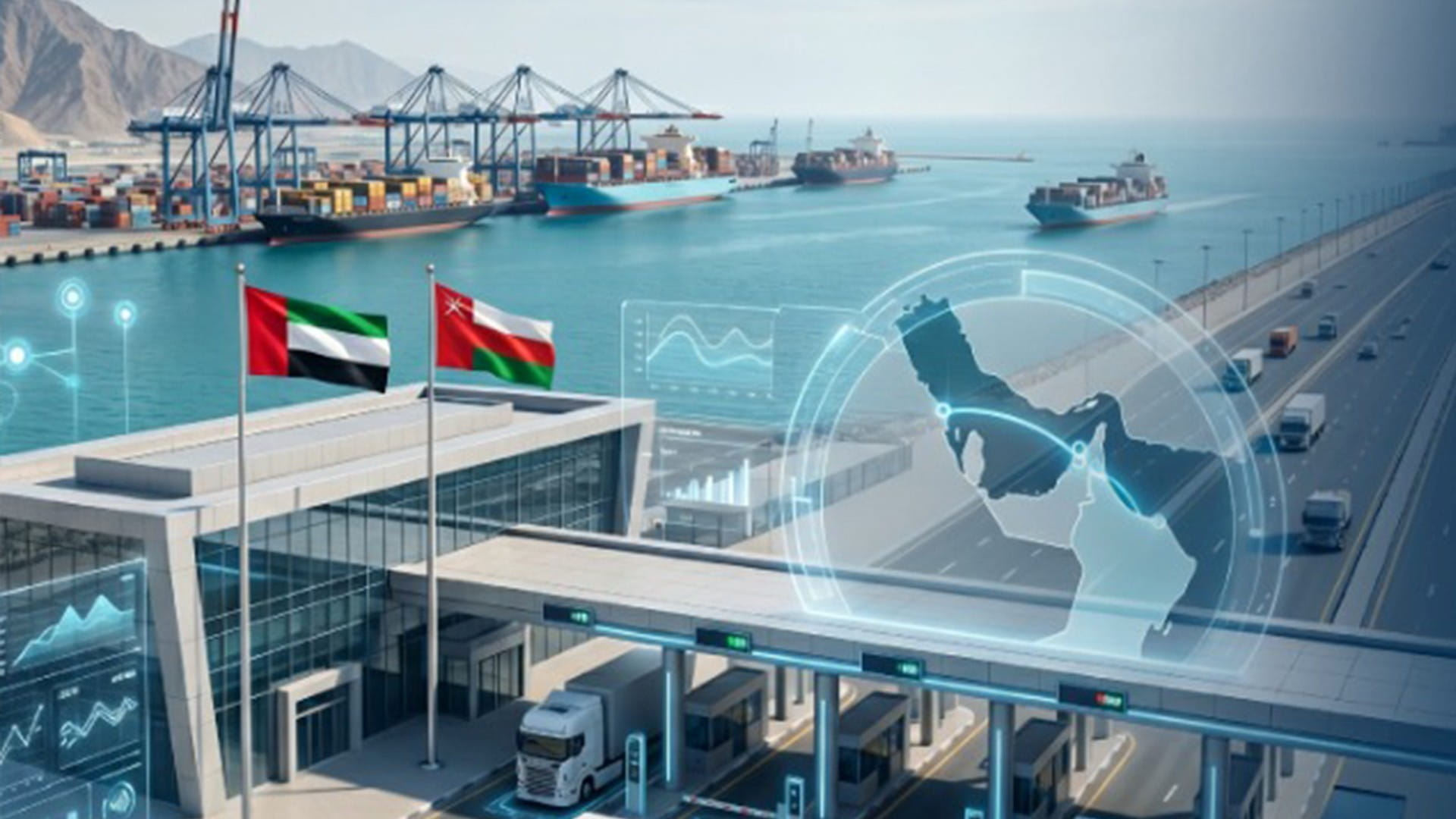
The logistics complex forms a key component of the trade and logistics corridors connecting Sharjah with GCC and regional markets. It supports the development of more efficient and resilient transportation routes that accelerate cargo movement, reduce transit times, and strengthen integration between production centres, distribution hubs, and consumer markets, further reinforcing Sharjah’s position as a strategic gateway for trade and logistics services across the region.
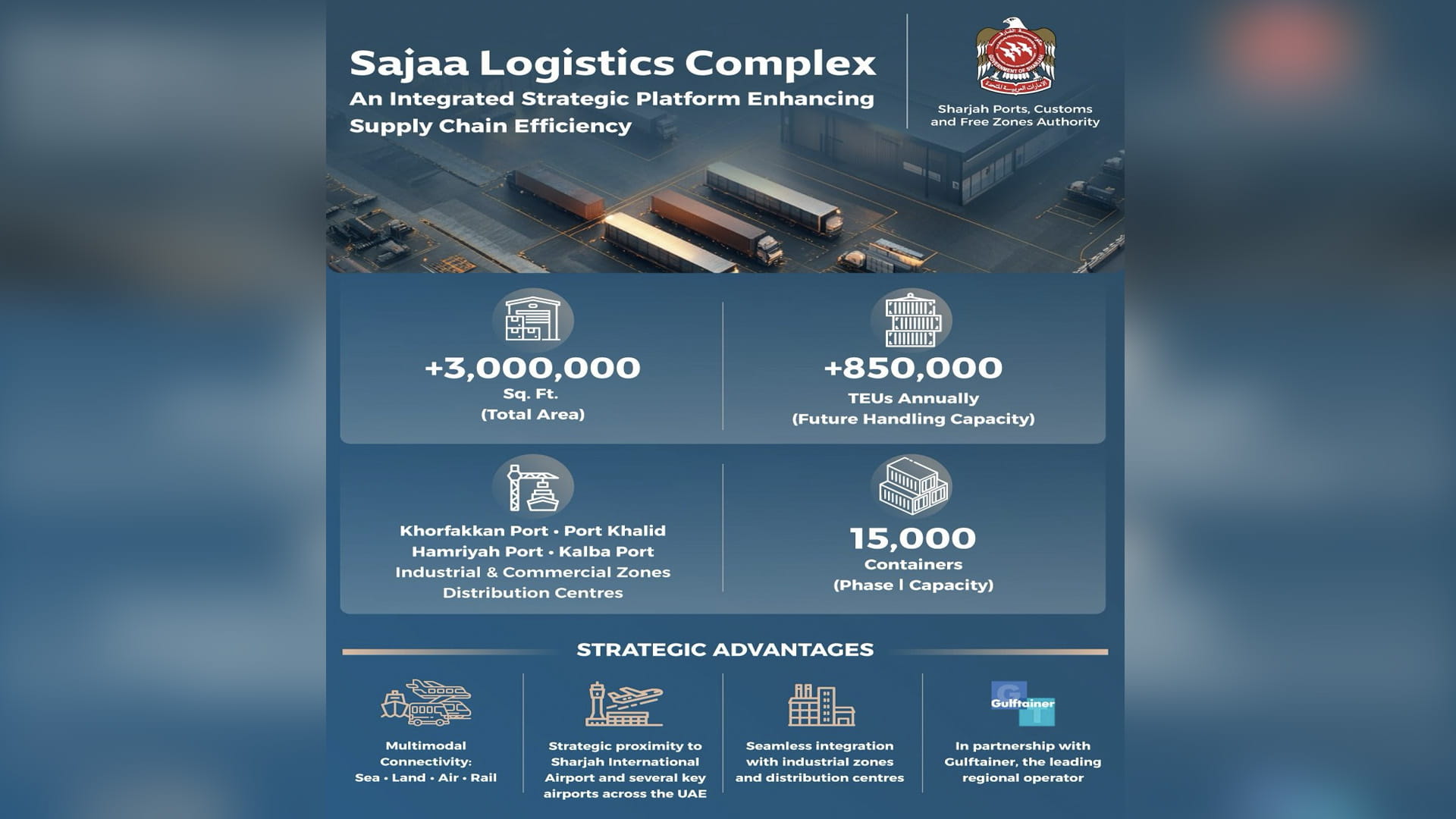
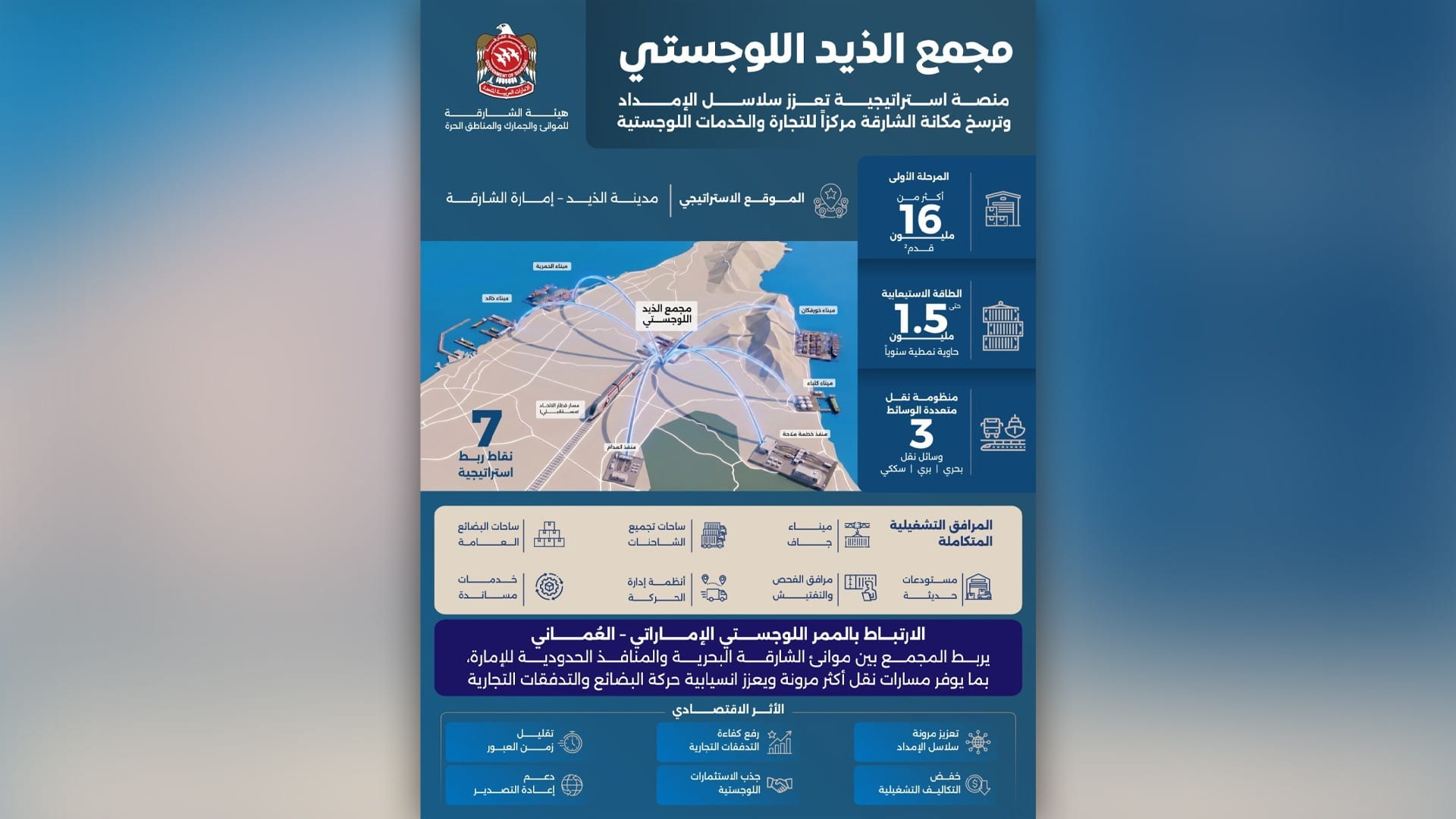
Sajaa Logistics Complex enjoys a prime location that positions it among Sharjah’s most important logistics connectivity hubs. The complex facilitates seamless connectivity between Khorfakkan Port, Port Khalid, Hamriyah Port, and Kalba Port on the one hand, and industrial zones, commercial centres, and distribution facilities on the other, providing businesses with a comprehensive operational platform that supports faster cargo movement and enhances the efficiency of import, export, and re-export activities.
The complex serves as an extension of Sharjah’s integrated ports ecosystem, which stretches from Port Khalid and Hamriyah Port on the UAE’s western coast to Khorfakkan Port and Kalba Port on the eastern coast overlooking the Gulf of Oman. This unique geographic advantage enhances Sharjah’s regional competitiveness and strengthens connectivity between maritime gateways and local, regional, and international markets.
The logistics hub also benefits from its close proximity to Sharjah International Airport and several major airports across the UAE, further enhancing integration between maritime, land, and air transport while providing more flexible and efficient operating options tailored to the needs of diverse economic and commercial sectors.
Future connectivity to the UAE’s national railway network through the Etihad Rail project will further reinforce Sharjah’s readiness to adopt a more advanced logistics model based on the integration of maritime, land, air, and rail transportation within a unified operating ecosystem that supports the sustainable growth of the trade and logistics sector.
The first phase of the development offers storage capacity for 15,000 TEUs as part of a comprehensive expansion strategy designed to progressively increase operational capabilities. The complex features advanced infrastructure, including modern warehouses, operational yards, and integrated logistics facilities that support storage, handling, and redistribution activities, enabling it to accommodate growing trade volumes while efficiently serving local and regional markets.
A key operational component of Sajaa Logistics Complex is its dry port facility, which is operated by Gulftainer and leverages the company’s extensive regional and international expertise. This enhances operational efficiency while supporting the seamless flow of cargo across supply chains.
The Sharjah Ports, Customs and Free Zones Authority (SPCFZA) stated that Sajaa Logistics Complex reflects the emirate’s vision of developing advanced logistics infrastructure aligned with the UAE’s broader objectives of strengthening trade and supply chains. The project achieves this through a modern operational platform that connects seaports, airports, industrial zones, and advanced transportation networks.
SPCFZA further noted that the complex represents a valuable addition to the UAE’s transport and logistics ecosystem, strengthening supply chain resilience, improving the efficiency of trade flows, and further cementing Sharjah’s position as a key gateway for trade and supply chains. It also unlocks new opportunities for investment and growth for local, regional, and international businesses, while enhancing the UAE’s global competitiveness and reinforcing its standing as a leading hub on the international trade and logistics landscape.
Sajaa Logistics Complex offers a fully integrated operating environment for businesses across the transportation, warehousing, distribution, and logistics sectors. Leveraging its strategic location and direct links to seaports, airports, industrial zones, and key transport networks, the complex supports greater operational efficiency by reducing logistics costs, shortening transit times, and facilitating the seamless movement of cargo.

 For an optimal experience, please
rotate your device to portrait mode.