GCC youth continue to strengthen their role as key partners in the sustainable development path of the GCC countries, reflecting their increasing demographic, economic and social importance
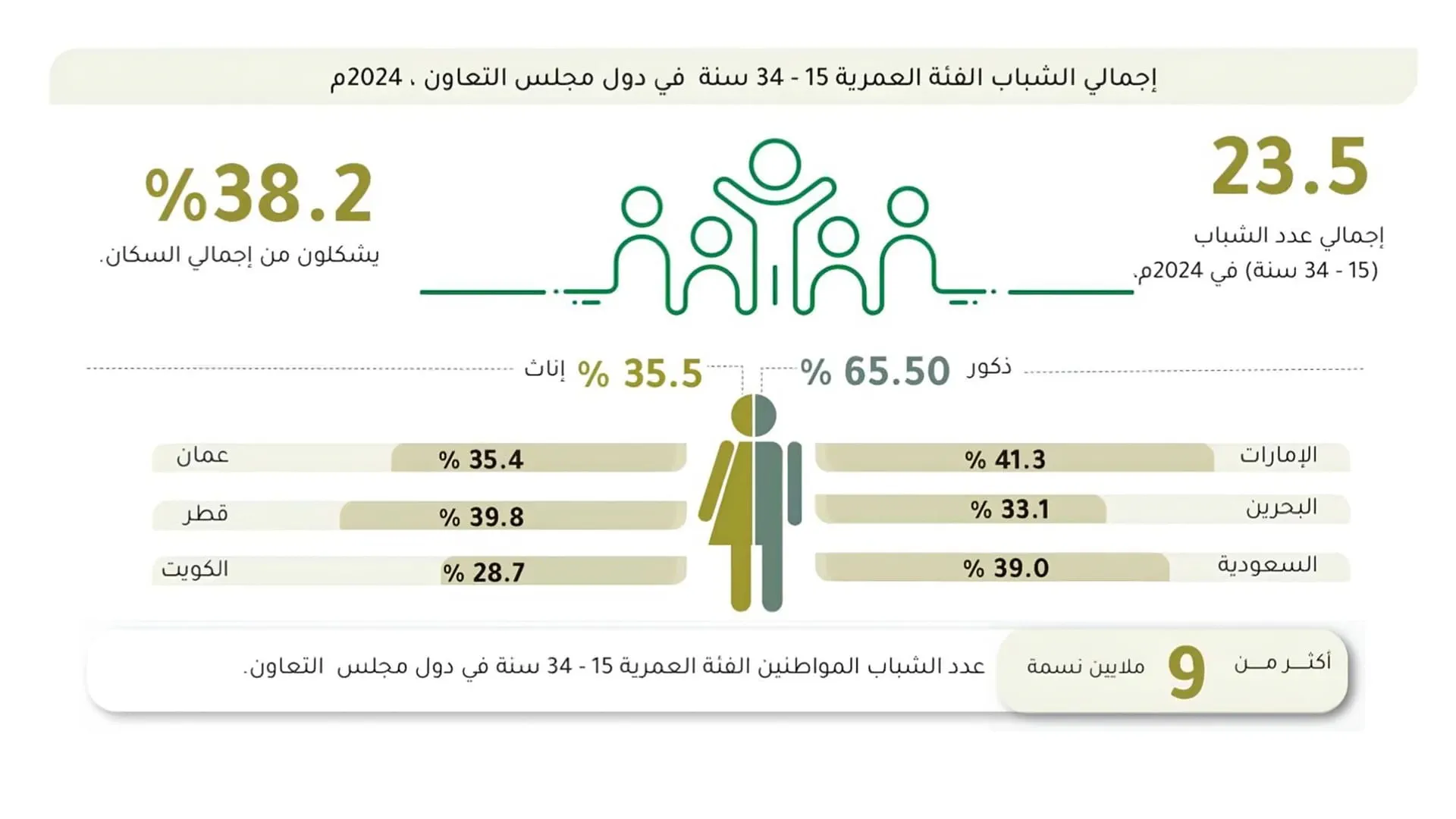
The Centre noted that the GCC countries are undergoing demographic transformations in line with global trends. The proportion of youth
Within the total GCC population, it declined slightly from 38.9% in 2010 to 38.2% in 2024. Globally, the corresponding share fell from 32.8% to 30.3% during the same period.
At the same time, the proportion of the population aged 35 years and above has increased, alongside a decline in the share of children under the age of 15. The GCC’s demographic profile is not static; life expectancy is rising, while fertility rates are falling.
The number of young people employed across the Gulf region reached about 14.2 million in 2025, or 38.1% of the total workforce, a 5.1% increase from the previous year.
In 2025, some 2.5 million young people worked among GCC nationals, making up 43.5% of all employed nationals. The number was up 3.1% from 2024.
Young people are reshaping the GCC — not as a demographic footnote, but as a genuine engine of business, innovation and community life across the region.




 For an optimal experience, please