Loading...
Loading...


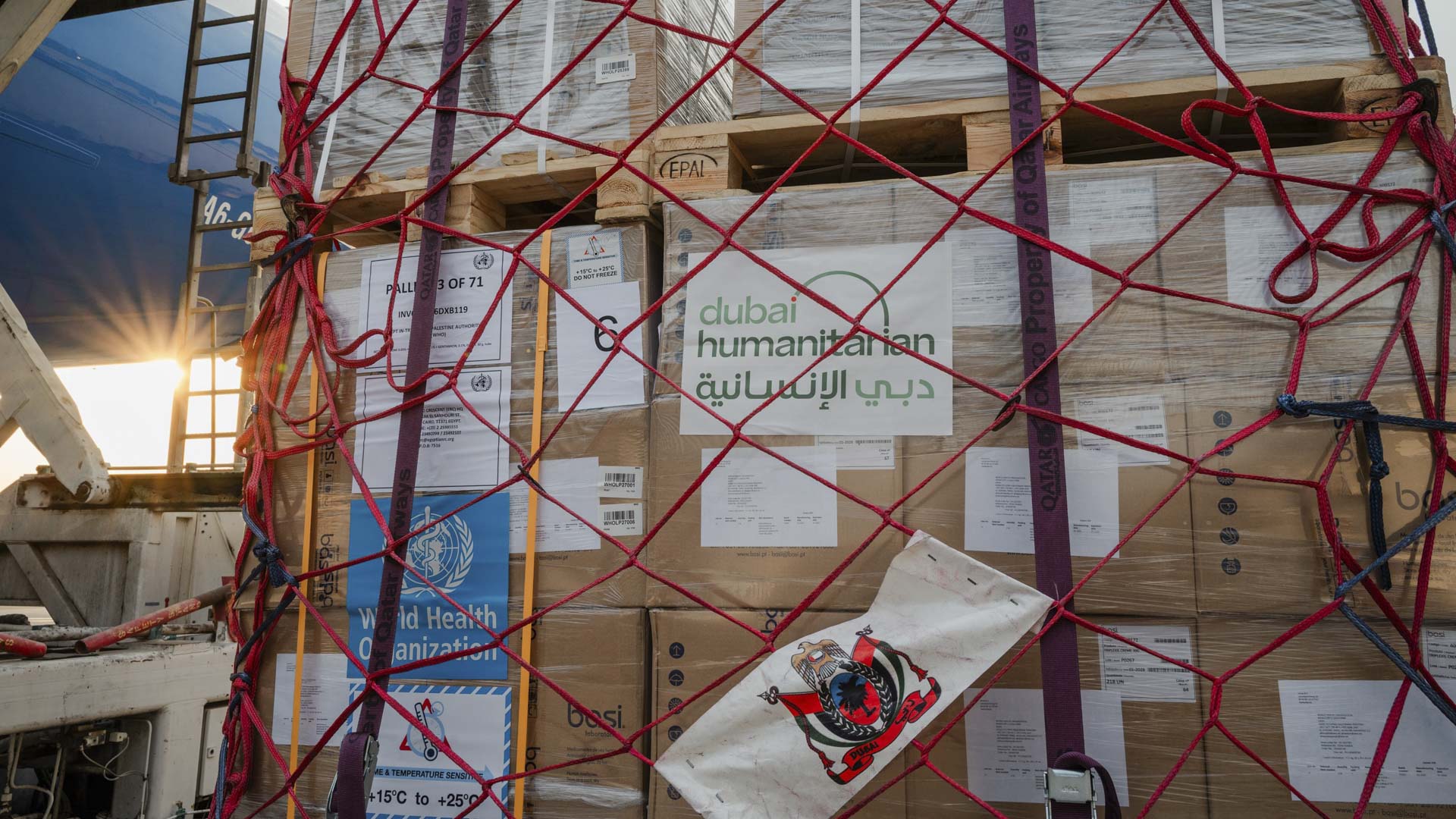
Launched in support of the World Health Organization (WHO), the operation began with an initial C-130 flight from the Dubai Air Wing carrying 11 metric tonnes of essential medicines to Egypt's Al Arish International Airport for onward transport to Gaza. This inaugural flight was followed by three additional journeys transporting more medicines, tents, and fortified nutritional biscuits.
150 tonnes of medical and health supplies to be dispatched
These four flights form part of a larger ongoing operation through which Dubai Humanitarian will dispatch roughly 150 metric tonnes of WHO medical and health supplies to Gaza in the coming weeks via a continuous logistics pipeline. All items are sourced directly from pre-positioned stocks at the WHO Global Logistics Centre hosted by Dubai Humanitarian, demonstrating the organisation's pivotal role in enabling fast, large-scale relief.
Dubai Humanitarian reaffirms commitment to Gaza
Mohammed Ibrahim Al Shaibani, Chairman of Dubai Humanitarian, emphasized that the new air bridge underscores Dubai's enduring commitment to supporting the people of Gaza under the leadership's guidance. Despite regional challenges, Dubai Humanitarian has partnered with international organizations this year to facilitate relief shipments and air bridges to countries including Afghanistan, Mozambique, Lebanon, and Uganda, complementing earlier efforts such as a three-truck overland medical convoy sent to Gaza.
WHO highlights humanitarian impact
Robert Blanchard, Head of Emergency Operations at the WHO Hub for Global Health Emergencies Logistics, noted that the series of charter flights is delivering over $1.3 million worth of medicines and medical supplies to treat roughly 400,000 people in Gaza.
Highlighting the generosity and operational backing of Dubai Humanitarian and the Government of Dubai, Blanchard explained that these charter flights allow WHO to scale up patient reach while cutting expenses. Amid declining financial resources across the humanitarian sector, Dubai Humanitarian's support—which has saved Gaza's health emergency operations over $4 million in logistics costs since the conflict began—empowers the WHO to redirect vital resources toward expanding life-saving medical access in Gaza and globally.

 For an optimal experience, please
rotate your device to portrait mode.