Loading...
Loading...


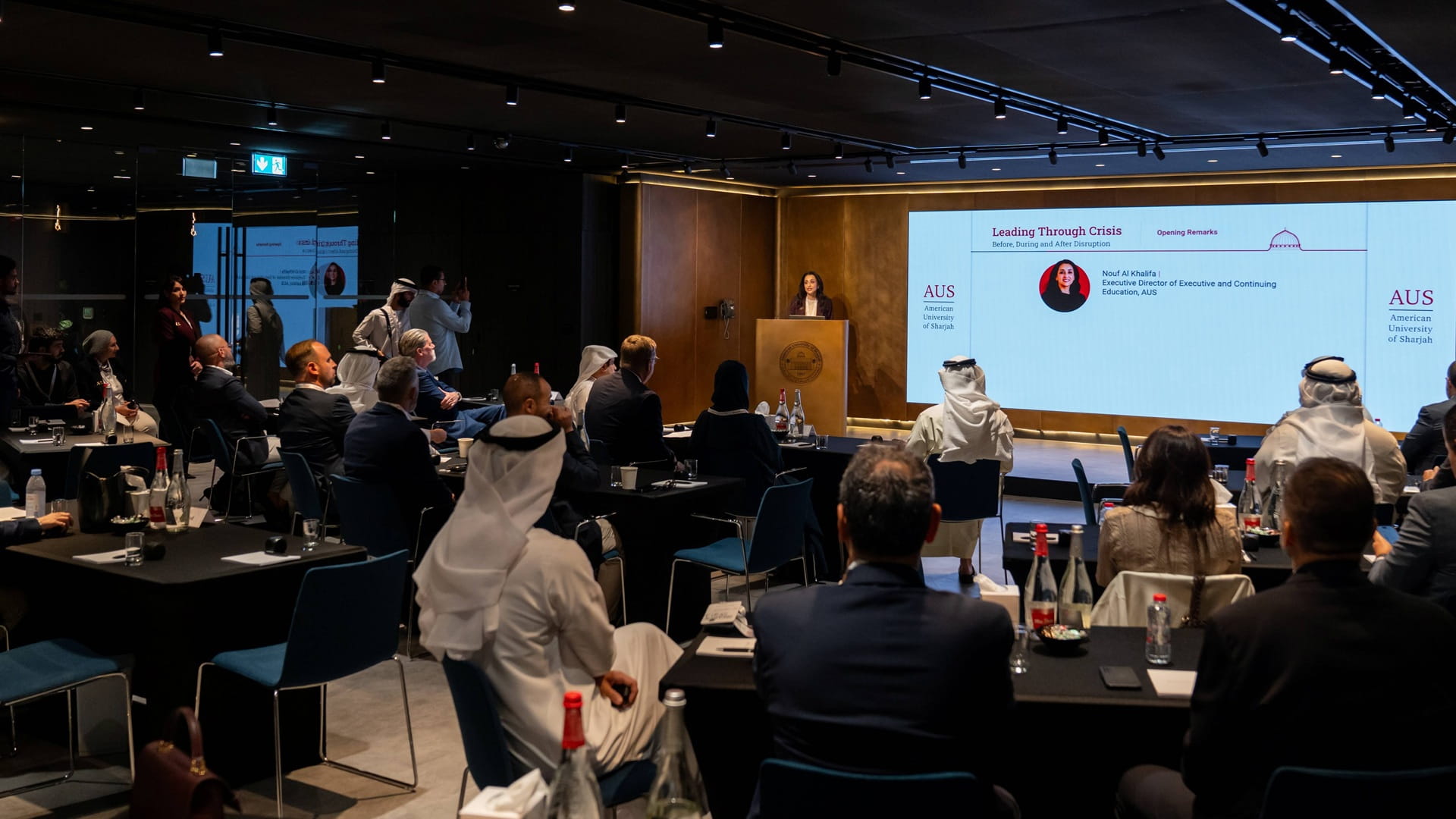
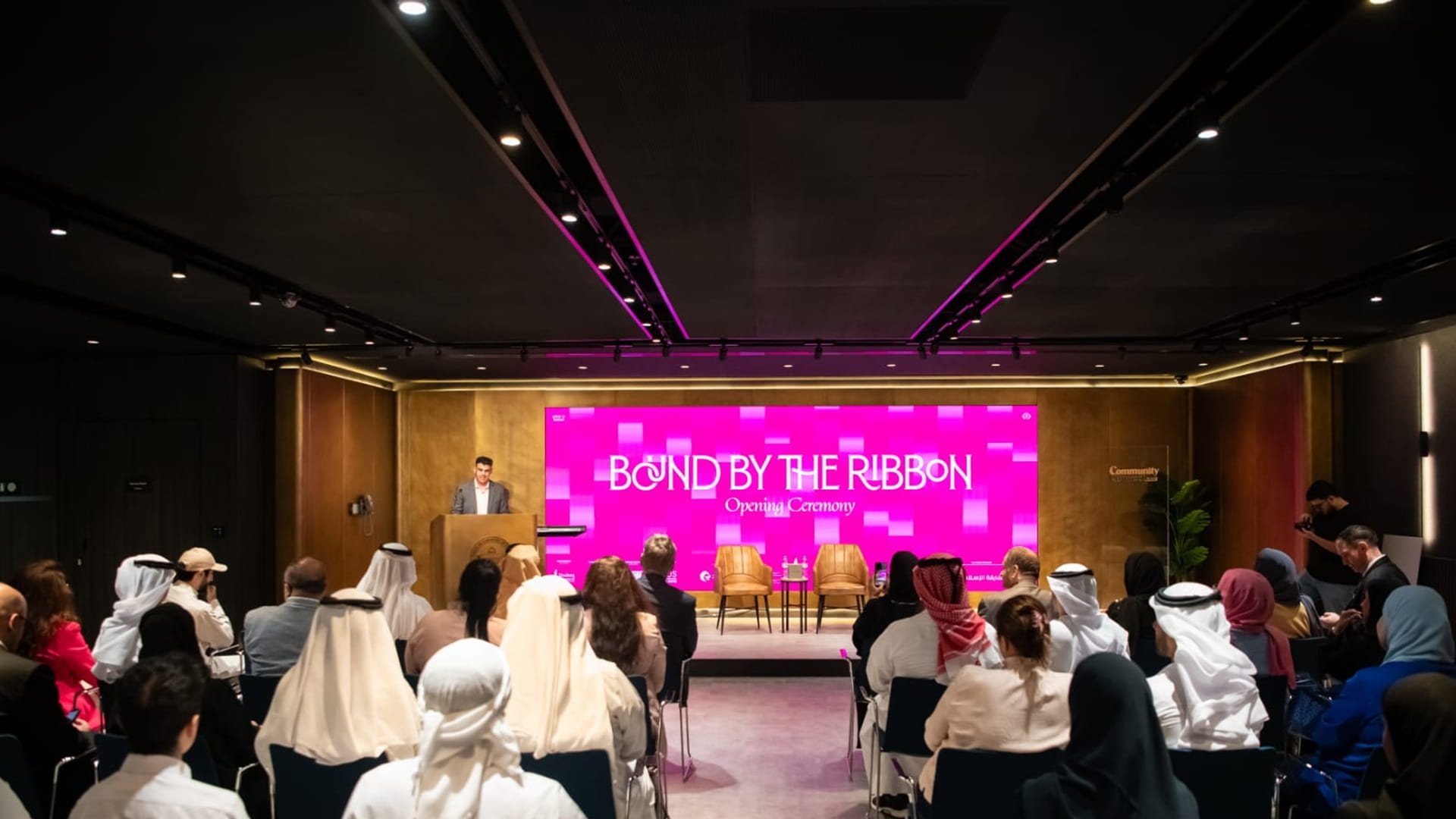
Opening the programme, Dr Tod Laursen, Chancellor of AUS, welcomed participants and highlighted the importance of timely dialogue on leadership in complex environments. The programme also featured a keynote by Brian Lott, Chief Communications Officer of Mubadala, followed by a fireside chat with him, during which he shared insights on how organisations can lead through periods of disruption by strengthening trust, maintaining clarity and aligning communication with decisive action.
Dr Salah Brahimi, Vice Chancellor for External Relations at AUS, said the programme reflected the university’s commitment to creating high-value platforms that connect academic expertise with the leadership priorities of industry and the wider community.
“Crisis leadership has become a defining capability for organisations operating in today’s environment. Through this programme, AUS brought together senior leaders, faculty expertise and experienced practitioners to examine how decision-making capacity, organisational resilience and leadership readiness can be developed before crises occur. This reflects our broader role in connecting knowledge with practice, strengthening industry engagement and supporting leadership development that responds to the needs of the UAE and the wider region,” he said.
A key component of the programme was “When Crisis Comes to Your Door: The Decisions That Determine What Comes Next,” a masterclass led by Dr John E. Katsos, Professor of Management at AUS and a two-time nominee for the Nobel Prize. Drawing on research-based frameworks and real-world case insights, the session examined why traditional crisis playbooks often fail under pressure and how decisions made before disruption can shape an organisation’s ability to respond, protect trust and recover with resilience.
“Most organisations treat crisis as an interruption. The evidence says otherwise. Crises often cascade rather than end: a military shock becomes an economic shock, then a talent crisis, then a question about whether an organisation can continue to operate with confidence in a given market. The leaders in my research who navigated these moments most effectively were those who had built distributed authority, deep local relationships and honest information channels before anyone called it a crisis. This is what we teach executives at AUS. The quiet period after the first wave of crisis is the window to build what the next wave will test. That window closes faster than leaders expect, and many organisations spend it focused on survival rather than preparing for what comes next,” said Dr Katsos.
Building on the focus on decision-making under pressure, participants joined “Executive Self-Regulation in Crisis: Leading with Clarity Under Pressure,” an interactive workshop led by Randy Helou, Managing Director of Synertia Consulting, and a leadership facilitator and executive coach. The session explored how leaders can manage stress responses, restore clarity and use practical tools such as the “Pause, Process, Proceed” method to guide teams more effectively during volatile moments.
Bringing practical regional and international perspectives into the discussion, the panel “Real Crises, Real Decisions: Perspectives from Gulf Executives” explored real-world crisis leadership, operational resilience, cybersecurity risk and geopolitical complexity. Moderated by Ryan Highland, a geopolitical risk consultant, the discussion featured Eleanor Berry, Crisis Manager for Eastern Europe, the Middle East and Africa at Mastercard; Dr Joe Battikh, Senior Partnership Manager at Mohamed bin Zayed University of Artificial Intelligence; Philippe Lopez, Head of Cyber Governance for ENOC Group; and Scott Wilcox, Founder and Senior Advisor at Sicuro Group. The conversation highlighted how crises rarely unfold according to fixed plans, requiring leaders to balance speed, judgment, communication and accountability while managing operational, digital and geopolitical risks.
“Our focus is to design executive learning experiences that respond directly to the realities leaders face in the market. This programme addressed a critical need for senior leaders: building decision-making capability before crises occur, strengthening resilience within teams and engaging with real-world perspectives from executives who have led through complex environments,” said Sheikha Nouf Al Khalifa, Executive Director of Executive Education at AUS.
“As a hub for lifelong learning, AUS Executive Education is committed to supporting leaders, professionals and organisations through future-focused, regionally relevant and practice-oriented learning that responds to the evolving needs of the UAE, the GCC and beyond,” she said.
Reflecting on the value of the programme mean its relevance to senior leaders navigating uncertainty, Dr Mohammad Hourani, CEO of Saif Al Ghurair Foundation, said: “The event offered timely and practical insights into crisis leadership, reminding us that resilience must be built before disruption occurs through proactive planning, continuous reflection and people-centered leadership. It highlighted proactive communication as a critical tool to protect human capital and strengthen business resilience during uncertainty. The discussions also reinforced that failure in times of crisis often comes from overconfidence, delayed reflection and slow reassessment of assumptions. Equally important was the emphasis on empowering teams closest to the challenge to act with agility, ownership and speed. Every crisis is different, but resilient leaders are those who reflect on vulnerabilities, adapt quickly and guide their organisations to emerge stronger.”
AUS Executive Education serves as a regional hub for practical, future-focused learning, supporting leaders, professionals and organisations through custom and open-enrollment programmes aligned with evolving market needs. Building on AUS’ academic excellence, industry partnerships and faculty expertise, it offers practice-oriented learning across areas such as leadership and strategy, AI and technology, sustainability and ESG, public policy, entrepreneurship and professional skills. It is also expanding its portfolio of accredited and certified offerings to strengthen leadership capacity, industry engagement and professional growth across the UAE and beyond.

 For an optimal experience, please
rotate your device to portrait mode.